Meditation in Schools: How Mindfulness Helps Students Focus and Thrive
When you think of meditation in schools, a practice where students learn to quiet their minds and focus on the present moment. Also known as mindfulness in education, it’s not about turning classrooms into silent retreats—it’s about giving kids tools to handle stress, focus better, and feel more in control of their emotions. Schools across the U.S. and U.K. are quietly adding just five minutes of quiet breathing or body scans to the start of the day, and the results are surprising: fewer arguments, less anxiety, and students who actually remember what they learned.
Why does this work? Because mindfulness, the ability to notice thoughts and feelings without getting swept away by them directly trains the brain’s emotional control center. When a kid gets frustrated in math class or feels overwhelmed before a test, mindfulness helps them pause instead of panic. It’s not magic—it’s neuroscience. Studies show that regular mindfulness practice in schools lowers cortisol levels, improves attention spans, and even boosts reading scores. And it doesn’t require expensive gear or special rooms. Just a quiet corner, a few minutes, and a teacher who’s willing to sit still with them.
It’s not just about calming down, either. student mental health, the emotional and psychological well-being of children in educational settings is under more pressure than ever. Social media, academic pressure, and unstable home lives are stacking up. Meditation in schools isn’t a band-aid—it’s a preventative tool. Teachers report fewer suspensions, less bullying, and kids who are better at working in groups. One school in Chicago saw a 50% drop in disciplinary incidents after introducing daily mindfulness. Another in London noticed kids were better at handling disappointment after losing a game or failing a quiz. That’s emotional regulation in action.
You won’t find kids chanting or sitting cross-legged for an hour. These aren’t spiritual exercises—they’re practical skills, like learning to tie your shoes or do math. They’re taught the same way: simple, repeated, and tied to real-life moments. "When you feel your heart racing before you speak in class, take three breaths," a teacher might say. Or, "Notice where your feet are touching the floor right now." These tiny anchors help kids come back to themselves when everything else feels loud.
And it’s not just for older kids. Even kindergarteners can learn to notice their breathing or pause before reacting. The key is consistency—not perfection. A school doesn’t need to go all-in overnight. Start with one class. One teacher. One minute a day. The ripple effect is real.
What you’ll find below are real stories, practical guides, and science-backed tips from teachers and parents who’ve seen this work firsthand. From how to start a quiet moment in a noisy classroom, to what to say when a child says "I can’t sit still," to how mindfulness fits into a packed school day—you’ll find answers that don’t require a PhD or a budget for yoga mats. Just care, patience, and a willingness to try something simple that actually works.
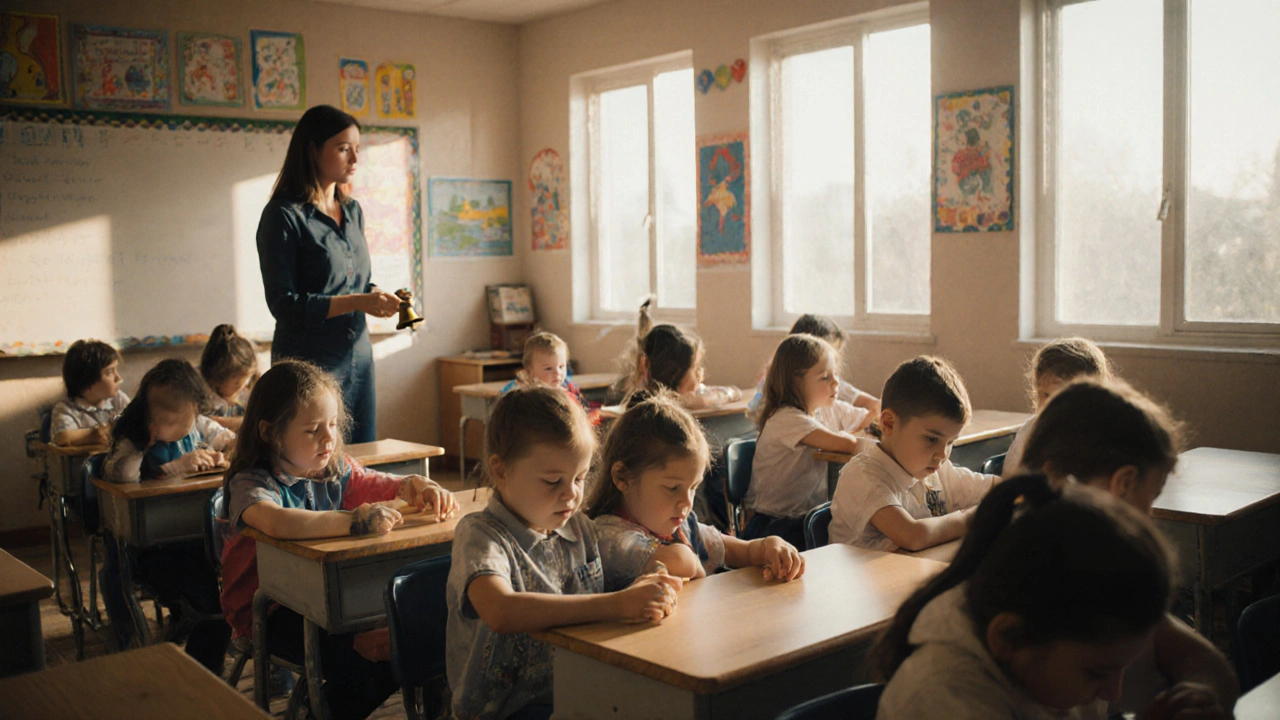
Meditation: A Potential Game-Changer in Education
Meditation in schools is quietly transforming classrooms by improving focus, reducing stress, and helping students manage emotions. Real data shows better behavior, attendance, and test scores-not from more studying, but from learning to pause.
Read More