Think about the last time you felt truly calm. Not just "not angry," but that deep, steady quiet where your thoughts don't race and your body isn't braced for impact. For most of us, that state feels like a luxury we can't afford. We live in a world designed to keep us on edge-pinging notifications, urgent deadlines, and news cycles that never sleep. But here is the thing about calmness: it is not just a feeling; it is a physiological state that unlocks higher-level cognitive functions. You cannot practice genuine mindfulness or achieve deep self-awareness while your nervous system is screaming "danger." Calmness is the gateway. Without it, mindfulness is just forced concentration, and self-awareness is often just rumination.
The Biological Link Between Calmness and Clarity
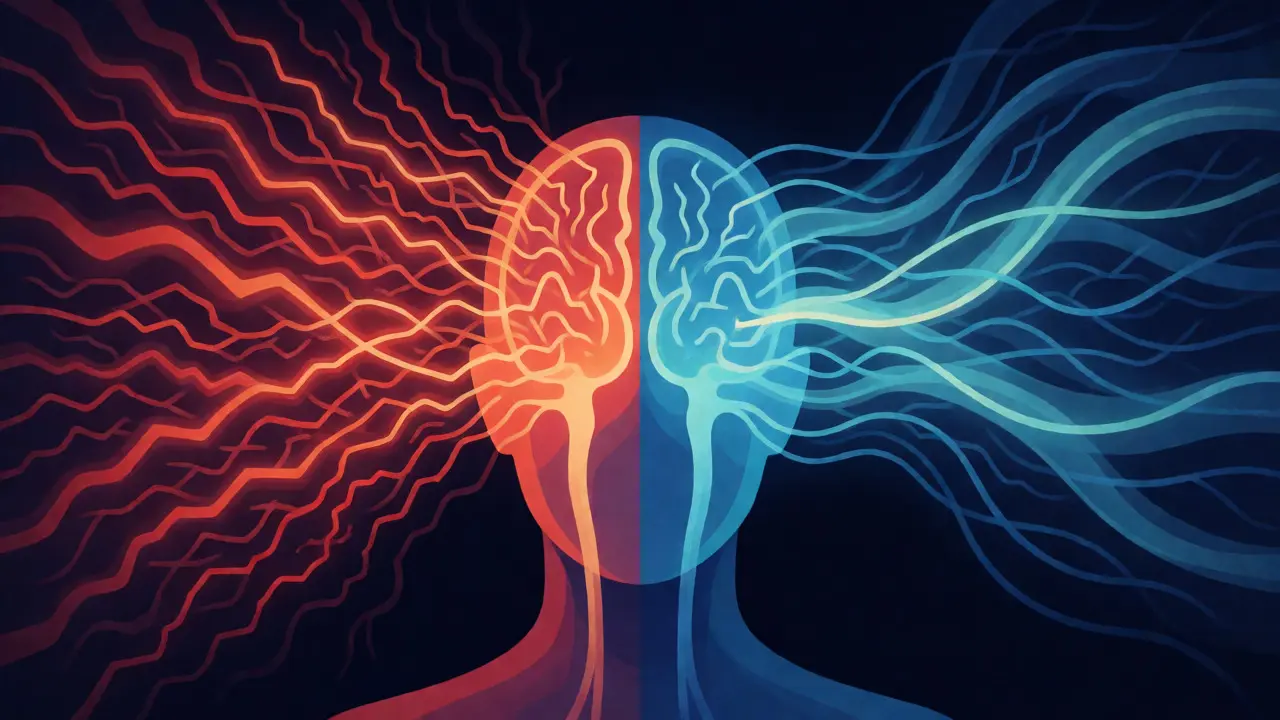
To understand why calmness matters, you have to look at what happens inside your brain when you are stressed versus when you are calm. When you are anxious, your amygdala-the brain's alarm system-takes the wheel. It shuts down access to the prefrontal cortex, the part of your brain responsible for logic, planning, and self-reflection. This is why trying to "think your way out" of stress rarely works. Your thinking brain is literally offline.
Mindfulness requires an active prefrontal cortex. You need to observe your thoughts without judgment, which is impossible if your survival instincts are hijacking your attention. By inducing calmness, you flip the switch from sympathetic (fight-or-flight) to parasympathetic (rest-and-digest) dominance. This shift doesn't just make you feel better; it restores your ability to see clearly. It creates the mental space needed to notice patterns in your behavior, recognize triggers, and choose responses rather than reacting blindly.
Why You Can't Force Mindfulness Without Calmness
A common mistake people make is jumping straight into meditation or journaling when they are already overwhelmed. They sit down, close their eyes, and try to "be mindful," only to find their mind racing faster than before. Why? Because they are asking a high-functioning cognitive skill to operate under low-resource conditions. It’s like trying to do complex math while sprinting. You might get an answer, but it won’t be accurate, and you’ll be exhausted.
Calmness acts as the foundation. Think of it as clearing the static from a radio signal. If there is too much noise, you can't hear the music, no matter how good your receiver is. In this analogy:
- The Noise: Stress hormones like cortisol and adrenaline.
- The Receiver: Your conscious awareness.
- The Music: Insights, intuition, and clear perception.
When you prioritize calming your physiology first, the static drops. Suddenly, mindfulness becomes easier because you aren't fighting against your own biology. You are working with it. This is why techniques like deep breathing or progressive muscle relaxation are so effective-they lower the noise floor, allowing the signal of self-awareness to come through.
Practical Steps to Cultivate Calmness Daily
You don't need an hour of silent retreat to cultivate calmness. You need micro-practices that signal safety to your nervous system. Here are three evidence-backed methods that work quickly:
- The Physiological Sigh: Developed by neuroscientist Andrew Huberman, this involves two quick inhales through the nose followed by one long exhale through the mouth. It physically offloads carbon dioxide and slows the heart rate within seconds. Use this when you feel tension rising.
- Grounding via Sensation: Instead of trying to stop your thoughts, focus entirely on physical sensation. Feel the weight of your feet on the floor or the texture of your shirt. This anchors your attention in the present moment, bypassing the analytical mind.
- Nature Exposure: Studies show that even looking at images of nature can lower blood pressure. In Sydney, a five-minute walk near water or greenery can reset your baseline anxiety levels more effectively than scrolling through social media during a break.
These aren't just "feel-good" tips. They are tools to regulate your autonomic nervous system. Once regulated, you are ready for deeper work.
From Calmness to Self-Awareness: The Bridge
Once you have established a baseline of calmness, you can begin the real work: self-awareness. This is where mindfulness moves from a relaxation technique to a tool for personal growth. Self-awareness is the ability to recognize your emotions, strengths, weaknesses, and values. But true self-awareness isn't just knowing facts about yourself; it's noticing them in real-time.
Consider the difference between these two scenarios:
| Scenario | Reactive Mode (Low Calmness) | Aware Mode (High Calmness) |
|---|---|---|
| Received critical feedback at work | Feel defensive, justify actions, blame others. | Notice the sting of ego, pause, ask clarifying questions. |
| Partner forgets an anniversary | Assume lack of care, escalate argument immediately. | Recognize hurt feelings, separate fact from story, communicate needs. |
| Stuck in traffic | Rage, honk, check phone repeatedly. | Accept delay, listen to podcast, use time for reflection. |
In the aware mode, you aren't suppressing your emotions. You are observing them. This gap between stimulus and response is where freedom lives. As Viktor Frankl famously noted, "Between stimulus and response there is a space. In that space is our power to choose our response." Calmness widens that space.

Pitfalls to Avoid on the Path to Mindfulness
While the journey seems straightforward, there are traps. The biggest one is "spiritual bypassing." This happens when you use calmness or mindfulness to avoid dealing with difficult emotions. You meditate to escape your problems rather than to face them. If you feel calm but still ignore underlying issues, you're building a house on sand.
Another pitfall is perfectionism. People often think they must be calm 100% of the time. That's unrealistic and counterproductive. Emotions are data. Anger tells you a boundary was crossed. Sadness tells you something valuable was lost. The goal isn't to eliminate emotion; it's to prevent emotion from driving the car. Aim for resilience, not rigidity. A resilient person gets stressed, notices it, calms down, and then addresses the issue. That cycle is far more valuable than a constant, artificial state of zen.
Building a Sustainable Practice
How do you make this stick? Start small. Consistency beats intensity. Five minutes of intentional calmness-building each day will yield better results than one hour once a week. Tie your practice to existing habits. Do the physiological sigh every time you wait for an elevator. Practice grounding while brushing your teeth.
Also, track your progress. Keep a simple journal. Note moments when you reacted impulsively versus moments when you paused. Over time, you'll see patterns. Maybe you're more reactive when hungry or tired. This is self-awareness in action. It informs your future choices, helping you adjust your environment to support your calmness.
Remember, this is a skill, not a trait. No one is born perfectly mindful. It is built through repetition. Each time you choose calm over chaos, you strengthen the neural pathways associated with self-regulation. You are literally rewiring your brain for clarity and compassion.
Is calmness the same as being passive?
No, calmness is not passivity. Passivity means doing nothing despite having agency. Calmness is a state of high alertness and control. A calm person can act decisively and assertively because they are not driven by fear or anger. In fact, calmness often leads to more effective action because decisions are made with a clear head rather than reactive impulse.
Can I practice mindfulness if I have ADHD or anxiety?
Yes, but the approach may need adjustment. Traditional seated meditation can be challenging for those with high anxiety or ADHD. Focus on movement-based mindfulness practices, such as walking meditation or yoga, which allow energy to move through the body. Additionally, shorter, more frequent sessions (e.g., 2-3 minutes) are often more sustainable than long, infrequent ones. The key is to start with calming the body first, as discussed, to reduce the initial barrier to entry.
How long does it take to see benefits from cultivating calmness?
Physiological changes can happen in seconds with techniques like the physiological sigh. However, structural changes in the brain, such as increased gray matter density in areas related to self-awareness, typically require consistent practice over several weeks to months. Most studies suggest noticeable improvements in stress resilience and emotional regulation after eight weeks of regular mindfulness and calming practices.
What is the difference between mindfulness and self-awareness?
Mindfulness is the process of paying attention to the present moment without judgment. Self-awareness is the knowledge gained from that attention. You use mindfulness as a tool to observe your internal state, and self-awareness is the resulting understanding of who you are, how you react, and what you value. Mindfulness is the method; self-awareness is the outcome.
Does technology help or hinder calmness?
Technology is a double-edged sword. Apps like Headspace or Calm can provide guided structure for beginners, making it easier to establish a routine. However, constant connectivity and notification overload are major contributors to chronic stress. To benefit from technology, use it intentionally for specific practices, then put the device away. Passive consumption of content often hinders calmness, while active engagement with digital tools can support it.