Gut Inflammation Risk Calculator
How Your Habits Affect Inflammation
Based on science from the University of California and European Society of Gastroenterology studies, this calculator estimates your gut inflammation risk based on key factors.
Ever feel bloated, tired, or achy for no clear reason? You might blame stress, lack of sleep, or aging-but what if the real culprit is hiding in your gut? The link between gut health and inflammation isn’t just buzzword territory. It’s backed by solid science, and it’s changing how doctors and nutritionists think about chronic pain, fatigue, and even autoimmune conditions.
What does gut health actually mean?
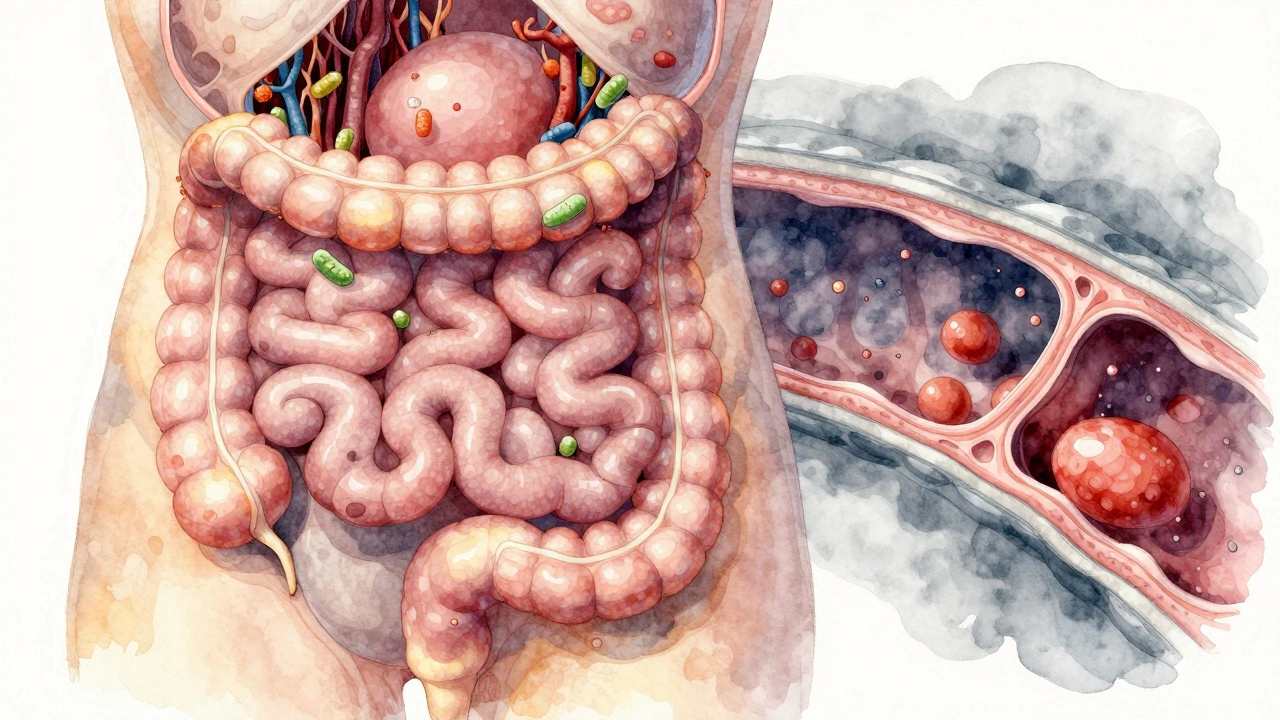
Your gut isn’t just a tube that digests food. It’s home to trillions of bacteria, viruses, and fungi-collectively called the gut microbiome. These tiny organisms help break down food, make vitamins, train your immune system, and even send signals to your brain. When they’re in balance, your body runs smoothly. When they’re out of whack, trouble starts.
That imbalance? It’s called dysbiosis. And it’s linked to higher levels of inflammation. Think of your gut lining like a fence. Healthy gut bacteria keep the fence strong and tight. But when bad bacteria take over, the fence gets leaky. That’s called leaky gut syndrome. Tiny particles from undigested food, toxins, and bacteria slip through the gaps into your bloodstream. Your immune system sees them as invaders and sends out inflammatory chemicals to fight them off. Over time, this low-grade, constant inflammation shows up as joint pain, skin rashes, brain fog, or even depression.
How inflammation starts in the gut
Inflammation isn’t always bad. It’s your body’s way of healing. A cut gets red and swollen? That’s inflammation doing its job. But when it sticks around too long-like when your gut is constantly leaking-it becomes a problem.
Studies from the University of California and the European Society of Gastroenterology show that people with chronic inflammatory conditions like rheumatoid arthritis, Crohn’s disease, and even type 2 diabetes often have different gut bacteria than healthy people. One 2023 study tracking 1,200 adults found that those with the lowest microbial diversity in their gut had 47% higher levels of C-reactive protein (CRP), a key marker of systemic inflammation.
It’s not just about bad bacteria, though. It’s also about what you’re not feeding the good ones. Fiber is their favorite food. When you eat refined carbs, sugar, and processed oils, you’re starving the good bugs and feeding the bad ones. That shifts the whole ecosystem toward inflammation.
What foods actually help reduce inflammation?
You don’t need fancy supplements or expensive probiotics to fix this. Real food works better-and it’s cheaper.
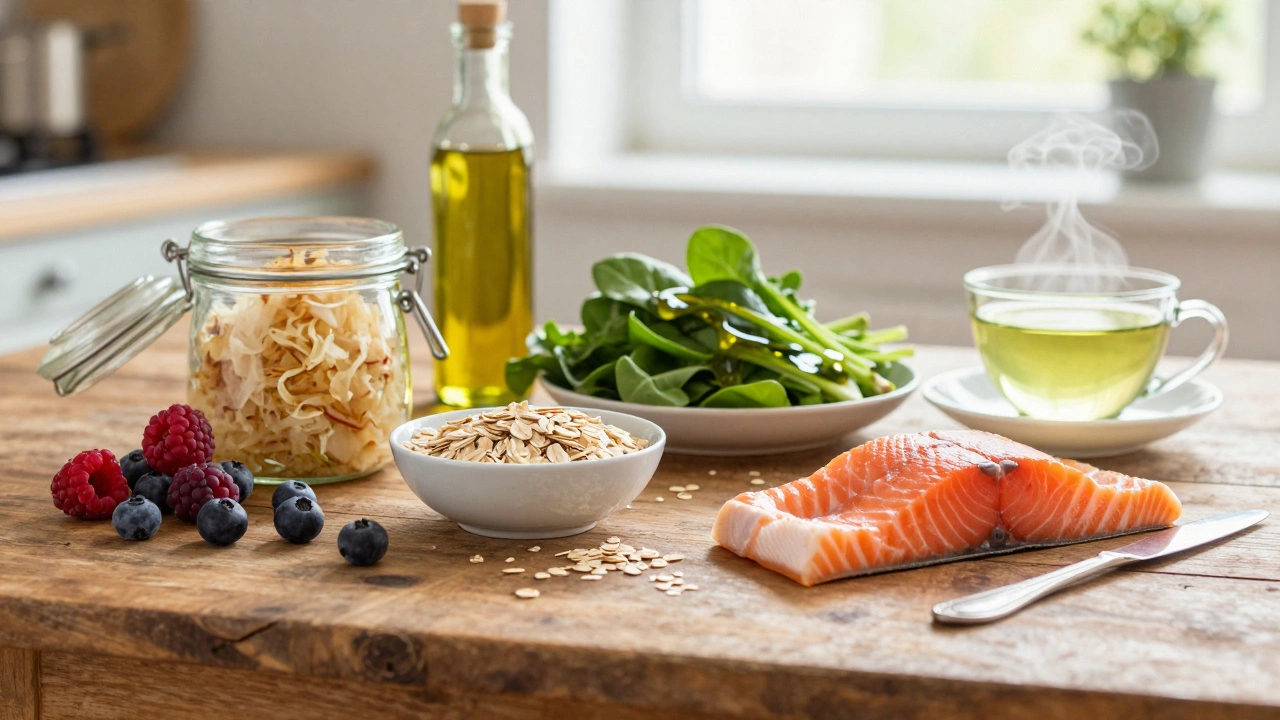
- Fermented foods: Sauerkraut, kimchi, kefir, and plain yogurt (unsweetened) add live cultures that help crowd out bad bacteria. A 2024 study in Nutrients showed that people who ate fermented foods daily for 6 weeks had lower levels of 4 inflammation markers.
- High-fiber plants: Beans, lentils, oats, broccoli, berries, and apples feed good bacteria. Aim for 30g of fiber a day. Most people get less than half that.
- Fatty fish: Salmon, sardines, and mackerel are rich in omega-3s, which directly reduce inflammatory cytokines. Just two servings a week can make a measurable difference.
- Extra virgin olive oil: It’s not just a healthy fat-it contains oleocanthal, a compound with similar anti-inflammatory power to ibuprofen.
- Green tea: Its antioxidant EGCG helps calm the gut lining and reduce oxidative stress.
On the flip side, cut back on sugar, artificial sweeteners, fried foods, and ultra-processed snacks. Even gluten and dairy can trigger inflammation in sensitive people-not because they’re evil, but because they irritate a damaged gut lining.
It’s not just about what you eat
Stress is a silent gut killer. When you’re under pressure, your body releases cortisol, which slows digestion and weakens the gut barrier. That’s why people often get stomach bugs or IBS flare-ups during exams, job stress, or family conflicts.
Sleep matters too. A 2023 study in the Journal of Clinical Sleep Medicine found that people who slept less than 6 hours a night had significantly less diverse gut bacteria and higher inflammation markers-even when their diet was the same as people who slept 7-8 hours.
And movement? Walking 30 minutes a day boosts microbial diversity. You don’t need to run marathons. Just get moving.
What does improvement look like?
People who fix their gut don’t just feel better-they notice real changes. One woman in Perth, 52, had constant knee pain and bloating for years. After switching to a high-fiber, low-sugar diet and adding daily fermented foods, her joint pain dropped by 60% in 10 weeks. Her CRP levels fell from 8.2 to 3.1 mg/L. She didn’t take a single pill.
Another man, 45, struggled with brain fog and fatigue. He cut out sugary coffee drinks and started eating sauerkraut with lunch. Within six weeks, his mental clarity improved. His doctor noticed his triglycerides dropped and his fasting insulin improved-both signs of less inflammation.
These aren’t outliers. They’re repeatable results.

How long does it take to see results?
Some people feel less bloating in 3-5 days. But lowering systemic inflammation takes time. Most studies show measurable drops in CRP and other markers after 6-8 weeks of consistent change. That’s why most people give up too soon. They expect overnight results, but gut healing is like fixing a leaky roof-you don’t see the rain stop until the whole structure is repaired.
Stick with it for at least two months. Track how you feel: energy levels, digestion, skin clarity, joint stiffness, mood. Those are better indicators than any lab test.
When to see a professional
If you’ve tried dietary changes for 8-12 weeks and still feel awful, it’s time to dig deeper. Chronic inflammation can be tied to small intestinal bacterial overgrowth (SIBO), food intolerances, or even hidden infections like H. pylori. A gut health specialist can run stool tests, breath tests, or food sensitivity panels to find the root cause.
Don’t self-diagnose with elimination diets long-term. Cutting out too many foods without guidance can make your microbiome even less diverse. Work with a registered dietitian who understands gut science.
The big picture
Gut health isn’t a quick fix. It’s a lifestyle. But the payoff is huge: less pain, better sleep, clearer skin, more energy, and a lower risk of chronic disease. You’re not just fixing your digestion-you’re calming your whole body.
The next time you feel tired, achy, or foggy, ask yourself: Is this in my head-or in my gut? The answer might surprise you.
Can probiotic supplements reduce inflammation?
Some probiotics can help, but not all. Strains like Lactobacillus rhamnosus GG and Bifidobacterium infantis have been shown in clinical trials to lower inflammation markers in people with IBS and metabolic syndrome. But supplements aren’t magic pills. They work best when paired with a fiber-rich diet. If you’re eating junk food, a probiotic won’t save you.
Is there a test for gut inflammation?
Yes. Blood tests for C-reactive protein (CRP) and erythrocyte sedimentation rate (ESR) measure systemic inflammation. Stool tests can check for gut-specific markers like calprotectin, which signals intestinal inflammation. Some advanced tests also analyze your microbiome composition. These aren’t always covered by insurance, but they’re useful if you’re stuck with unexplained symptoms.
Does alcohol affect gut inflammation?
Yes, even moderate drinking can damage your gut lining and increase inflammation. Alcohol kills good bacteria and lets harmful ones thrive. It also increases gut permeability, making leaky gut worse. If you’re trying to reduce inflammation, cutting back or eliminating alcohol for 4-6 weeks can make a big difference.
Can stress alone cause gut inflammation?
Stress doesn’t directly cause inflammation, but it weakens your gut barrier and changes your microbiome. Chronic stress lowers beneficial bacteria and increases gut permeability. That lets inflammatory molecules enter your bloodstream. So while stress isn’t the only cause, it’s a major driver-and often the missing piece in people who eat well but still feel unwell.
What’s the fastest way to reduce gut inflammation?
Start with three things: cut out sugar and processed foods, eat 2-3 servings of fermented foods weekly, and get 30 minutes of walking daily. That’s it. Most people see improvements in digestion and energy within 10 days. For full anti-inflammatory effects, stick with it for at least 8 weeks.