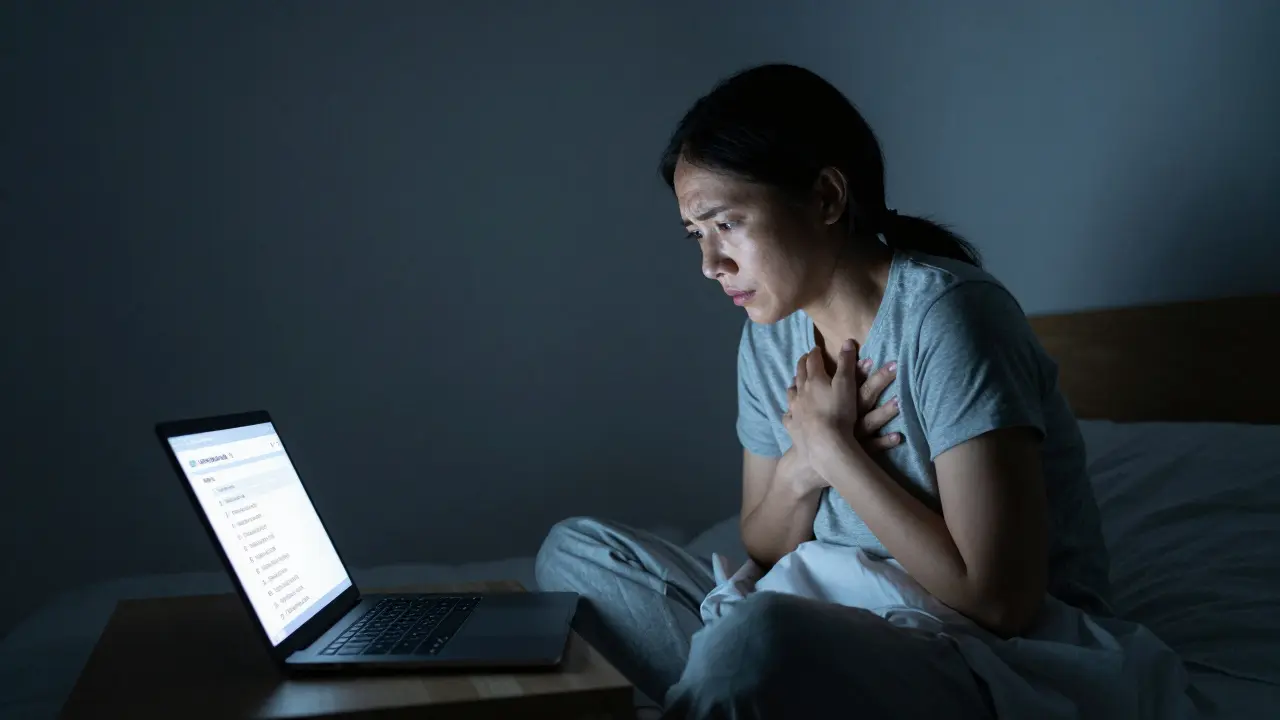
Every time you feel a headache, your mind races: Is it a brain tumor? A sore throat? Could that be cancer? You check your body five times a day. You scroll through medical sites until your eyes burn. You’ve called your doctor three times this month-each time, they say you’re fine. But you don’t believe them. You can’t shake it. This isn’t just being cautious. This is health anxiety, and it’s exhausting you.
What Health Anxiety Really Feels Like
Health anxiety isn’t just worrying about getting sick. It’s when your brain turns every normal sensation into a warning sign. A flutter in your chest? Heart disease. A tingling finger? MS. A cough? Lung cancer. You don’t just notice these things-you obsess over them. You research symptoms late at night. You avoid hospitals because you’re scared of catching something. Or you go constantly, needing reassurance that you’re not dying.
Studies from the American Psychological Association show that up to 5% of adults experience health anxiety severe enough to disrupt daily life. Many of them have had normal test results-multiple times. But the fear doesn’t fade because it’s not about the body. It’s about the mind’s inability to tolerate uncertainty.
Why Your Brain Keeps Screaming "Danger!"
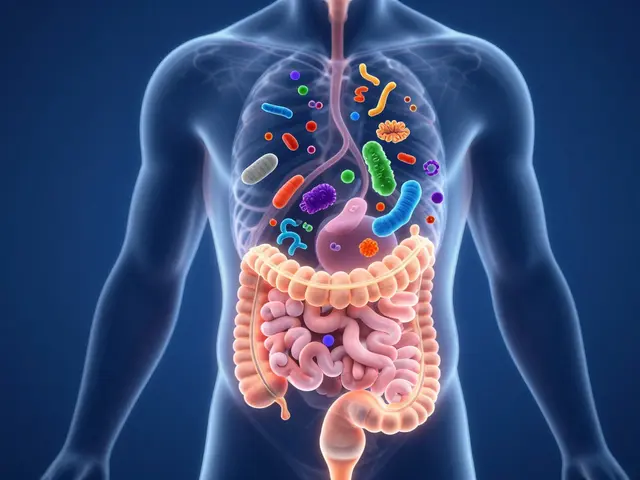
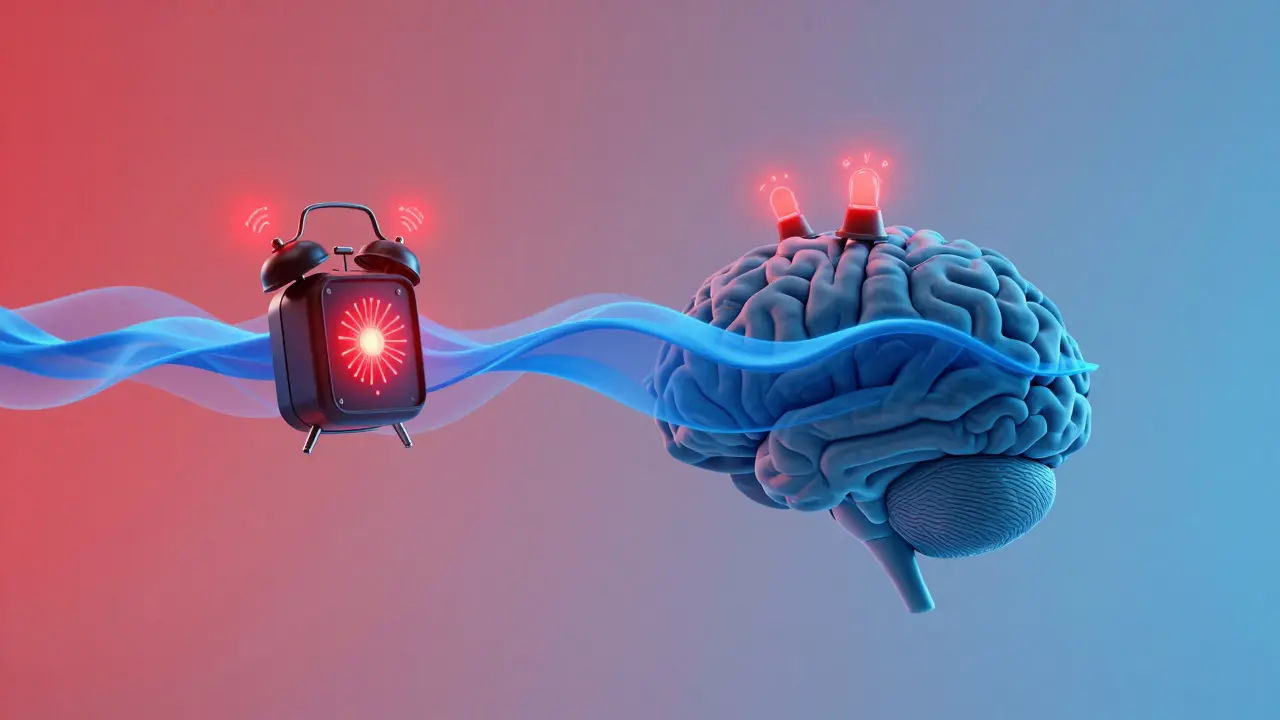
Your brain is wired to protect you. Back when humans lived in caves, noticing a strange ache could mean a snake bite or infection. Survival depended on paying attention. Today, that same system misfires. A stress-induced muscle twitch? Your brain labels it a stroke. A dry throat from breathing through your mouth? It’s throat cancer.
This isn’t irrational thinking-it’s overactive threat detection. People with health anxiety have heightened sensitivity to bodily sensations. A 2023 study in Psychological Medicine found that those with health anxiety process physical signals differently. Their brains amplify normal signals and ignore calming feedback from doctors. It’s like your body’s alarm system is stuck on max volume.
How Health Anxiety Feels Different From Real Illness
It’s easy to confuse health anxiety with real medical issues. But there are clues:
- Real illness usually comes with clear, progressive symptoms that don’t vanish with reassurance. A fever stays. A rash spreads. A cough worsens.
- Health anxiety brings sudden, shifting symptoms that disappear after a doctor’s visit-only to return hours later with a new twist. One day it’s your heart, the next your nerves, then your lungs. The symptoms change because they’re fueled by fear, not disease.
- People with real illness often feel relief when treated. People with health anxiety feel temporary relief, then panic again when a new symptom pops up.
One woman I spoke with in Adelaide checked her pulse 40 times a day after reading about arrhythmia online. Her doctor ran ECGs, blood tests, even a CT scan. All normal. She still couldn’t sleep. She wasn’t lying. She truly felt her heart racing. But the cause wasn’t her heart-it was her anxiety.
What Makes It Worse (And How to Stop It)
There are five habits that feed health anxiety-and each one makes it stronger.
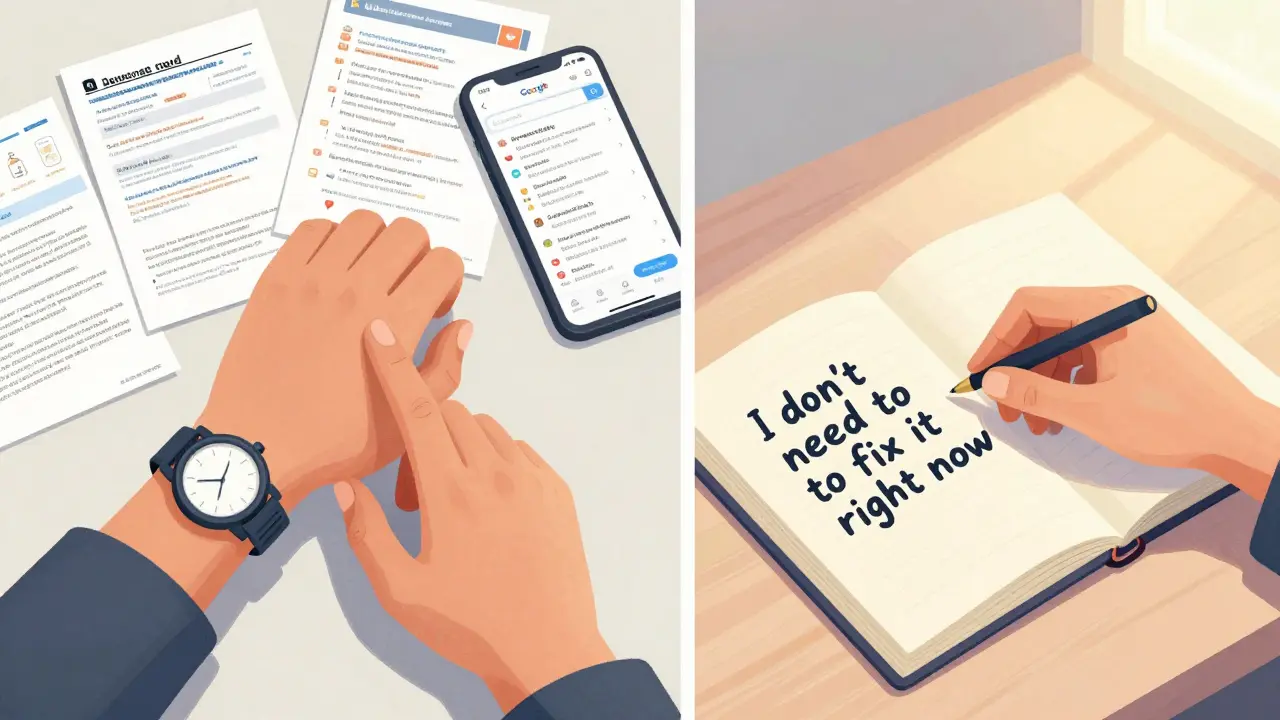
- Google symptom checking - Searching "chest pain and cancer" doesn’t give answers. It gives fear. Every click reinforces the idea that something is wrong.
- Body checking - Running your hands over your neck for lumps, staring at your skin for rashes, timing your heartbeat. These rituals give a false sense of control.
- Seeking reassurance - Asking friends, calling doctors, reading forums. Each time you ask, you get a short calm-but then the doubt returns, stronger.
- Avoiding triggers - Skipping gyms because you fear heart attacks, avoiding hospitals because you fear germs. Avoidance tells your brain: "This is dangerous."
- Waiting for certainty - "I’ll stop worrying when I get a clean scan." But there’s no scan that proves you’ll never get sick. Life doesn’t work that way.
Breaking these habits isn’t about being strong. It’s about rewiring your brain.
How to Fight Health Anxiety-Step by Step
Recovery isn’t about eliminating fear. It’s about learning to live with it without letting it control you.
1. Delay the Google Search
When a symptom hits, set a 30-minute timer. Do something else-walk, call a friend, cook. After 30 minutes, ask: "Did the symptom change? Did I feel worse? Or did I just feel more afraid?" Most times, the fear grows louder than the symptom. You’ll start noticing the pattern.
2. Stop Body Checking
Put your hands in your pockets. Leave your phone in another room. Don’t look in the mirror for five minutes. At first, it feels unbearable. That’s the point. Your brain will scream: "What if I miss something?" Let it scream. You’re not ignoring your body-you’re learning it’s safe to not monitor it constantly.
3. Reduce Reassurance Seeking
Write down your worries. Then, instead of calling your doctor, write: "I feel anxious about this. I don’t need to fix it right now." Keep a log. After a week, look back. You’ll see that most fears faded on their own.
4. Face Your Fears (Slowly)
Start small. Watch a video about a common illness. Read a medical article without checking your body. Go to a pharmacy and look at over-the-counter meds. These aren’t tests. They’re exposures. Each one tells your brain: "This isn’t dangerous."
5. Accept Uncertainty
You can’t guarantee you’ll never get sick. No one can. Health isn’t about being 100% safe. It’s about being well enough to live. The goal isn’t to stop worrying. It’s to stop letting worry steal your life.
When to Seek Professional Help
Self-help works for many-but not everyone. If you’ve tried these steps for 4-6 weeks and still can’t sleep, work, or leave the house, it’s time to see a therapist trained in Cognitive Behavioral Therapy (CBT). CBT for health anxiety targets the core issue: the belief that physical sensations mean danger.
One Australian study from 2024 showed that 78% of people with health anxiety who completed 12 sessions of CBT saw their symptoms drop by over 60%. They didn’t become fearless. They became free.
Medication like SSRIs can help too, especially if anxiety is tied to depression. But therapy is the long-term fix. Pills calm the noise. Therapy teaches you how to live without needing silence.
What Recovery Looks Like
Recovery isn’t about never feeling anxious again. It’s about noticing the thought-"What if this is cancer?"-and letting it pass like a cloud. It’s about going to the movies without checking your pulse. It’s about sleeping through the night.
One man I know stopped checking his blood pressure after 12 years of doing it daily. He still felt nervous. But now, he says, "I don’t let it decide what I do." That’s the shift.
You don’t need to be cured. You just need to stop letting fear run the show.
Is health anxiety the same as hypochondria?
Yes, health anxiety is the modern term for what was once called hypochondria. The name changed to reduce stigma and better reflect the psychological nature of the condition. It’s not about being "crazy"-it’s about a brain that misreads normal bodily signals as threats.
Can health anxiety cause real physical symptoms?
Absolutely. Anxiety doesn’t just live in your head. It triggers real physical responses: muscle tension, rapid heartbeat, dizziness, stomach upset, numbness. These aren’t fake. They’re caused by your nervous system being stuck in fight-or-flight mode. The symptoms are real-but they’re not signs of disease.
How long does it take to get better from health anxiety?
It varies. Some people notice improvement in 3-4 weeks with consistent self-help. Others need 3-6 months of therapy. Progress isn’t linear. Some days feel worse. That’s normal. The key is sticking with the tools, even when it’s hard. Most people who stick with CBT see lasting results within six months.
Should I avoid medical tests if I have health anxiety?
No. If you have new, unexplained symptoms that last more than a few weeks-or if you’re unsure-it’s still important to see a doctor. The difference is not going because you’re terrified, but because you’re being responsible. Once you have a clean bill of health, the goal is to stop repeating tests unless new symptoms arise.
Can health anxiety go away on its own?
Sometimes, yes-especially if stress levels drop or life circumstances change. But without learning new ways to respond to fear, it often comes back stronger. The tools in this article aren’t just for symptom relief-they’re for rewiring your brain. That’s what leads to lasting change.
What Comes Next
If you’re reading this and nodding along, you’re already on the path. You didn’t just click away. You stayed. That takes courage.
Start with one small step today. Delay your next Google search. Don’t check your pulse for an hour. Write down one fear and leave it on the page. Don’t fix it. Just let it be there.
Recovery isn’t about becoming someone else. It’s about coming back to yourself-before fear took over.