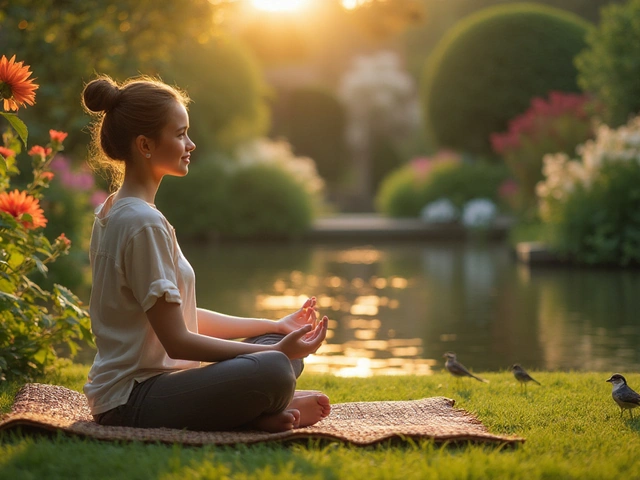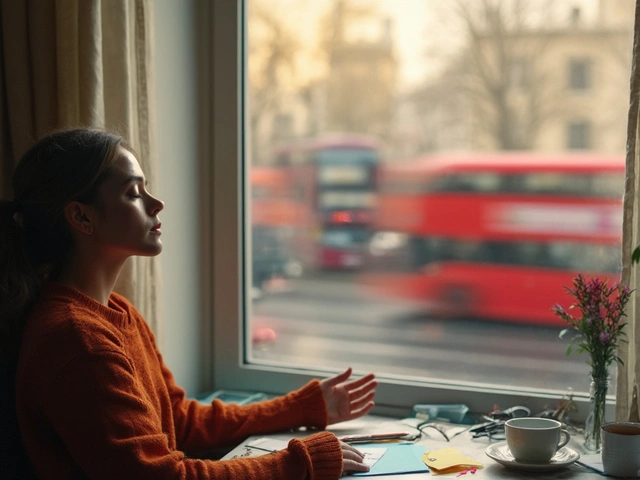
You can eat the cleanest diet on the planet and hit the gym five days a week, but if your body is stuck in a state of high-alert survival mode, you will never feel truly healthy. This is the paradox of modern wellness: we obsess over adding more-more movement, more supplements, more productivity hacks-while ignoring the biological necessity of slowing down. Relaxation techniques are structured practices designed to activate the parasympathetic nervous system and reduce physiological stress markers. They are not just about feeling "chill"; they are the mechanical brake pedal for your biology.
Think of your body like a car engine. You can have premium fuel (nutrition) and a well-tuned motor (fitness), but if you leave the handbrake on while driving, the transmission burns out. Relaxation is that handbrake release. Without it, cortisol levels remain elevated, sleep quality plummets, and inflammation creeps into every cell. If your current routine feels incomplete or exhausting, this missing piece is likely why you aren't seeing the results you want.
Understanding the Biology of Stress and Recovery
To understand why relaxation works, you have to look at the hardware running your life: the autonomic nervous system. It has two main modes. The first is the sympathetic nervous system, often called the "fight or flight" response. This is what kicks in when a bear chases you or when you realize you missed a major deadline. Your heart rate spikes, your breath shallows, and your muscles tense up. In the wild, this keeps you alive. In a modern office job, it keeps you anxious, bloated, and unable to focus.
The second mode is the parasympathetic nervous system, known as "rest and digest." This is where healing happens. Here, digestion improves, heart rate lowers, and the brain processes emotions. Most people spend 80% of their day in sympathetic dominance and only 20% in parasympathetic recovery. Relaxation techniques are tools that manually force the switch from one to the other. You cannot think your way into calm; you must physically signal safety to your brain through these methods.
Top Evidence-Based Relaxation Methods
Not all relaxation is created equal. Scrolling through social media might feel like downtime, but it often keeps the brain in a state of low-grade stimulation. True relaxation requires active engagement with your physiology. Here are three highly effective techniques backed by clinical research.
| Technique | Primary Mechanism | Time Required | Best For |
|---|---|---|---|
| Diaphragmatic Breathing | Stimulates the vagus nerve via slow exhalation | 5-10 minutes | Immediate anxiety reduction, pre-sleep |
| Progressive Muscle Relaxation (PMR) | Reduces physical tension by contrasting contraction and release | 10-15 minutes | Chronic pain, insomnia, physical tightness |
| Mindfulness Meditation | Decouples stimulus from reaction; reduces amygdala activity | 10-20 minutes | Long-term stress resilience, emotional regulation |
Diaphragmatic Breathing
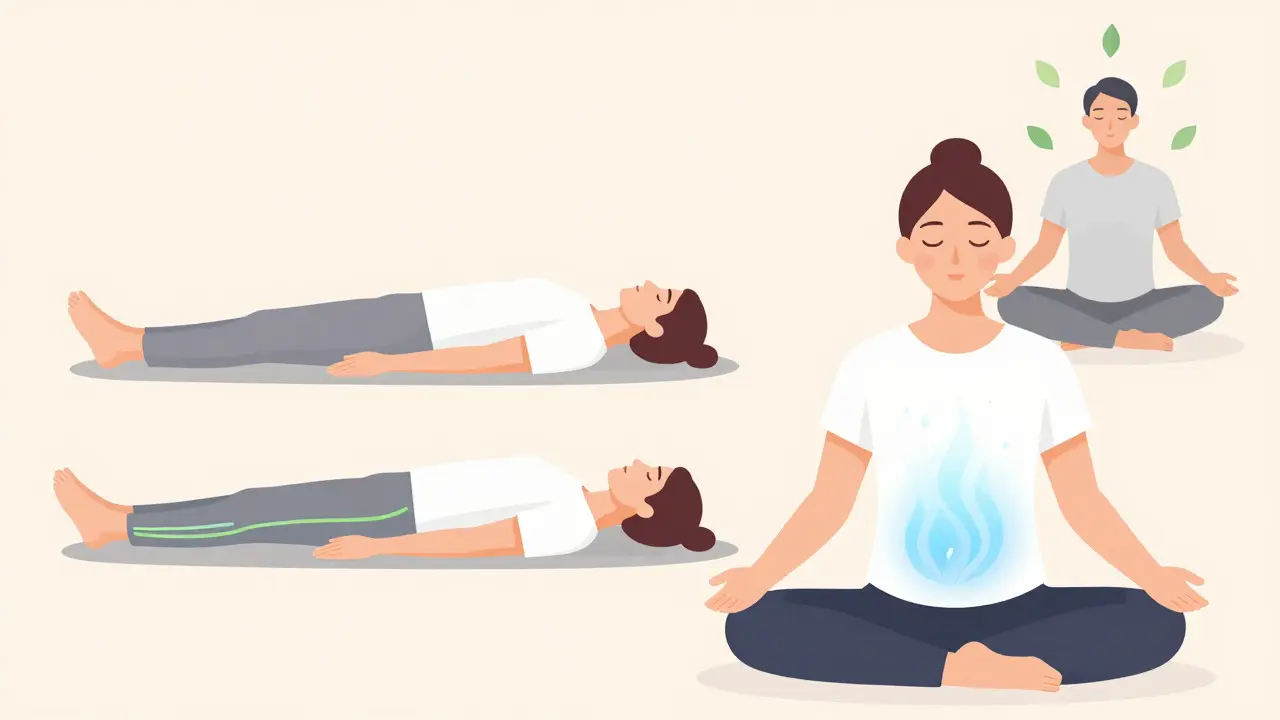
This is the fastest hack available to you. When you breathe shallowly into your chest, your body interprets this as danger. When you breathe deeply into your belly, you trigger the vagus nerve, which tells your heart to slow down. To do this correctly, place one hand on your chest and one on your stomach. Inhale through your nose for four seconds, ensuring only the stomach hand rises. Exhale through pursed lips for six seconds. The longer exhale is key-it signals safety to the brain. Do this for five minutes before a meeting or right after work to reset your baseline.
Progressive Muscle Relaxation (PMR)
Many people carry stress in their shoulders, jaw, and lower back without realizing it. PMR addresses this directly. You systematically tense a muscle group for five seconds, then release it completely for ten seconds, noticing the difference between tension and relaxation. Start at your toes and work up to your head. Squeeze your fists, clench your abs, shrug your shoulders to your ears. Then let go. This technique is particularly powerful for those who suffer from tension headaches or insomnia because it physically exhausts the urge to hold onto stress.
Mindfulness Meditation
Unlike breathing or PMR, which are physical interventions, mindfulness is cognitive. It involves observing your thoughts without judgment. Imagine sitting by a river, watching leaves float by. Each leaf is a thought. Instead of jumping into the river and drowning in the thought, you just watch it pass. Studies using fMRI scans show that consistent mindfulness practice actually shrinks the amygdala, the brain's fear center, and thickens the prefrontal cortex, responsible for decision-making. It’s not about emptying your mind; it’s about changing your relationship with your mind.
Integrating Relaxation Into a Busy Schedule
The biggest barrier to relaxation is the belief that it requires large blocks of free time. This is false. You can integrate micro-doses of relaxation throughout the day to prevent stress accumulation. This approach is often more effective than one long session once a week.
- The Morning Anchor: Spend two minutes doing diaphragmatic breathing before checking your phone. This sets a parasympathetic tone for the day rather than starting in reactive mode.
- The Commute Reset: If you drive, use the red lights to drop your shoulders away from your ears. If you take public transit, close your eyes and focus solely on the sensation of your feet on the floor.
- The Lunch Break Boundary: Step away from your screen for ten minutes. Walk outside without headphones. Let your eyes soften and look at distant objects. This visual rest reduces mental fatigue.
- The Evening Wind-Down: Perform a quick scan of your body. Where are you holding tension? Release your jaw. Unclench your teeth. This prepares the body for sleep architecture.
Common Pitfalls and How to Avoid Them
Even with the best intentions, people often sabotage their relaxation efforts. Recognizing these traps can help you stay consistent.
Trying to "Force" Calm: Many beginners treat relaxation like a performance goal. They sit down to meditate and get frustrated when their mind wanders. This frustration creates more stress. The goal is not to stop thinking; the goal is to notice when you are thinking and gently return to the present moment. Every time you notice your mind wandering, you are doing a rep for your brain. That is success.
Ignoring Physical Cues: You cannot relax a body that is screaming for movement or stillness. If you are restless, try gentle yoga or stretching before attempting meditation. If you are exhausted, try passive listening to calming music instead of active breathing exercises. Listen to your body’s immediate needs.
Inconsistency: Doing a twenty-minute meditation once a month does nothing. Doing two minutes every day rewires your brain. Consistency trumps duration. Build the habit so small that it feels impossible to fail.

Advanced Strategies for Deep Restoration
Once you have mastered the basics, you can layer in more advanced techniques for deeper restoration. These are useful during periods of high burnout or trauma recovery.
Sensory Deprivation: Floating tanks or simple eye masks and noise-canceling headphones can remove external stimuli, allowing the brain to enter theta wave states associated with deep creativity and relaxation. This is particularly helpful for overstimulated minds.
Guided Imagery: This involves creating a detailed mental scene of a peaceful place. Engage all five senses. What does the air smell like? What is the temperature? This distracts the conscious mind and allows the subconscious to relax. It is widely used in clinical settings to manage pain and anxiety.
Heart Rate Variability (HRV) Biofeedback: Using apps or devices that measure HRV, you can learn to synchronize your breathing with your heart rhythm. Coherent breathing, typically around six breaths per minute, maximizes HRV, which is a strong marker of overall health and resilience.
Building a Sustainable Wellness Ecosystem
Relaxation is not a standalone fix; it is part of an ecosystem. It works synergistically with sleep, nutrition, and social connection. When you relax, you improve gut health, which affects mood. When you reduce stress, you make better food choices. When you are calm, you connect more deeply with loved ones, which further buffers against stress.
Treat your relaxation practice with the same respect you give your career or your fitness goals. Schedule it. Protect it. And remember, the goal is not perfection. The goal is presence. By integrating these techniques, you are not just adding a puzzle piece to your routine; you are building a foundation for a life that feels manageable, meaningful, and genuinely yours.
How long does it take for relaxation techniques to work?
Physiological effects, such as lowered heart rate and blood pressure, can occur within minutes of practicing deep breathing or progressive muscle relaxation. However, long-term changes in brain structure and stress resilience typically require consistent daily practice over several weeks to months.
Can relaxation techniques help with chronic pain?
Yes. Chronic pain is often exacerbated by muscle tension and heightened nervous system sensitivity. Techniques like Progressive Muscle Relaxation (PMR) and mindfulness meditation can reduce muscle guarding and change how the brain perceives pain signals, leading to significant relief for many individuals.
Is meditation the same as relaxation?
Not exactly. While meditation often leads to relaxation, its primary goal is awareness and attention training. Relaxation techniques specifically aim to reduce physiological arousal. You can be relaxed without meditating, and you can meditate without feeling immediately relaxed, especially in the beginning.
What is the best time of day to practice relaxation techniques?
The best time is whenever you can consistently do it. However, morning practice helps set a calm tone for the day, while evening practice aids in sleep onset. Many experts recommend splitting practice: a short breathing exercise in the morning and a longer session like PMR or meditation before bed.
Do I need special equipment to start relaxing?
No. The most effective techniques, such as diaphragmatic breathing and progressive muscle relaxation, require no equipment. You simply need a quiet space and a few minutes of your time. Apps can guide you, but they are optional, not mandatory.