Cycling Recovery: How to Recover Faster and Ride Stronger
When you push your legs hard on the bike, your muscles don’t repair themselves by accident—they need cycling recovery, the intentional process of restoring energy, reducing inflammation, and repairing muscle tissue after intense rides. Also known as post-exercise recovery, it’s what separates riders who keep improving from those who burn out or get stuck in pain. Skipping recovery doesn’t make you tougher—it makes you slower, more prone to injury, and less consistent.
Good cycling recovery, the intentional process of restoring energy, reducing inflammation, and repairing muscle tissue after intense rides. Also known as post-exercise recovery, it’s what separates riders who keep improving from those who burn out or get stuck in pain. Skipping recovery doesn’t make you tougher—it makes you slower, more prone to injury, and less consistent.
Good muscle recovery, the biological process of repairing damaged muscle fibers and restoring strength after physical stress doesn’t mean lying on the couch all day. It means moving gently, hydrating well, eating the right nutrients, and giving your body signals to heal. sports massage, a targeted therapy that improves circulation, breaks down scar tissue, and reduces muscle tightness after training is one of the most effective tools—especially if you ride hard or long. Studies show riders who get regular massage recover 20-30% faster than those who don’t. And you don’t need a pro session every time: foam rolling, stretching, or even a warm bath can trigger similar benefits if done consistently.
Recovery also ties directly to what you eat and how you sleep. After a long ride, your body needs protein to rebuild muscle and carbs to refill glycogen stores. Skipping meals or drinking alcohol right after cycling delays healing. Same with sleep—deep rest is when your body releases growth hormone, the key player in muscle repair. If you’re riding hard but still feeling tired two days later, it’s not just fatigue. It’s a sign your recovery routine is broken.
Active recovery isn’t just for pros. Whether you ride 20 miles on weekends or train for century rides, your body responds the same way. The difference? Pros plan it. They don’t wait until they’re sore to start fixing it. They build recovery into their weekly rhythm—like brushing their teeth. That’s what you need too.
Below, you’ll find real advice from riders and experts who’ve been there: how to use massage, what to eat after a ride, why stretching matters more than you think, and how to tell if you’re pushing too hard. No fluff. No gimmicks. Just what works.
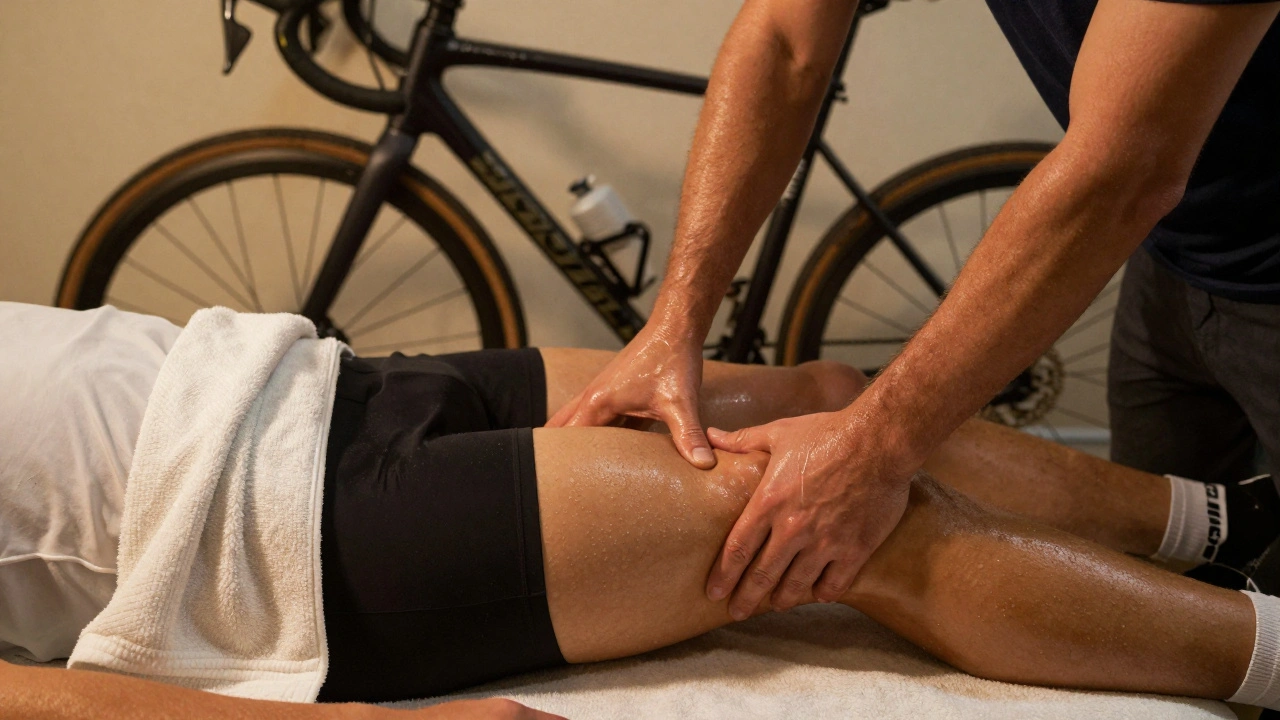
Unlocking the Benefits of Sports Massage for Cyclists
Sports massage helps cyclists recover faster, reduce muscle tightness, and prevent injuries. Learn how targeted therapy improves performance, when to schedule sessions, and how to find the right therapist.
Read More