Sports Massage Frequency Calculator
Recommended Frequency
Every cyclist knows the ache after a long ride-tight quads, sore lower back, heavy calves that feel like they’ve been wrapped in concrete. You stretch, you foam roll, you ice down. But what if there’s a faster, deeper way to reset your body? Sports massage isn’t just for pro racers. It’s a practical, science-backed tool that can turn recovery from a chore into a real advantage.
Why Cyclists Need More Than Just Stretching
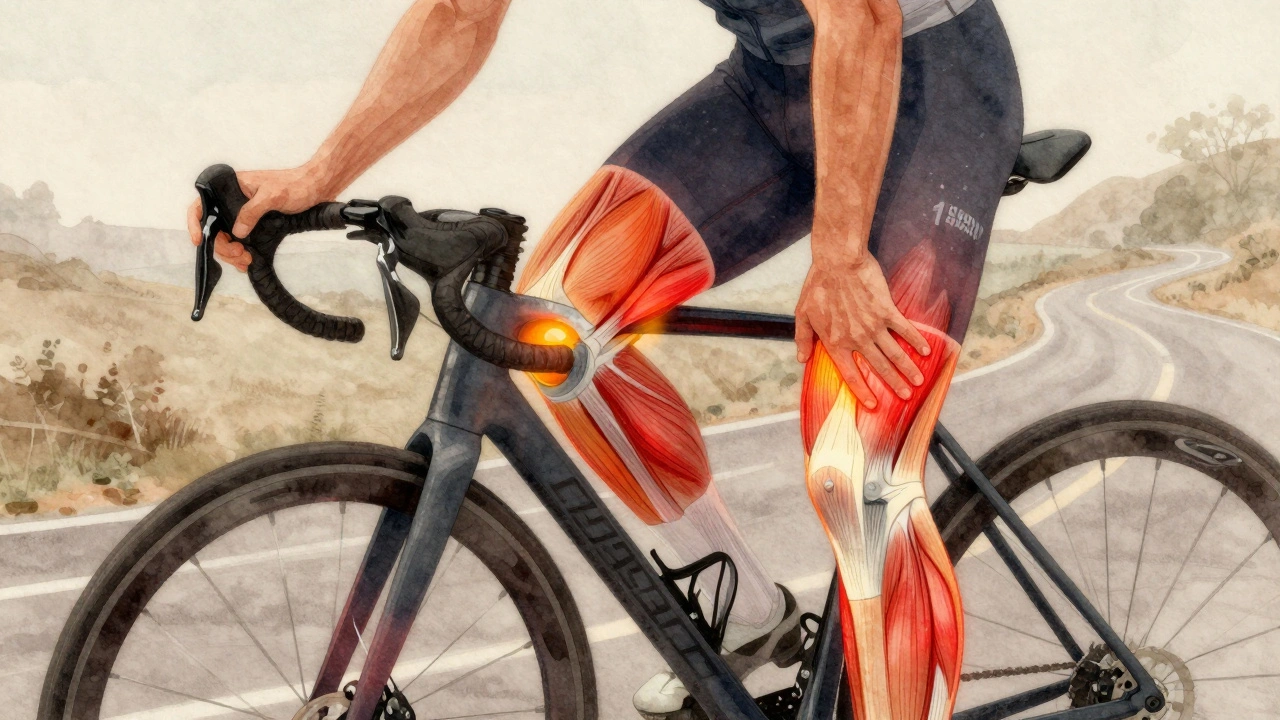
Cycling looks smooth, but it’s a repetitive motion that locks muscles into the same position for hours. Your hip flexors stay shortened. Your hamstrings get pulled tight. Your calves never fully relax. Over time, this leads to muscle imbalances, reduced range of motion, and even knee or lower back pain.
Stretching helps, but it doesn’t fix the knots. Foam rollers give surface relief, but they can’t reach deep into fascia or trigger points. Sports massage targets the exact tissues that get overloaded during long rides. A 2023 study from the Journal of Sports Rehabilitation found that cyclists who received weekly sports massage over eight weeks improved their pedal efficiency by 7% and reported 40% less muscle stiffness after rides.
How Sports Massage Works for Cyclists
Sports massage isn’t one technique-it’s a blend of deep tissue, myofascial release, and trigger point therapy, all timed to your training cycle. Before a big ride, a lighter session warms up muscles and improves blood flow. After a ride, deeper work breaks down lactic acid buildup and reduces inflammation.
Therapists focus on key areas for cyclists:
- Quadriceps and hip flexors-these take the brunt of pedaling and often become chronically tight
- Hamstrings and glutes-overworked during climbs and sprints
- Calf muscles-constantly engaged to stabilize the pedal stroke
- Lower back and thoracic spine-stiffness here affects posture and breathing efficiency
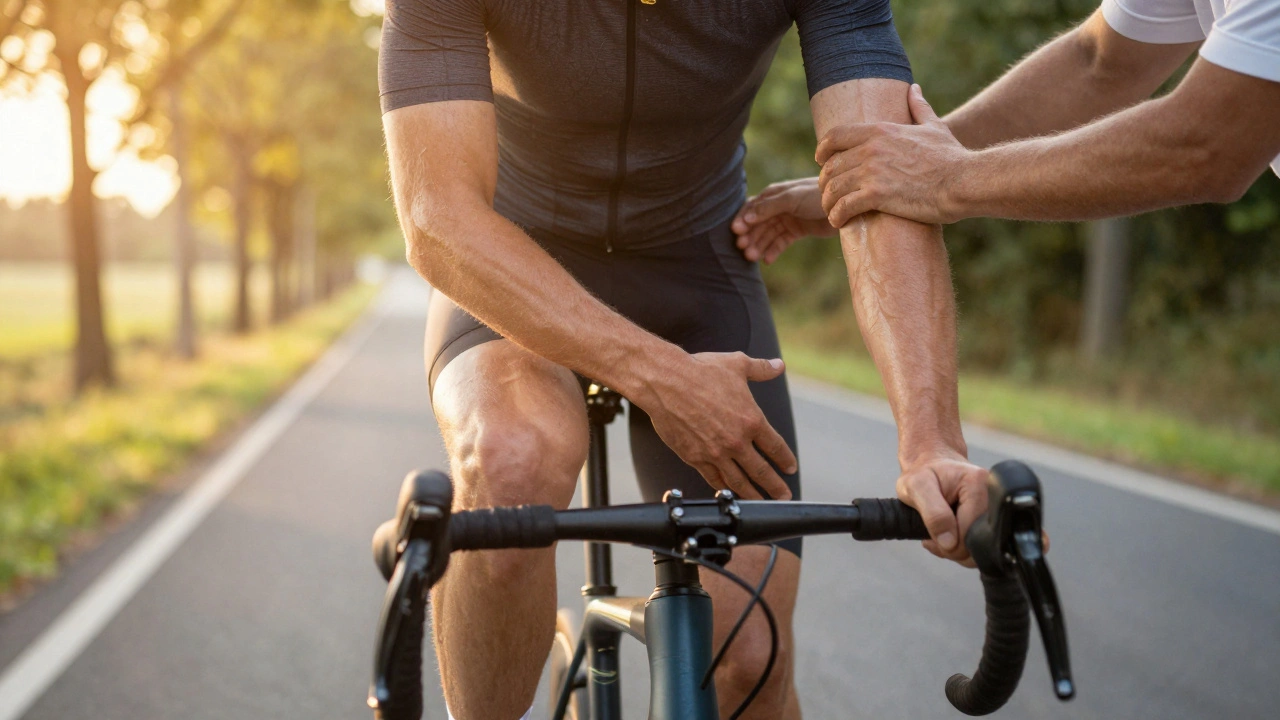
- Forearms and shoulders-tension builds from gripping the handlebars
A good therapist doesn’t just push hard. They feel for areas of restriction, use controlled pressure to release adhesions, and guide you through breathing to help muscles let go. It’s not supposed to hurt-but it should feel like the right kind of pressure, like your body is finally being heard.
The Real Benefits: Beyond Just Feeling Better
People think sports massage is about feeling good. It’s more than that. For cyclists, it’s performance optimization.
- Faster recovery-One study showed cyclists who got massage after a time trial recovered 20% faster in muscle strength compared to those who didn’t.
- Reduced injury risk-Tight muscles pull on joints. Regular massage helps maintain balance, lowering the chance of IT band syndrome, patellar tendonitis, or lower back strain.
- Better range of motion-Looser hips mean more efficient pedal stroke. Even a 5% increase in hip mobility can reduce energy waste over long distances.
- Improved sleep-Massage lowers cortisol and boosts serotonin. Cyclists who get regular sessions report deeper, more restorative sleep, which is critical for adaptation.
- Early warning system-A therapist can spot subtle tightness before it turns into pain. That tiny knot in your glute? It could be the start of sciatica. Catch it early, and you avoid weeks off the bike.
When to Get a Massage-Timing Matters
Not every massage is the same. Timing affects results.
- 24-48 hours after a hard ride-Best for flushing out metabolic waste and reducing soreness. Avoid deep work right after a race-it can cause more inflammation.
- 3-5 days before a big event-Light, stimulating massage to increase circulation and loosen stiffness without triggering fatigue.
- During heavy training blocks-Once a week keeps muscles pliable and prevents cumulative tension.
- Off-season-Use this time for deeper structural work. Fix imbalances before next season starts.
Don’t wait until you’re in pain. Pro cyclists don’t. They treat massage like nutrition or sleep-part of the daily routine.
What to Expect in Your First Session
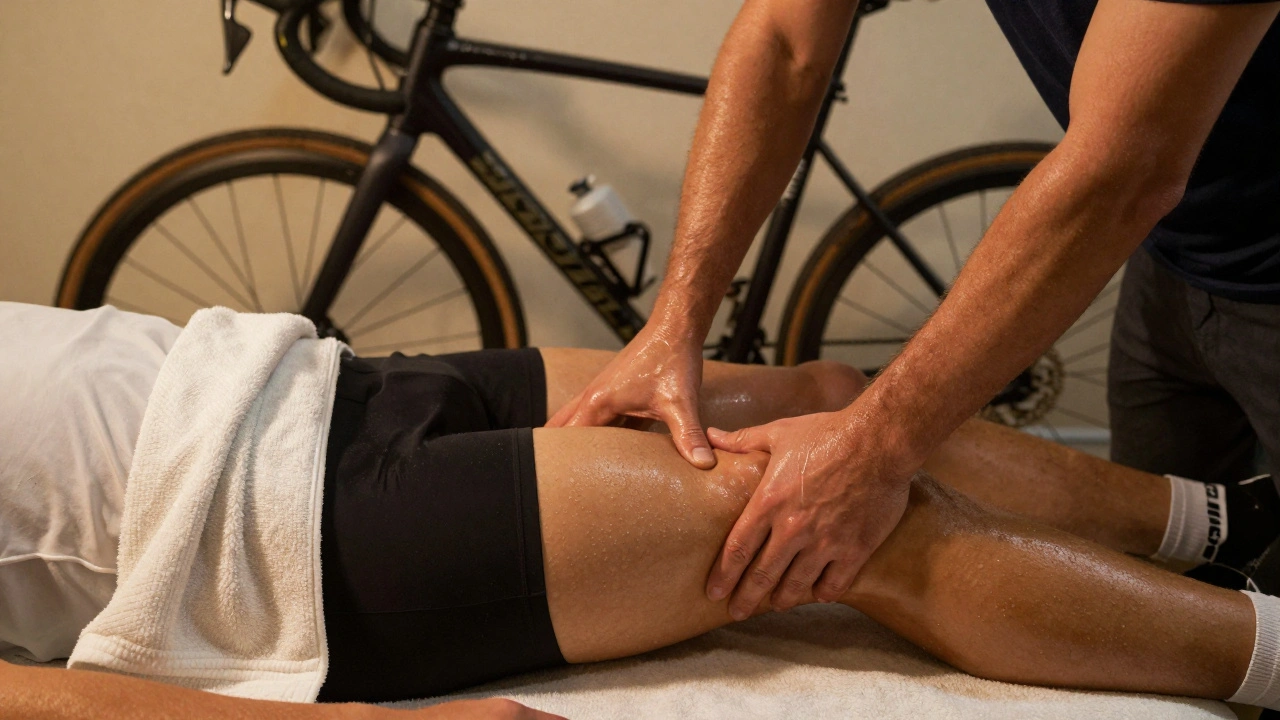
Your first sports massage for cycling won’t be like a spa day. The room will be warm. The therapist will ask about your training schedule, recent rides, and areas of discomfort. They’ll check your posture and may even watch you pedal on a stationary bike.
You’ll likely be asked to wear shorts and a tank top. The therapist will use oil or lotion and work directly on your skin. Don’t be shy-tell them if the pressure is too light or too deep. A good therapist adjusts on the fly.
Afterward, you might feel a little tender for a day. Drink plenty of water. Avoid intense training for 24 hours. You’ll notice the difference in your next ride-your legs will feel lighter, your back looser, your breathing easier.
DIY Tips Between Sessions
You don’t need a massage every week to benefit. But if you’re riding hard, you need to stay proactive.
- Use a lacrosse ball or massage gun on your quads and glutes for 2 minutes per side after rides.
- Roll your calves over a foam roller while watching TV-hold on tender spots for 20-30 seconds.
- Do dynamic hip openers before rides and static stretches after.
- Hydrate well. Dehydrated muscles are more prone to cramping and tightness.
- Don’t skip sleep. Recovery happens when you’re resting, not when you’re on the bike.
Who Should Avoid Sports Massage?
Most cyclists can benefit. But there are exceptions:
- Acute injuries-like a recent muscle tear or sprain. Massage can make inflammation worse.
- Open wounds or skin infections.
- Severe osteoporosis or blood clotting disorders-always check with your doctor first.
- During the first trimester of pregnancy-some techniques aren’t safe.
If you’re unsure, talk to your physio or GP. A good massage therapist will ask about your medical history before starting.
How Often Should You Get One?
There’s no one-size-fits-all. But here’s a simple guide:
- Recreational riders (under 500km/month)-Every 4-6 weeks
- Regular riders (500-1,000km/month)-Every 2-3 weeks
- Competitive riders (1,000km+ or racing)-Weekly or biweekly during peak season
Even one session a month can make a difference if you’re consistent. Think of it like oil for your bike. You don’t wait until the chain snaps.
Where to Find a Good Sports Massage Therapist
Not all massage therapists understand cycling. Look for someone who:
- Has experience working with endurance athletes
- Asks about your training load and goals
- Uses specific techniques-not just general relaxation massage
- Is certified in sports massage (look for credentials like ASMI, ISM, or similar)
In Brisbane, clinics near cycling hubs like Mount Coot-tha or the Brisbane River Trail often have therapists familiar with riders. Ask at your local bike shop-they usually know who to recommend.
Can sports massage help with chronic lower back pain from cycling?
Yes, if the pain comes from muscle tightness, not nerve damage. Cyclists often develop lower back pain from tight hip flexors pulling on the pelvis. Sports massage releases those muscles, takes pressure off the spine, and improves pelvic alignment. Many riders report reduced back pain after just 2-3 sessions. But if the pain radiates down the leg or includes numbness, see a physiotherapist first-it could be a disc issue.
Is sports massage better than foam rolling for cyclists?
They serve different purposes. Foam rolling is great for daily maintenance-it’s accessible and helps with general tightness. But it can’t reach deep trigger points or release fascial restrictions like a trained therapist can. Think of foam rolling as brushing your teeth and sports massage as a dental cleaning. You need both.
Does sports massage improve cycling performance directly?
Not by making you stronger overnight. But it removes barriers to performance. Tight muscles waste energy. Poor posture reduces oxygen intake. Limited mobility forces you to pedal inefficiently. By fixing those issues, massage lets you ride faster with less effort. It’s not magic-it’s optimization.
How much does a sports massage cost for cyclists?
In Brisbane, a 60-minute sports massage typically costs between $80 and $120. Some clinics offer packages for riders-like 5 sessions for $350. Compare to the cost of a new bike part or race entry. A massage is cheaper and keeps you riding instead of sidelined.
Can I get sports massage if I’m not a racer?
Absolutely. You don’t need to race to benefit. Whether you ride 20km on weekends or train for century rides, your muscles still get overworked. Sports massage helps anyone who rides regularly and wants to feel better, recover faster, and stay injury-free.
Final Thought: Recovery Is Part of Training
You don’t get faster by riding harder alone. You get faster by recovering smarter. Sports massage isn’t a luxury-it’s a tool, like your helmet or your water bottle. It’s how you keep your body ready for the next ride, the next hill, the next personal best. Skip it, and you’re leaving performance on the table. Do it consistently, and you’ll ride longer, stronger, and with less pain.