Probiotic Recommendation Calculator
Find Your Ideal Probiotic
Select your health goal to get personalized recommendations based on clinical evidence.
Recommended Probiotics
Dosage Guidance
What if the key to better digestion, stronger immunity, and even improved mood was living inside you right now? It’s not magic. It’s probiotics - the trillions of good bacteria that call your gut home. And science is catching up to what traditional medicine has known for centuries: these tiny microbes are powerful.
What Exactly Are Probiotics?
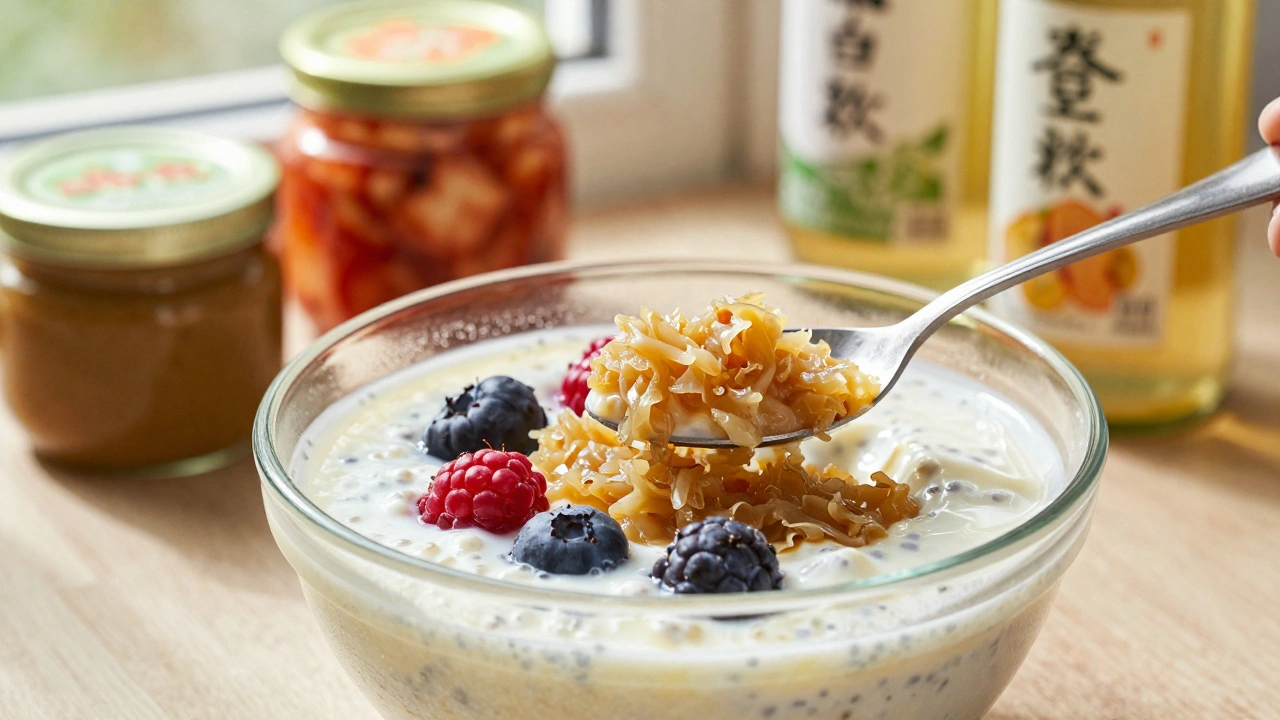
Probiotics are live microorganisms - mostly bacteria, sometimes yeast - that give you health benefits when you consume them in the right amounts. They’re not new. Fermented foods like yogurt, kefir, sauerkraut, and kimchi have been part of diets for thousands of years. But today, we know more than ever about how they work.
Not all bacteria are bad. In fact, your body hosts about 39 trillion bacterial cells - mostly in your intestines. These aren’t invaders. They’re partners. Probiotics help keep the balance right. When antibiotics wipe out good bacteria, or when you eat too much sugar and processed food, bad bacteria can take over. That’s when problems start: bloating, diarrhea, constipation, even skin rashes or mood swings.
Probiotics don’t just hang out in your gut. They talk to your immune system, help break down food, make vitamins like B12 and K, and even send signals to your brain through the vagus nerve. That’s why what’s happening in your gut affects how you feel - physically and mentally.
Improved Digestion Is the Most Proven Benefit
If you’ve ever had bloating after a heavy meal or diarrhea after traveling, probiotics might help. Multiple clinical studies show that certain strains - like Lactobacillus rhamnosus GG and a well-researched probiotic strain shown to reduce antibiotic-associated diarrhea by up to 60% - can shorten the duration of infectious diarrhea by about a day.
For people with irritable bowel syndrome (IBS), probiotics aren’t a cure, but they’re one of the few treatments with solid evidence. A 2023 review of 42 studies found that specific probiotic blends reduced bloating, gas, and abdominal pain in over 70% of participants. Not every strain works the same. Bifidobacterium infantis and a strain shown to improve bowel movement regularity and reduce IBS symptoms in clinical trials are often recommended for IBS.
Probiotics also help with constipation. One study with older adults found that taking a daily probiotic supplement increased bowel movements by 25% over four weeks. No laxatives needed.
They Strengthen Your Immune System
Here’s something surprising: about 70% of your immune system lives in your gut. Probiotics don’t just sit there. They train your immune cells to respond better.
When cold and flu season hits, people who take probiotics regularly get sick less often. A 2024 meta-analysis of 12 randomized trials showed that daily probiotic use reduced the risk of upper respiratory infections by 42%. Those who did get sick had milder symptoms and recovered faster - on average, two days sooner.
Probiotics also help with allergies. In children, taking certain strains like Lactobacillus paracasei and a strain linked to reduced eczema severity in infants during the first year of life lowered the chance of developing eczema by 50% in high-risk babies. That’s not just a small win - it’s life-changing for families.

Probiotics and Mental Health: The Gut-Brain Connection
You’ve heard of the gut-brain axis. Now you know it’s real. The gut and brain are wired together - not just by nerves, but by chemicals. Probiotics produce serotonin, dopamine, and GABA - the same neurotransmitters that affect mood.
In a 2023 trial, adults with mild to moderate depression who took a daily probiotic supplement for eight weeks saw a 40% greater reduction in symptoms than those on a placebo. The effect wasn’t huge, but it was consistent. And it worked best when combined with therapy or lifestyle changes.
Stress affects your gut. Your gut affects your stress. People who take probiotics report lower cortisol levels - the body’s main stress hormone. One study found that students taking probiotics before exams had less anxiety and better focus. It’s not a magic pill, but it’s a real tool.
How to Get Probiotics - Food vs. Supplements
You don’t need pills. Real food works better. Here’s what actually contains live, active cultures:
- Yogurt - Look for "live and active cultures" on the label. Avoid sugary versions.
- Kefir - A fermented milk drink with up to 60 strains of bacteria. More diverse than yogurt.
- Sauerkraut - Unpasteurized only. Pasteurization kills the good bugs.
- Kimchi - Spicy Korean fermented cabbage. Rich in fiber too.
- Miso - Fermented soybean paste used in soups.
- Tempeh - Fermented soy, great as a meat substitute.
- Kombucha - Fermented tea. Watch out for added sugar.
Supplements can be useful if you need a targeted dose - like after antibiotics or for a specific condition. But they’re not magic. Look for products with at least 1 billion CFUs (colony-forming units) and multiple strains. Check the expiration date. Probiotics die over time. And store them properly - many need refrigeration.

Who Should Avoid Probiotics?
Most people can take probiotics safely. But there are exceptions.
If you have a weakened immune system - from chemotherapy, organ transplants, or severe illness - talk to your doctor first. In rare cases, probiotics can cause infections in these groups.
People with short bowel syndrome or central venous catheters should also be cautious. And if you’re severely ill or in the ICU, probiotics might do more harm than good.
Side effects? A few people get bloating or gas at first. That usually goes away in a few days. If it doesn’t, try a different strain.
What You Can Do Today
You don’t need to overhaul your life. Start small:
- Swap your morning yogurt for a plain, unsweetened kefir.
- Add a tablespoon of sauerkraut to your salad or sandwich.
- Try miso soup once a week.
- If you’re on antibiotics, start a probiotic the same day - and keep taking it for two weeks after.
- Drink water. Fiber feeds good bacteria. Probiotics need prebiotics - found in garlic, onions, bananas, and oats - to thrive.
Consistency matters more than dosage. One cup of kefir every day beats a high-dose supplement you take once a week.
Probiotics Aren’t a Cure-All - But They’re a Game Changer
They won’t fix everything. If you’re eating junk food, sleeping poorly, and stressed out, probiotics alone won’t save you. But they’re one of the easiest, safest, and cheapest ways to support your body’s natural systems.
Think of them like a garden. You wouldn’t plant seeds and then pour poison on the soil. Your gut is the same. Probiotics are the seeds. Healthy food, sleep, and stress management are the sunlight and water.
Start today. Your gut - and your whole body - will thank you.
Can probiotics help with weight loss?
Some studies suggest certain strains, like Lactobacillus gasseri, may help reduce belly fat slightly, but the effect is small and not guaranteed. Probiotics aren’t weight-loss pills. They support metabolism and reduce inflammation, which can help with long-term weight management - but only when paired with diet and exercise.
How long does it take for probiotics to work?
For digestive issues like bloating or diarrhea, you might notice changes in 3-7 days. For immune support or mood, it can take 4-8 weeks. Consistency is key. Don’t stop after a few days.
Are all probiotics the same?
No. Different strains do different things. Lactobacillus is often for digestion, Bifidobacterium for immune support, Saccharomyces boulardii for diarrhea. Always check the strain name on the label - not just the brand.
Can you get too many probiotics?
It’s very rare. Your body naturally expels excess bacteria. But high doses (over 100 billion CFUs) can cause gas or bloating in sensitive people. Stick to the recommended dose unless advised otherwise by a doctor.
Do probiotics need to be refrigerated?
Many do, especially liquid or food-based ones. Check the label. Some shelf-stable supplements use special coatings to protect the bacteria. If it says "refrigerate after opening," don’t ignore it.