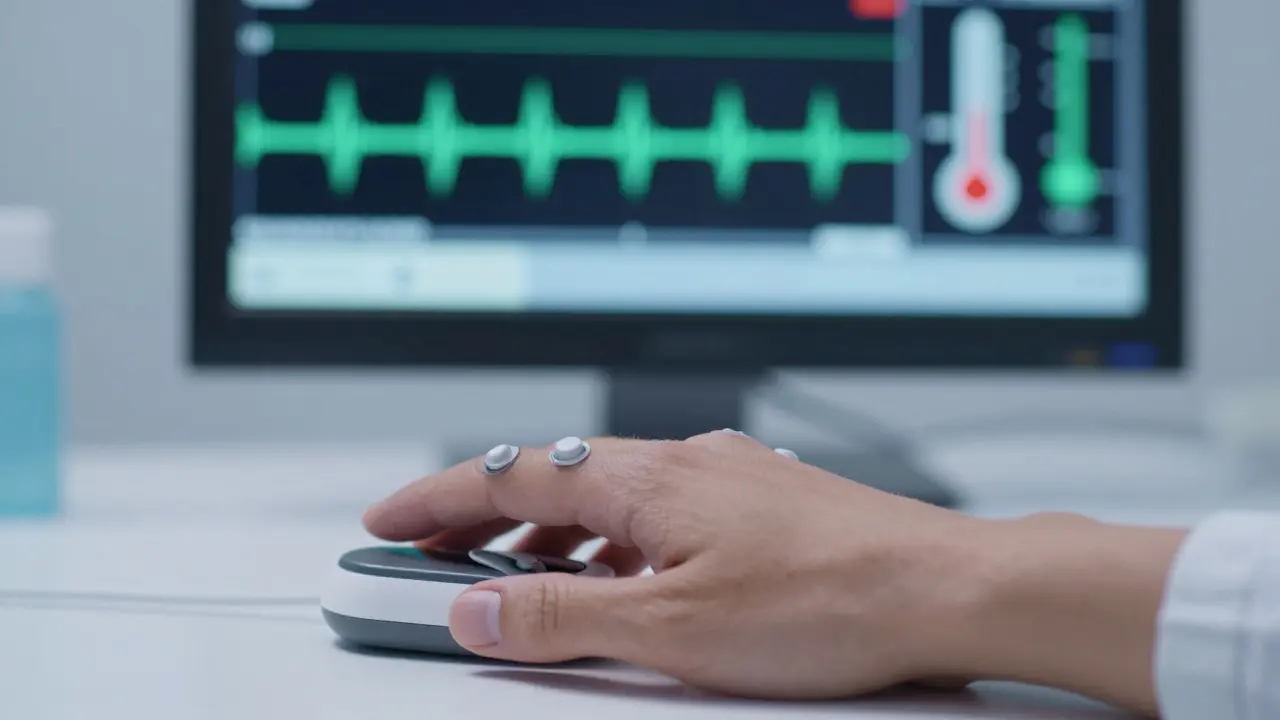
Imagine having a dashboard for your body. Not just one that shows your steps or sleep hours, but one that tells you exactly how tense your muscles are, how fast your heart is beating, and even the temperature of your fingertips in real-time. Now imagine being able to look at that data and consciously lower those numbers. That is biofeedback. For millions of people living with chronic pain, this technology isn't science fiction; it is a proven, non-invasive tool that helps reclaim control over a nervous system stuck in overdrive.
Chronic pain is tricky because it often outlasts the original injury. The tissue heals, but the pain signals keep firing. This happens when the central nervous system becomes hypersensitive, amplifying normal sensations into painful ones. Biofeedback works by interrupting this loop. It teaches you to recognize the subtle physical signs of stress and tension before they escalate into full-blown pain episodes.
How Biofeedback Works to Reduce Pain
To understand why biofeedback helps with pain, we first need to look at the connection between the mind and the body. When you feel stressed or anxious, your body enters a "fight or flight" mode. Your muscles tighten, your blood vessels constrict, and your heart rate spikes. If you have chronic pain, these physiological changes act like fuel on a fire, making the pain worse.
Biofeedback is a technique that trains individuals to improve health by gaining increased control over heart rate, muscle tension, skin temperature, and other bodily processes that normally happen automatically. By using sensors attached to the body, patients receive immediate visual or auditory feedback about their physiological state. This allows them to learn relaxation techniques that directly influence these involuntary functions.
The process relies on operant conditioning. Just as a child learns to walk by receiving feedback from their environment, you learn to relax by seeing the results of your efforts on a screen. Over time, this conscious control becomes automatic. You no longer need the machines to know if you are relaxed; your body simply defaults to a calmer state.
Types of Biofeedback Used for Pain Management
Not all biofeedback is the same. Different types target different physiological systems, depending on where your pain originates or how your body reacts to it.
- EMG (Electromyography) Biofeedback: This measures muscle tension. Sensors are placed on the skin over specific muscles. If you have chronic back pain or tension headaches, EMG biofeedback helps you identify which muscles are clenched without you realizing it. You learn to release that tension voluntarily.
- Thermal Biofeedback: This monitors skin temperature. When you are stressed, blood flows away from your extremities to protect vital organs, causing your hands and feet to cool down. This is common in conditions like Raynaud's disease or migraines. Thermal biofeedback teaches you to warm your hands through mental imagery and relaxation, improving circulation and reducing pain.
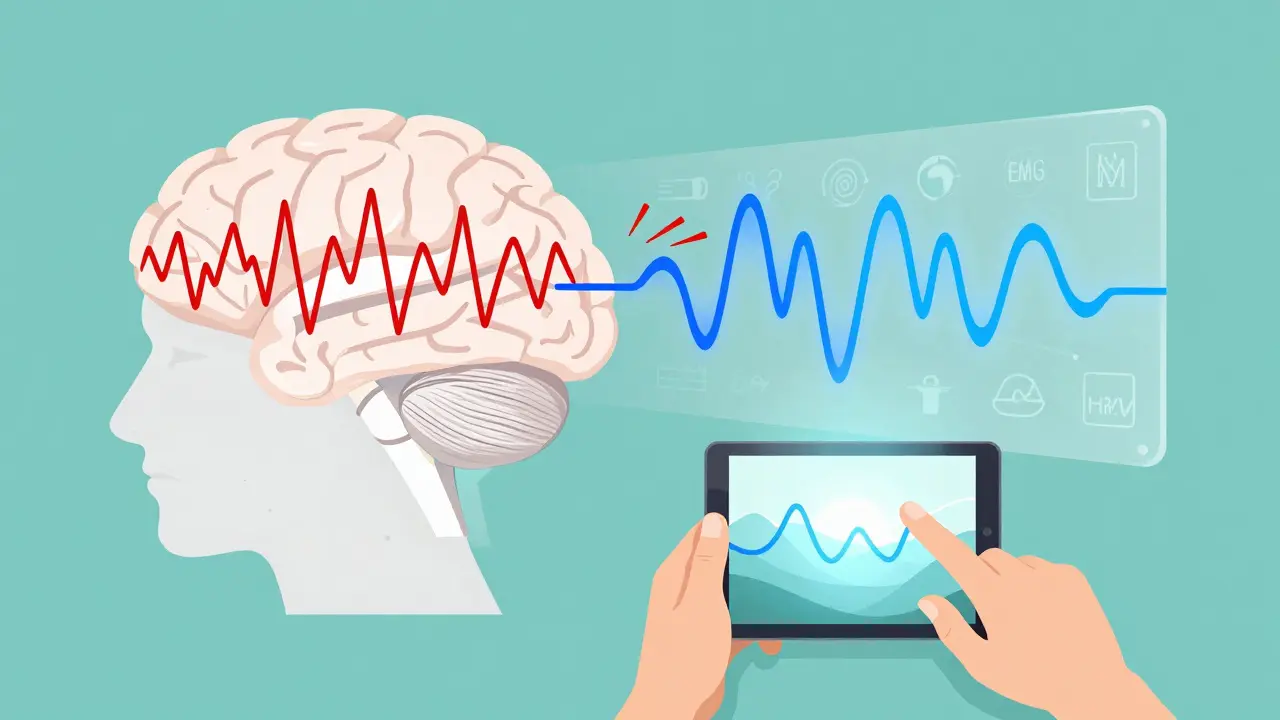
- HRV (Heart Rate Variability) Biofeedback: HRV measures the variation in time between heartbeats. A healthy heart has a natural rhythm that varies slightly. Stress makes the heartbeat more rigid. HRV training focuses on breathing patterns to increase variability, which signals the parasympathetic nervous system (the "rest and digest" system) to activate. This is particularly effective for fibromyalgia and widespread pain syndromes.
- EEG (Electroencephalogram) Biofeedback: Also known as neurofeedback, this measures brain waves. It is used less frequently for general pain but can be helpful for patients whose pain is exacerbated by anxiety or poor sleep quality.
Conditions That Respond Well to Biofeedback
Biofeedback is not a cure-all, but clinical evidence supports its effectiveness for several specific chronic pain conditions. The American Psychological Association recognizes biofeedback as an empirically supported treatment for certain disorders.
| Condition | Primary Biofeedback Type | Mechanism of Relief |
|---|---|---|
| Tension Headaches | EMG | Reduces contraction of forehead and neck muscles |
| Migraines | Thermal / HRV | Improves peripheral circulation and reduces vascular sensitivity |
| Chronic Low Back Pain | EMG | Decreases guarding and spasm in lumbar muscles |
| Fibromyalgia | HRV | Regulates autonomic nervous system dysregulation |
| Irritable Bowel Syndrome (IBS) | HRV / EMG | Reduces gut-brain axis stress response |
For example, studies have shown that patients with tension-type headaches who undergo EMG biofeedback experience fewer headache days and reduced intensity compared to those who only take medication. Similarly, thermal biofeedback has been shown to reduce migraine frequency by teaching patients to maintain warmer hand temperatures, which correlates with better blood flow to the head.
The Biofeedback Session: What to Expect
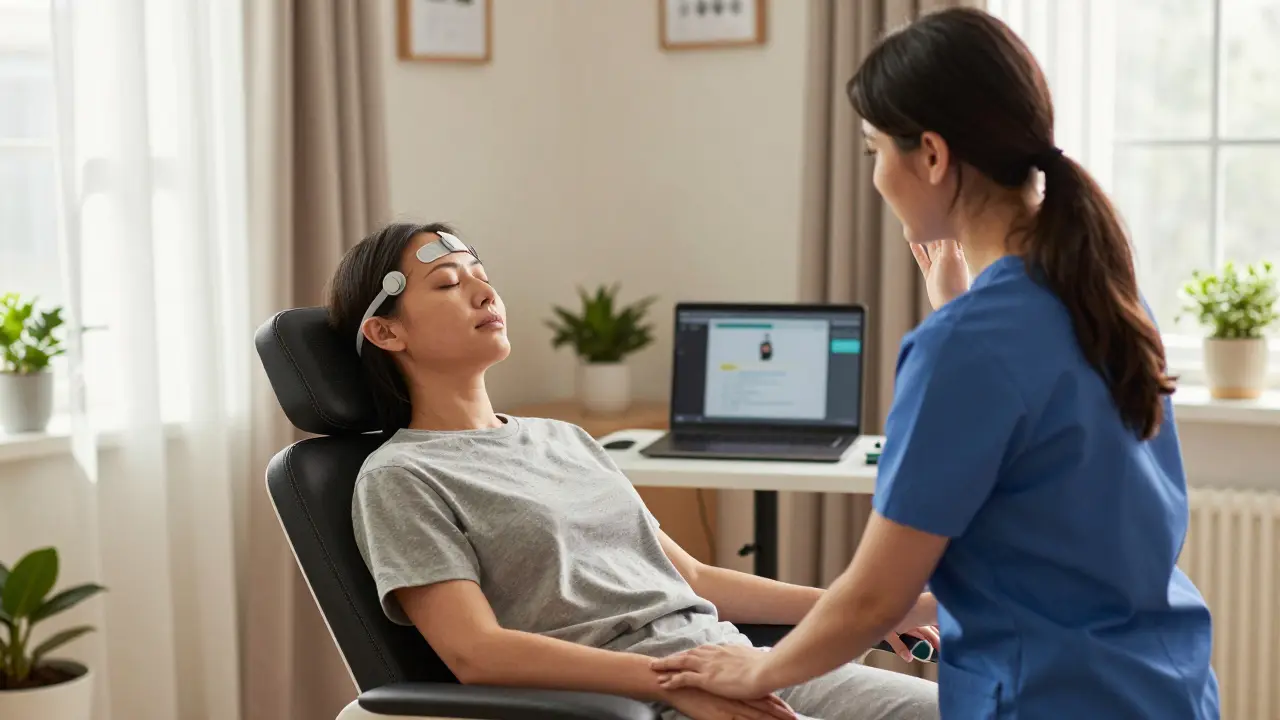
If you decide to try biofeedback, you might wonder what actually happens during a session. Typically, you will work with a certified biofeedback practitioner. These professionals are often psychologists, physiotherapists, or nurses with specialized training.
- Assessment: The therapist will discuss your medical history and pain patterns. They may conduct a baseline measurement to see how your body responds to stress right now.
- Sensor Placement: Small, painless electrodes or sensors are attached to your skin. For EMG, these go on muscles. For thermal, they go on fingers. For HRV, they might clip onto your earlobe or finger.
- Feedback Loop: You sit in a comfortable chair while watching a monitor. The screen might show a graph of your muscle tension, a thermometer reading, or a game that progresses when you relax. For instance, a video game character might jump higher when your heart rate variability increases.
- Technique Practice: The therapist guides you through relaxation techniques. This could include deep diaphragmatic breathing, progressive muscle relaxation, or guided imagery. You experiment to see which method moves the needle on the screen.
- Homework: Biofeedback requires practice. You will likely be given portable devices or instructions to practice these techniques at home daily. Consistency is key to rewiring your nervous system.
A typical course of treatment involves 6 to 10 sessions, each lasting 30 to 60 minutes. Most patients report noticeable improvements within the first few weeks, though long-term benefits continue to grow as the skills become habitual.
Biofeedback vs. Traditional Pain Treatments
Many people turn to opioids, NSAIDs, or corticosteroids for chronic pain. While these medications can provide temporary relief, they come with risks of side effects, dependency, and tolerance. Biofeedback offers a different approach: it empowers the patient rather than relying solely on external substances.
Unlike surgery or injections, biofeedback has virtually no physical side effects. It does not mask the pain; it addresses the physiological amplification of pain. However, it is important to view biofeedback as part of a multimodal treatment plan. It works best when combined with cognitive behavioral therapy (CBT), physical therapy, and lifestyle changes like regular exercise and good sleep hygiene.
One major advantage is sustainability. Medication stops working when you stop taking it. Biofeedback skills, once learned, remain with you for life. You carry the ability to calm your nervous system wherever you go, without needing a pill bottle.
Getting Started with Biofeedback
Finding a qualified provider is crucial. Look for certifications from recognized bodies such as the Association for Applied Psychophysiology and Biofeedback (AAPB). In Australia, you can search for practitioners through the Australian Biofeedback Association or ask your GP for a referral to a psychologist or physiotherapist trained in biofeedback.
Cost and insurance coverage vary. In many cases, Medicare or private health insurance may cover biofeedback if prescribed by a doctor for a specific condition like migraines or IBS. Check with your provider beforehand. Some clinics also offer telehealth options, allowing you to use remote monitoring software connected to consumer-grade sensors.
Remember, biofeedback requires effort. It is not a passive treatment. You must be willing to practice relaxation techniques regularly. But for those struggling with chronic pain, the investment of time often leads to a significant improvement in quality of life, reducing reliance on medication and restoring a sense of agency over one's own body.
Is biofeedback safe for everyone?
Yes, biofeedback is generally considered very safe and non-invasive. Since it involves no drugs or surgery, there are minimal physical risks. However, some people may feel temporarily anxious when first confronting their physiological stress responses. It is important to work with a trained professional who can guide you through this process safely.
How long does it take to see results from biofeedback?
Results vary by individual and condition. Many patients notice some improvement within 4 to 6 sessions. However, mastering the skills usually requires consistent home practice over several months. For chronic conditions like fibromyalgia, long-term maintenance is often necessary to sustain benefits.
Can I do biofeedback at home without a therapist?
While there are consumer apps and devices available, starting with a certified therapist is highly recommended. They help you interpret the data correctly and teach you effective techniques. Once you have mastered the basics, you can use home devices to maintain your progress. Without proper guidance, you might misinterpret signals or develop ineffective habits.
Does health insurance cover biofeedback?
Coverage depends on your location and insurance plan. In Australia, Medicare may rebates apply if referred by a GP for specific conditions. Private health funds often cover biofeedback under extras or hospital policies. Always check with your insurer and provider for pre-authorization requirements.
What is the difference between biofeedback and meditation?
Meditation is a practice focused on mindfulness and awareness, often without external feedback. Biofeedback uses technology to provide real-time data about your body's functions. Think of meditation as learning to drive by feeling the car, while biofeedback is learning to drive with a detailed dashboard showing speed, RPM, and fuel levels. Biofeedback accelerates the learning curve for relaxation.