When someone says "therapy," most people picture a quiet room, a couch, and a therapist taking notes. But what if healing didn’t need words at all? What if it happened through a brushstroke, a drumbeat, or the motion of your own body moving freely?
What Creative Arts Therapies Actually Do
Creative arts therapies aren’t about becoming an artist, musician, or dancer. They’re about using those forms to express what words can’t. People who’ve been through trauma, depression, chronic illness, or even just deep emotional numbness often find that talking feels impossible. But painting? Dancing? Playing an instrument? Those things bypass the part of the brain that shuts down when words fail.
In 2024, a study from the University of Pennsylvania followed 120 adults with PTSD who had tried talk therapy without lasting results. Half were assigned to weekly art therapy sessions-drawing, collage, clay work. The other half continued with traditional counseling. After 12 weeks, the art therapy group showed a 42% greater reduction in flashbacks and hypervigilance. Not because they learned to draw better. Because they finally had a way to release what was stuck inside.
Art Therapy: When Colors Speak Louder Than Words
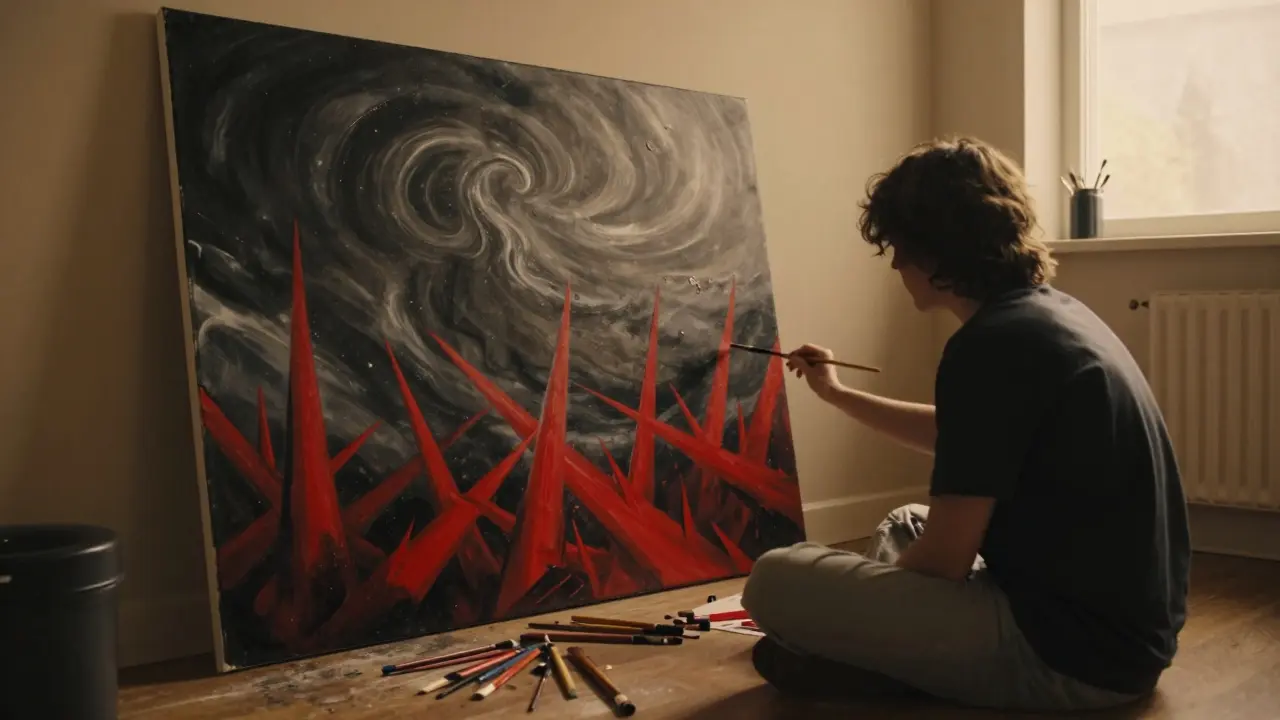
Art therapy uses visual creation to help people process emotions. You don’t need skill. You just need to be willing to make a mark. A client in a hospital oncology unit once told me, "I couldn’t say I was scared. But when I painted my fear, it looked like a black storm with red spikes. And then I tore it up. And I felt lighter."
Therapists don’t interpret your art. They ask questions: "What part of this drawing feels the heaviest?" "If this color could talk, what would it say?" The act of choosing materials, applying pressure, mixing hues-it all becomes a physical metaphor for internal states. Clay can be smashed or smoothed. Paint can be layered or washed away. These actions mirror the process of healing: destruction, rebuilding, letting go.
Music Therapy: Rhythms That Reconnect the Nervous System
Music therapy isn’t listening to calming playlists. It’s active engagement-playing instruments, improvising melodies, even just tapping out a beat with your hands. A 2023 meta-analysis of 37 clinical trials found that music therapy reduced anxiety levels in people with dementia by 58% on average. Why? Because rhythm regulates the autonomic nervous system. A steady drumbeat can slow a racing heart. A familiar song can trigger memories that words can’t reach.
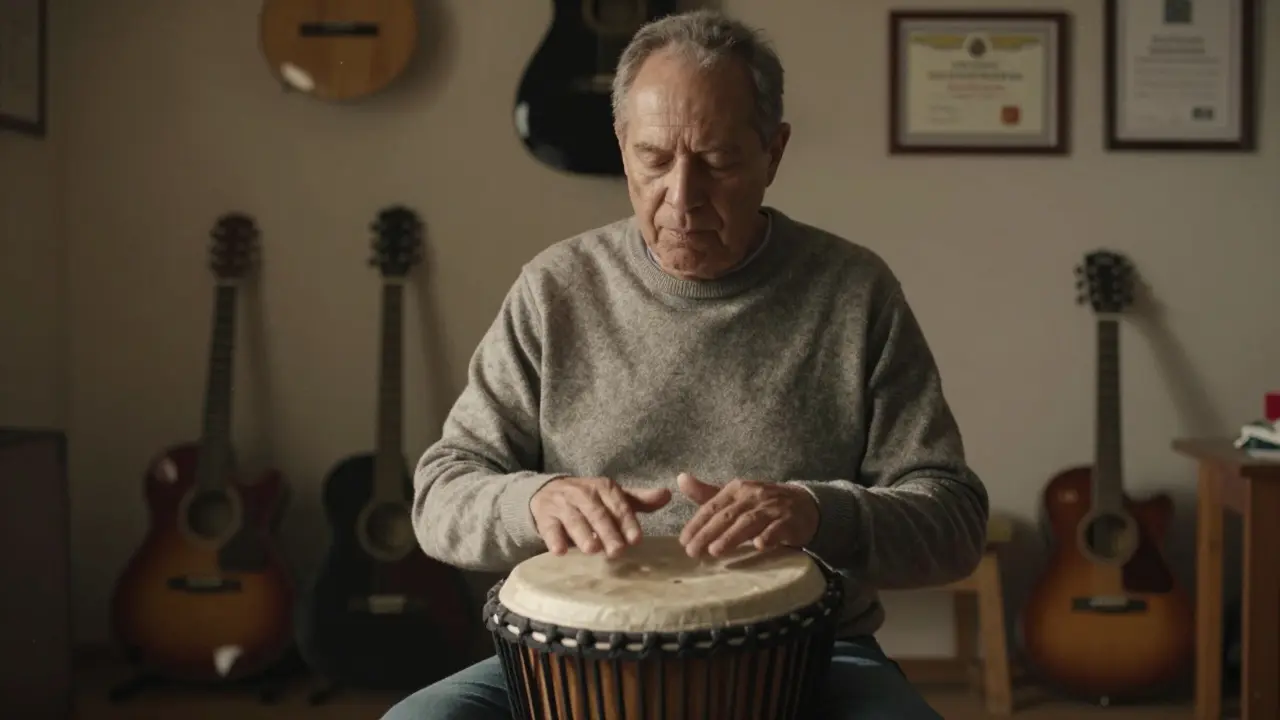
One veteran with severe PTSD used to freeze whenever he heard sirens. His music therapist gave him a small djembe drum. Every day, he’d sit with it and play a simple 4-beat pattern. Over time, he began to associate rhythm with control, not danger. He started playing the same pattern when he felt panic rising. It didn’t erase his trauma. But it gave him a tool to come back to his body when his mind spiraled.
Dance/Movement Therapy: Healing Through the Body
Most people think of dance as performance. Dance/movement therapy is about expression. It’s about noticing how your body holds tension, how it wants to move when no one’s watching. A woman recovering from an abusive relationship once told her therapist, "I stopped feeling like I had a body. Then I started moving-just swaying, then stepping, then spinning. I cried for an hour. I hadn’t felt my own skin in years."
Therapists observe posture, gesture, breath. They don’t correct form. They reflect: "I noticed when you moved your arms like you were pushing something away. What was that like?" Movement becomes a language. Shallow breathing? Tight shoulders? These aren’t just physical symptoms-they’re emotional signals. Dance therapy helps people reclaim their physical autonomy, especially when trauma made them feel trapped in their own skin.
Expressive Arts: When You Combine Them All
Some therapists blend art, music, movement, and even poetry into one session. This is called expressive arts therapy. A person might start by drawing their mood, then choose a song that matches it, then move to the rhythm, then write a line or two about what emerged. The process isn’t linear. It’s messy. And that’s the point.
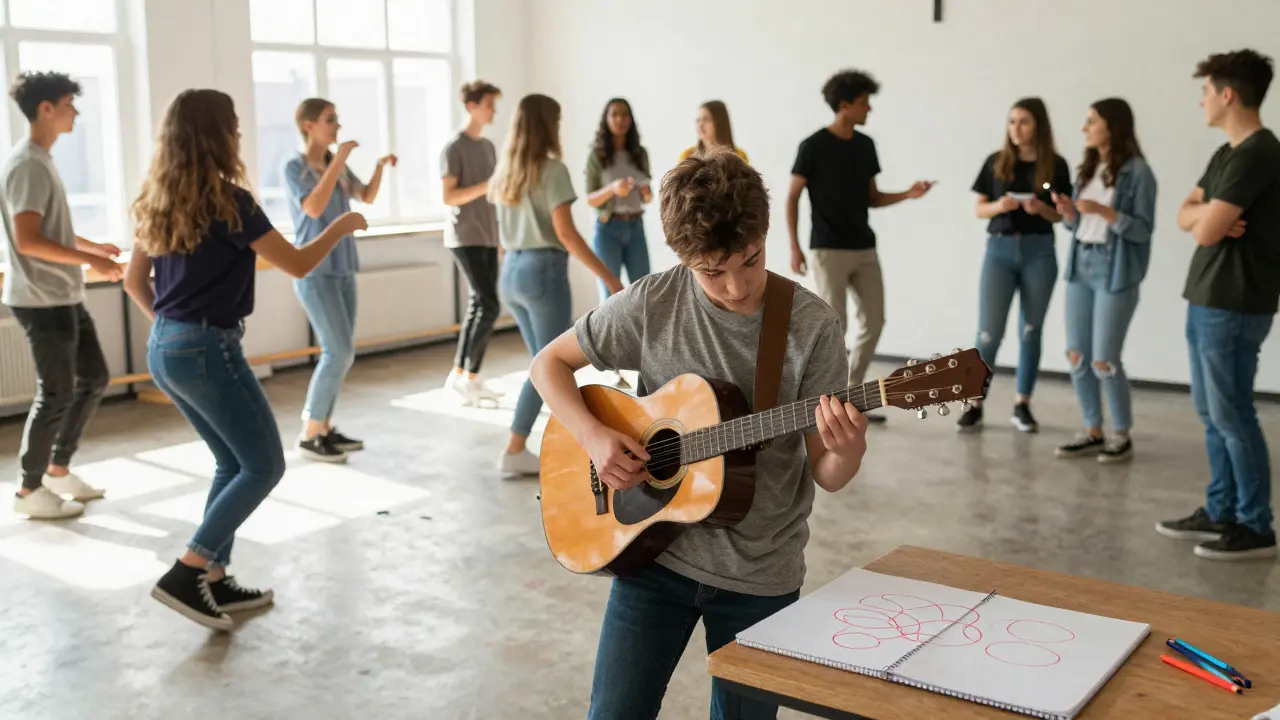
At a community center in Portland, a group of teens who’d experienced homelessness met weekly for expressive arts. One boy, quiet and withdrawn, spent three weeks just coloring circles in a notebook. Then, one day, he added a single red line through them. He didn’t speak. But the next week, he brought a guitar. He played three chords. Then he sang a line: "I’m still here."
That’s the power of combining modalities. It gives the brain multiple pathways to process pain. One form might open the door. Another might help you walk through it.
Who Benefits? It’s Not Just for "Artists"
Creative arts therapies work for people of all ages and backgrounds. Children with autism use sand tray art to communicate emotions they can’t name. Veterans with TBI use rhythmic drumming to improve focus and coordination. Elderly patients with Alzheimer’s recall entire childhoods when they hear songs from their youth. People with depression find energy in movement when talking feels too heavy.
You don’t need talent. You don’t need to be "good." You just need to be willing to try something new with your hands, your voice, or your body. The goal isn’t a masterpiece. It’s a moment of release. A breath. A beat. A stroke that says, "I’m still here."
How to Get Started
If you’re curious, here’s how to begin:
- Find a licensed creative arts therapist. Look for credentials like ATR-BC (Registered Art Therapist), MT-BC (Music Therapist), or R-DMT (Registered Dance/Movement Therapist). These are certified professionals, not hobbyists.
- Try a single session. Many clinics offer free or low-cost introductory sessions.
- Start at home with simple tools: crayons and paper, a drum or shaker, space to move barefoot.
- Don’t judge what comes out. Let it be messy, strange, or boring. That’s normal.
- Notice how you feel afterward. Not the art. Not the music. The quiet space inside you after you stopped trying to control it.
What It’s Not
It’s not a replacement for medical treatment. It’s not a quick fix. It’s not about becoming famous or selling your work. And it’s not something you "do" alone for a few minutes and expect miracles.
It’s a slow, embodied practice. A way to rebuild trust-with yourself, with your body, with the world. It works because it doesn’t ask you to explain your pain. It lets you live it, move it, paint it, and finally, let it go.
Do I need to be artistic to benefit from creative arts therapies?
No. Creative arts therapies are not about skill, talent, or producing something beautiful. They’re about using creative expression to access emotions that are hard to put into words. Whether you’ve never held a paintbrush or haven’t danced since childhood, the process works the same. The focus is on your inner experience, not the final product.
Can creative arts therapies help with anxiety and depression?
Yes. Multiple studies show that art, music, and movement therapies reduce symptoms of anxiety and depression by lowering cortisol levels and activating the parasympathetic nervous system. A 2023 review in the Journal of Clinical Psychology found that participants in creative arts therapy reported greater emotional regulation and improved mood compared to those in talk therapy alone, especially when words felt inadequate.
Is creative arts therapy covered by insurance?
Some insurance plans cover licensed creative arts therapists, especially if they’re part of a broader mental health treatment plan. Look for providers with credentials like MT-BC or ATR-BC, as these are often recognized by insurers. Medicaid and some employer-sponsored plans include coverage-call your provider to ask specifically about "expressive therapies" or "creative arts therapy." Many community centers also offer sliding-scale fees.
How long does it take to see results?
Some people feel a shift after one session-often a sense of relief or release. But lasting change usually takes 8 to 12 weekly sessions. Like physical therapy, emotional healing through movement or art requires consistency. The changes are subtle at first: a deeper breath, less tension in the shoulders, a moment of quiet after creating. These are signs your nervous system is beginning to reset.
Can I do this on my own without a therapist?
You can use creative expression for self-care-painting, drumming, dancing alone-but it’s not the same as therapy. A trained therapist creates a safe, structured space and helps you interpret your experience without judgment. They notice patterns you might miss and guide you through difficult emotions. For trauma or severe mental health conditions, working with a licensed professional is strongly recommended. For daily stress relief, solo practice can be powerful-but not a substitute for clinical care when needed.
Where This Is Heading
The future of healing isn’t just in pills or talk. It’s in the hands that shape clay, the feet that move to a rhythm, the voice that sings without words. More hospitals, schools, and veterans’ centers are adding creative arts therapists to their teams. The science is catching up to what people have always known: sometimes, you have to make something to feel whole again.