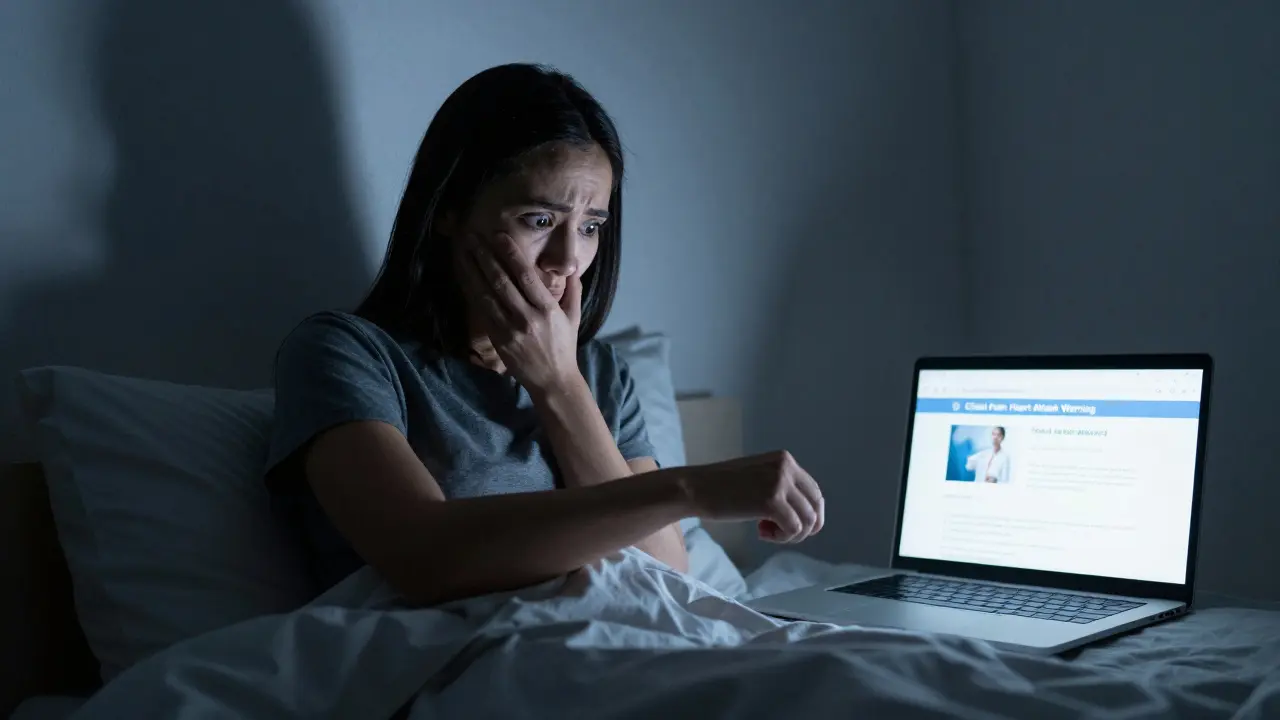
Every day, people check their pulse, Google symptoms, and cancel plans because their chest feels tight. They’ve seen the doctor three times this year. Each time, they’re told there’s nothing wrong. But they don’t believe it. They can’t shake the feeling that something deadly is hiding inside them. This isn’t just being careful. This is health anxiety-a quiet, growing crisis that’s silently eating away at millions of lives.
What Health Anxiety Really Looks Like
Health anxiety isn’t about being sick. It’s about being terrified you’re sick-even when you’re not. People with this condition don’t just worry about illness. They fixate on it. A headache becomes a brain tumor. A cough turns into lung cancer. A skipped heartbeat? Heart failure. They scan their body like detectives hunting for clues. They read medical websites for hours. They call their GP with new symptoms every week. And every negative test only makes things worse. Why? Because the brain doesn’t trust the answer. It needs more proof. And more. And more.
It’s not rare. A 2024 study from the University of Cambridge tracked over 12,000 adults in the UK and found that 4.3% met the clinical criteria for severe health anxiety. That’s roughly 2.8 million people. And that’s just the ones who sought help. Many more suffer in silence, afraid to admit they’re obsessed with their health.
Why It Feels So Real
Here’s the cruel twist: the symptoms feel real. Your heart races. Your muscles tense. Your breathing gets shallow. Your body is reacting to fear, not disease. But your brain doesn’t know the difference. It interprets every physical sensation as evidence of danger. A dry throat? Cancer. A tired feeling? Chronic fatigue syndrome. A tingling hand? MS. The more you focus, the worse the sensations get. It’s a feedback loop: fear → physical reaction → more fear → more reaction.
Many people with health anxiety have had a real health scare in the past. A friend died young. A parent was misdiagnosed. A child got seriously ill. That one event rewires the brain. Suddenly, every bodily sensation carries meaning. Every symptom is a warning sign. And once that switch flips, it’s hard to turn off.
What Doesn’t Help
Let’s be clear: reassurance doesn’t work. You can’t talk someone out of health anxiety with logic. Saying “You’re fine” or “You’re overreacting” only makes them feel misunderstood. Even repeated medical tests can backfire. A clean MRI? That just means the cancer hasn’t grown yet. A normal blood test? That’s because it’s too early to detect the problem. The brain finds a way to twist every piece of evidence into proof of danger.
Google searches are worse. A 2025 report from the NHS Digital showed that 68% of people with health anxiety searched for symptoms more than 10 times a week. They’d type “chest pain” and get 17 million results-most of them about heart attacks. They don’t read the fine print. They don’t read about muscle strain or anxiety. They see “life-threatening” and their body goes into overdrive. The internet isn’t helping. It’s fueling the fire.
What Actually Works
There is a way out. It’s not easy, but it’s proven. The most effective treatment is Cognitive Behavioral Therapy (CBT) tailored for health anxiety. It doesn’t focus on stopping the thoughts. It teaches you to change your relationship with them.
One technique is exposure. Instead of avoiding sensations, you learn to sit with them. You let your heart race. You hold your breath. You notice the tingling. Not because you think it’s dangerous-but because you’re learning it’s not. You’re rewiring your brain to say: “This is anxiety. It’s uncomfortable, but it’s not a threat.”
Another tool is behavioral experiments. You test your beliefs. “If I don’t check my pulse for 24 hours, will I die?” You do it. You survive. You write down what happened. Slowly, the brain learns: my fear doesn’t match reality.
Medication can help too. SSRIs like sertraline or escitalopram have been shown in multiple trials to reduce health anxiety symptoms by 50-70% over 12 weeks. They don’t cure it. But they take the edge off. Enough for therapy to work.
How to Start Getting Better
If you recognize yourself here, you’re not broken. You’re stuck in a pattern. And patterns can be changed.
- Track your triggers. Keep a simple log: time, symptom, thought, what you did. You’ll start seeing patterns-like always checking after stress or before bed.
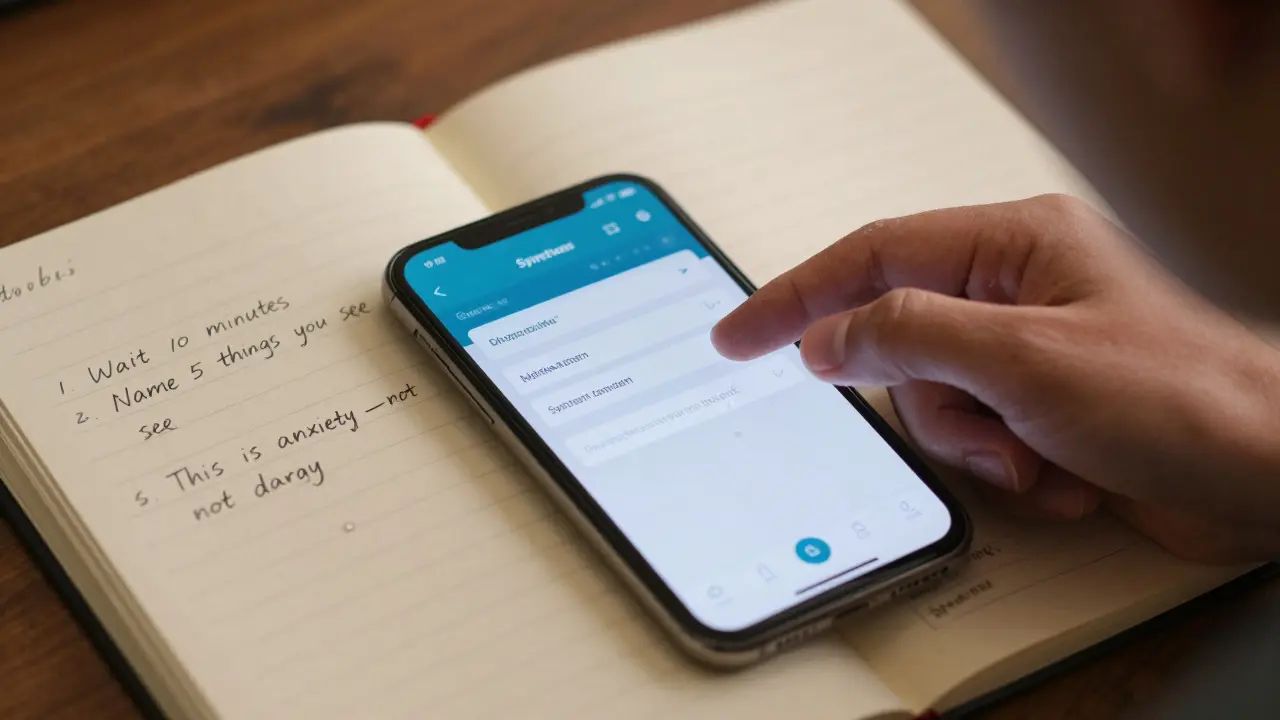
- Delay checking. If you feel the urge to Google or measure your pulse, wait 10 minutes. Then 20. Then an hour. Each delay weakens the habit.
- Reduce screen time. Delete symptom-checking apps. Block medical websites during work hours. Use a timer if you need to look something up-5 minutes max.
- Talk to a therapist who knows health anxiety. Not every therapist does. Ask if they’ve treated people with hypochondriasis before.
- Practice grounding. When anxiety spikes, name 5 things you see, 4 you can touch, 3 you hear, 2 you smell, 1 you taste. It pulls you out of your body and into the present.
The Hidden Cost
Health anxiety doesn’t just hurt emotionally. It costs money. People spend thousands on private scans, alternative treatments, and specialist visits. They miss work. They cancel vacations. They isolate themselves. One woman in Norwich told me she hadn’t been on a train in three years because she was afraid of sudden cardiac arrest. She’d read too many stories about people collapsing on public transport.
It also strains relationships. Partners get tired of the constant questions. Parents worry their child is sick. Friends stop inviting them out. The loneliness is heavy.
But here’s the truth: you don’t have to live like this. Health anxiety is one of the most treatable anxiety disorders. Success rates for CBT are higher than 70%. And recovery doesn’t mean never feeling anxious again. It means knowing when to trust your body-and when to let go.
It’s Not About Being Crazy
People with health anxiety aren’t weak. They’re not dramatic. They’re not faking it. They’re trapped in a system that rewards vigilance. In a world where every symptom is a potential red flag, it’s no wonder their brains went into overdrive. But the system doesn’t work for them. It’s broken.
Recovery isn’t about ignoring your body. It’s about learning to listen without panicking. It’s about realizing that feeling uncomfortable doesn’t mean you’re dying. That your heart can race without being broken. That your mind can be wrong-even when it feels absolutely certain.
And if you’re reading this and you recognize yourself-you’re not alone. Millions are walking this path. And help exists. It’s not magic. It’s science. And it works.
Is health anxiety the same as hypochondria?
Yes, health anxiety is the modern term for what was once called hypochondria. The name changed because "hypochondria" carried stigma and implied the person was imagining things. Health anxiety is a recognized mental health condition in the DSM-5 and ICD-11. It’s not about being fake-it’s about a brain that misreads normal bodily signals as life-threatening.
Can health anxiety cause real physical symptoms?
Absolutely. Anxiety triggers the fight-or-flight response, which causes real physical changes: increased heart rate, muscle tension, dizziness, nausea, tingling, and fatigue. These aren’t imaginary. They’re biological. But they’re caused by fear, not disease. That’s the key difference.
How long does treatment take?
Most people see noticeable improvement within 8 to 12 weeks of starting CBT. Full recovery can take 4 to 6 months, depending on how long the anxiety has been present and how often someone seeks reassurance. Medication, if used, usually takes 4 to 6 weeks to start working. Consistency matters more than speed.
Should I stop seeing my doctor?
No. You should keep seeing your GP-but with a new plan. Work with them to set limits: one check-up every 3 months, unless there’s a new, clear symptom. Ask them to help you avoid unnecessary tests. A good doctor will support your recovery, not feed your anxiety.
Can health anxiety come back?
Yes, like other anxiety disorders, it can return during stress, illness, or major life changes. But recovery isn’t about being perfect. It’s about having tools. If you’ve learned how to respond to anxiety without panicking, you can handle a relapse. It won’t be as bad. And it won’t last as long.