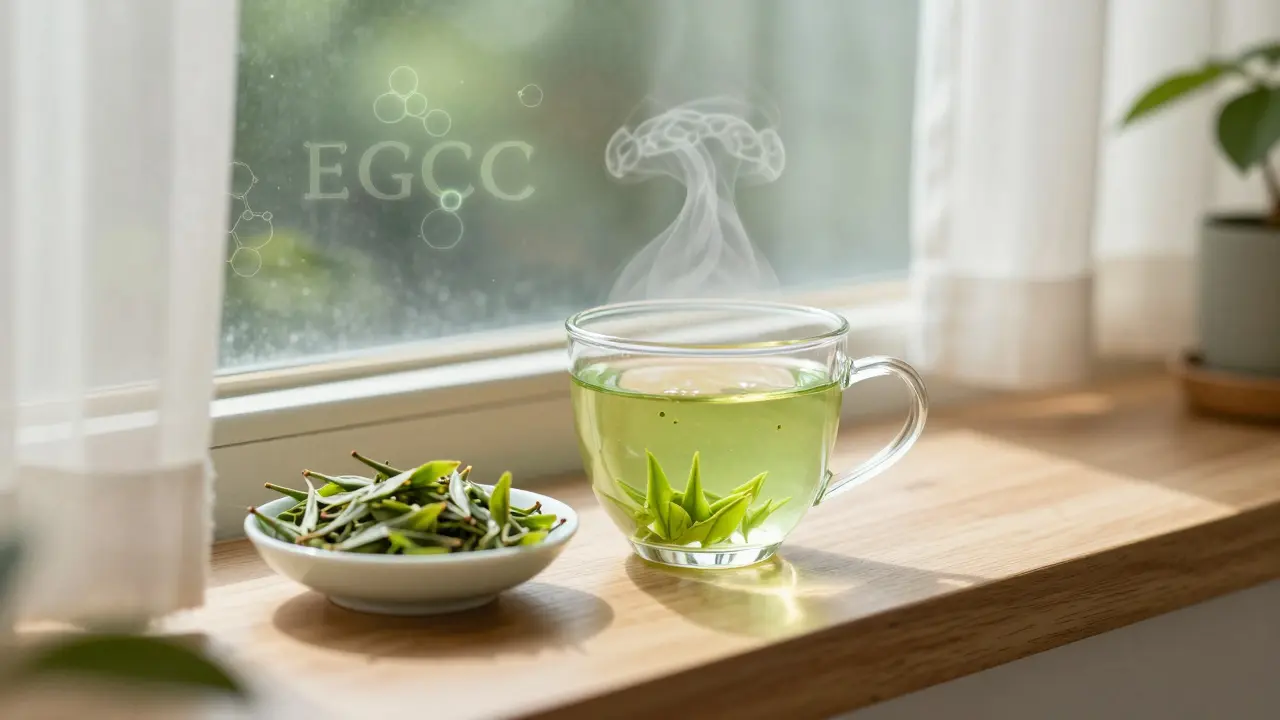
Green tea isn’t just a soothing drink you sip on a lazy afternoon. It’s one of the most studied beverages in modern science, with over 12,000 research papers linking it to real health improvements. If you’ve been drinking it just because it’s ‘healthy,’ you’re missing half the story. The truth? Green tea delivers measurable, science-backed benefits that go far beyond relaxation.
It’s Packed with Antioxidants That Fight Cellular Damage
What makes green tea different from black or oolong tea? It’s processed differently-steamed or pan-fired right after harvesting, which locks in its natural compounds. The star player here is epigallocatechin gallate, or EGCG. This antioxidant is 20 times more powerful than vitamin E at neutralizing free radicals, the unstable molecules that damage cells and speed up aging.
A 2023 meta-analysis of 27 clinical trials found that people who drank at least three cups of green tea daily had significantly lower levels of oxidative stress markers in their blood. That’s not just theory-it’s lab-confirmed. These antioxidants don’t just sit around; they actively protect your DNA, reduce inflammation, and may even lower your risk of certain cancers. The effect is strongest for oral, prostate, and breast cancers, according to the National Cancer Institute.
It Helps You Lose Weight-Without Starving
Let’s cut through the hype: green tea won’t melt fat off your belly overnight. But it does give your metabolism a gentle, natural boost. Studies show that the combination of caffeine and EGCG in green tea can increase fat oxidation by up to 17% during moderate exercise. That means your body burns more fat while you walk, bike, or even clean the house.
In a 12-week trial published in the American Journal of Clinical Nutrition, participants who drank green tea extract lost an average of 2.9 pounds more than those who took a placebo-without changing their diet or exercise routine. The key? Consistency. Drinking two to three cups a day, especially before workouts, makes a measurable difference over time.
Your Heart Will Thank You
Heart disease is the leading cause of death worldwide. Green tea doesn’t cure it, but it helps prevent it. Regular drinkers have lower LDL (bad) cholesterol and higher HDL (good) cholesterol. One large Japanese study tracking over 40,000 adults found that those who drank five or more cups of green tea daily had a 26% lower risk of dying from cardiovascular disease over a decade.
How? EGCG improves the function of endothelial cells-the lining of your blood vessels. Better endothelial function means your arteries stay flexible, your blood pressure stays lower, and plaque buildup slows down. A 2024 review in the Journal of the American Heart Association confirmed that green tea drinkers had significantly better arterial stiffness scores than non-drinkers.
It Sharpens Your Brain and Protects Against Decline
Ever feel foggy after lunch? Green tea can help. It contains L-theanine, an amino acid that works with caffeine to produce calm focus-not the jittery crash you get from coffee. This combo boosts alpha brain waves, which are linked to relaxed alertness.
Researchers at the University of Cambridge found that older adults who drank green tea regularly scored higher on memory and attention tests over a six-month period. Brain scans showed increased connectivity between regions responsible for working memory. This isn’t just about feeling sharper today-it’s about protecting your brain long-term. Studies suggest green tea drinkers have a 30% lower risk of developing Alzheimer’s and Parkinson’s diseases.

It Lowers Blood Sugar and Helps Prevent Type 2 Diabetes
If you’re prediabetic or just trying to avoid insulin spikes, green tea is a quiet hero. Multiple clinical trials show that daily green tea consumption improves insulin sensitivity and reduces fasting blood sugar levels. In one 12-week study of 100 adults with prediabetes, those who drank green tea daily lowered their fasting glucose by an average of 8%-without medication.
The polyphenols in green tea slow down carbohydrate digestion, which means sugar enters your bloodstream more slowly. That keeps energy levels steady and reduces cravings. The American Diabetes Association lists green tea as a recommended beverage for people managing blood sugar, alongside water and unsweetened herbal teas.
It’s Good for Your Skin and May Reduce Acne
Acne isn’t just a teenage problem-it affects 50 million Americans every year. Green tea’s anti-inflammatory and antimicrobial properties make it useful both inside and out. Drinking it reduces systemic inflammation that triggers breakouts. Topical green tea extracts are even used in acne creams for their ability to shrink sebaceous glands and kill acne-causing bacteria.
A 2022 study in the Journal of Clinical and Aesthetic Dermatology showed that participants who drank two cups of green tea daily saw a 35% reduction in inflammatory acne lesions after eight weeks. The same compounds that protect your cells from aging also calm redness and soothe irritated skin.
How Much Should You Drink? And What About Caffeine?
You don’t need to chug gallons. Two to three cups a day is the sweet spot for most health benefits. Each cup contains about 20-45 mg of caffeine-less than half of what’s in a cup of coffee. That’s enough to give you a gentle lift without the jitters or sleep disruption.
But timing matters. Drink it in the morning or early afternoon. Avoid it within four hours of bedtime if you’re sensitive to caffeine. Also, skip adding sugar or milk. Sugar cancels out the benefits, and milk proteins can bind to EGCG, reducing its absorption. Drink it plain, or add a slice of lemon-vitamin C helps your body absorb more antioxidants.

What About Green Tea Supplements?
Green tea extract pills are popular, but they’re not always better. Some supplements contain concentrated doses of EGCG that can stress your liver. The FDA has issued warnings about liver damage linked to high-dose green tea extract supplements. Stick to brewed tea-it’s safer, more balanced, and comes with the ritual that makes it enjoyable.
And don’t confuse green tea with matcha. Matcha is powdered green tea, so you consume the whole leaf. That means more caffeine and more antioxidants-about three times as much EGCG per serving. But it’s also stronger. If you’re new to green tea, start with regular loose-leaf or bagged tea before moving to matcha.
Who Should Avoid Green Tea?
Most people can drink it safely. But if you have iron-deficiency anemia, green tea can interfere with iron absorption. Drink it between meals, not with them. If you’re pregnant, limit intake to one or two cups a day-too much caffeine can affect fetal growth. And if you’re on blood thinners like warfarin, talk to your doctor. Green tea contains vitamin K, which can affect how the medication works.
Also, avoid drinking it on an empty stomach if you’re prone to nausea. The tannins can irritate your gut. Have it with a light snack instead.
Simple Ways to Make It Part of Your Day
- Swap your afternoon soda for a cup of iced green tea.
- Keep a thermos of brewed green tea at your desk.
- Try cold-brewing it overnight-less bitter, more refreshing.
- Use it as a base for smoothies (chilled, unsweetened).
- Make a weekly ritual: brew a pot on Sunday night and sip it slowly while journaling.
It’s not magic. But it’s one of the few things you can drink every day that actually adds years to your life-and life to your years.
Can green tea really help with weight loss?
Yes, but not dramatically. Green tea boosts fat burning during exercise by about 17% and helps reduce body fat over time when combined with a healthy diet. It’s not a miracle, but it’s a helpful tool-especially when you drink it consistently, two to three times a day.
Is green tea better than coffee for energy?
It depends on what kind of energy you want. Coffee gives you a quick, sharp spike followed by a crash. Green tea delivers a smoother, longer-lasting alertness thanks to L-theanine, which calms your mind while caffeine wakes it up. You feel focused, not wired.
Does green tea have more caffeine than black tea?
Not usually. Green tea typically has less caffeine than black tea-about 20-45 mg per cup versus 40-70 mg in black tea. The difference comes from processing, not the plant itself. Green tea leaves are steamed quickly, which preserves more compounds but leaves less caffeine than the longer oxidation used for black tea.
Can I drink green tea at night?
It’s not ideal. Even though green tea has less caffeine than coffee, it still has enough to interfere with sleep for sensitive people. If you want a nighttime drink, opt for decaf green tea or herbal tea. Decaf versions still contain antioxidants but remove most of the caffeine.
Is bottled green tea as healthy as brewed tea?
Almost never. Most bottled green teas are heavily diluted, sweetened with sugar or high-fructose corn syrup, and contain only a fraction of the antioxidants found in brewed tea. Some even have less than 10% of the EGCG in a home-brewed cup. Always check the label-if sugar is listed before tea, skip it.
Does green tea help with anxiety?
Yes, surprisingly. The L-theanine in green tea increases GABA, serotonin, and dopamine levels in the brain-chemicals that reduce stress and promote calm. Studies show it lowers cortisol, the stress hormone, and helps people feel more relaxed during high-pressure situations, like public speaking or exams.