Most people think gut health is just about avoiding stomach bugs or bloating after a big meal. But your gut is doing way more than digesting food-it’s controlling your immune system, influencing your mood, and even affecting how well you sleep. If you’ve ever felt tired for no reason, got anxious before a meeting, or had trouble staying regular, your gut might be sending you a signal. The good news? You don’t need a detox, expensive supplements, or a strict diet to start fixing it. Small, simple changes today can make a real difference in how you feel tomorrow.
Start with fiber-but not just any kind
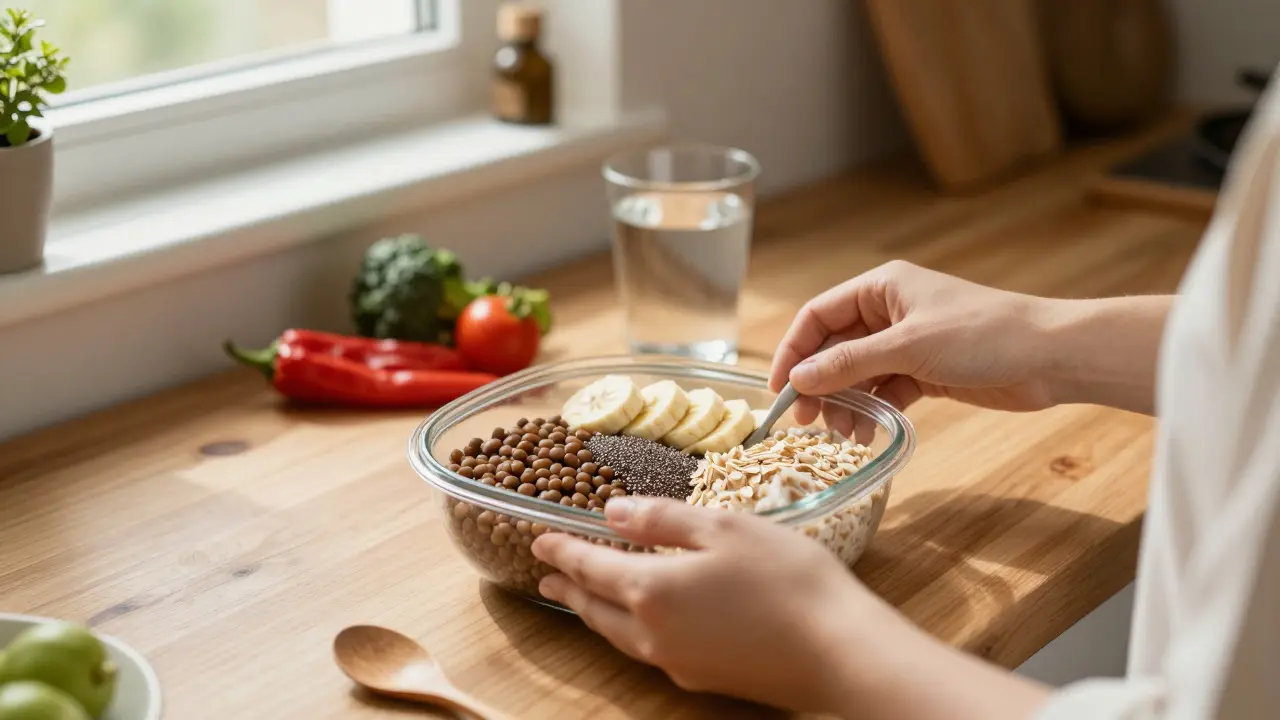
Fiber is the backbone of a healthy gut, but not all fiber works the same. Soluble fiber, found in oats, apples, and beans, dissolves in water and feeds the good bacteria in your colon. Insoluble fiber, like whole wheat and vegetables, helps things move through your system. Most people get enough insoluble fiber but miss out on soluble. Try adding half a cup of cooked lentils to your lunch. That’s 8 grams of fiber-nearly a third of your daily goal. Or swap your morning cereal for oatmeal topped with sliced banana and chia seeds. You’ll notice less bloating and more steady energy by the afternoon.
Drink water before meals, not after
It sounds simple, but timing matters. Drinking a glass of water 20 to 30 minutes before eating helps your stomach produce the right amount of acid and enzymes to break down food. If you chug water during or right after a meal, you dilute those digestive juices. That’s why some people feel heavy or gassy after eating-even if they didn’t eat too much. Try this: set a phone reminder to drink a glass of water at 11:30 a.m. before lunch and at 5:30 p.m. before dinner. Do it for three days. You might be surprised how much less bloating you feel.
Eat fermented foods daily
Fermented foods are packed with live cultures that help balance your gut microbiome. You don’t need to eat kimchi or kombucha if you don’t like them. Plain, unsweetened yogurt with live cultures works just as well. A small container (about 150g) a day gives you billions of good bacteria. If dairy isn’t your thing, try sauerkraut or miso soup. A tablespoon of raw sauerkraut on your sandwich or a spoonful of miso in warm water can make a difference. Just avoid pasteurized versions-they’ve been heat-treated and killed the good bugs. Look for "raw," "unpasteurized," or "live cultures" on the label.
Stop eating late at night
Your gut needs downtime. When you eat right before bed, your digestive system doesn’t get a chance to rest. That can lead to acid reflux, poor sleep, and even weight gain over time. Aim to finish your last meal at least three hours before you go to bed. If you’re hungry later, reach for a small handful of almonds or a cup of herbal tea like chamomile or ginger. No sugar, no dairy, no chocolate. Just quiet, gentle support for your gut while you sleep.

Move your body-gently
You don’t need to run a marathon to help your gut. Walking for 20 minutes after dinner does more than you think. It helps food move through your intestines, reduces bloating, and lowers stress hormones that mess with digestion. Even pacing while you talk on the phone or doing light stretching before bed helps. A 2023 study from the University of Sydney found that people who took a 15-minute walk after meals had 20% less post-meal bloating than those who sat still. It’s not about intensity-it’s about consistency.
Reduce processed sugar and artificial sweeteners
Sugar doesn’t just cause cavities. It feeds the bad bacteria in your gut, leading to inflammation, cravings, and even brain fog. Artificial sweeteners like aspartame and sucralose are even worse-they can throw off your gut’s natural balance without giving you any calories. Check your coffee creamer, flavored yogurt, protein bars, and even "sugar-free" gum. If you see ingredients like maltodextrin, high-fructose corn syrup, or sucralose, swap them out. Try using a little honey or maple syrup instead, or just cut back. You might not notice the change right away, but in a few weeks, your cravings will start to settle.
Manage stress like it’s part of your diet
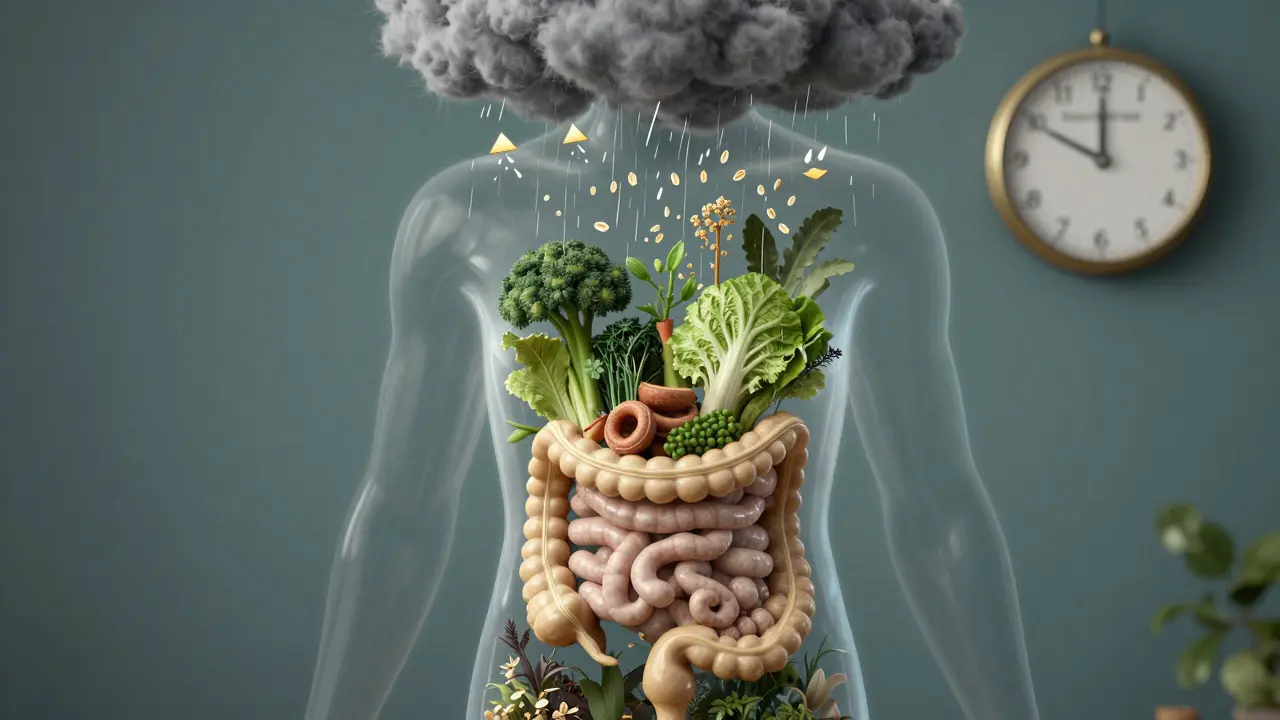
Your gut and brain are wired together. When you’re stressed, your gut slows down or goes into overdrive. That’s why you get butterflies before a presentation or diarrhea during a big deadline. You can’t eliminate stress, but you can reduce its impact. Try this: take three slow breaths before you eat. Inhale for four counts, hold for two, exhale for six. Do it three times. It signals your body to switch from "fight or flight" to "rest and digest." Do this every day for a week. You’ll start to notice you’re less likely to feel sick to your stomach after meals.
Track your symptoms-not your calories
Instead of counting calories, start noticing how you feel after eating. Keep a simple notebook or use a notes app on your phone. Write down what you ate and how you felt 1-2 hours later. Did you get bloated? Did your skin break out? Did you feel sluggish? After a week, look for patterns. Maybe every time you have dairy, you get a headache. Or maybe gluten makes you tired. You don’t need to cut everything out. Just identify the triggers that affect you personally. That’s the real key to gut health-knowing what works for your body, not what works for someone else.
Give it time-no quick fixes
Improving your gut health isn’t a 7-day challenge. It’s a daily habit. You won’t wake up one morning feeling completely different. But after 2-3 weeks of these small changes, you’ll notice you’re sleeping better, your energy is steadier, and you’re not reaching for snacks out of boredom or stress. Your gut is a living ecosystem. It needs consistency, not intensity.
Can probiotic supplements replace fermented foods?
Probiotic supplements can help, but they’re not a replacement for real food. Most supplements contain only a few strains of bacteria, while fermented foods like yogurt, sauerkraut, and kefir offer dozens of different strains, plus prebiotics that feed them. Supplements are useful if you’ve been on antibiotics or have a diagnosed condition, but for everyday gut support, food works better and costs less.
Is apple cider vinegar good for gut health?
A small amount of raw, unfiltered apple cider vinegar before meals might help stimulate stomach acid, which can improve digestion-especially if you tend to feel full quickly or have heartburn. But it’s not a magic cure. Dilute one tablespoon in a glass of water. Don’t drink it straight-it can damage tooth enamel and irritate your throat. If you have acid reflux or ulcers, skip it.
What if I have IBS or another digestive condition?
If you have IBS, Crohn’s, or another diagnosed condition, these tips can still help-but they’re not a substitute for medical care. Work with a dietitian who specializes in gut health. Some people with IBS need to avoid certain fibers or fermentable carbs (FODMAPs), so a personalized plan is essential. Don’t self-diagnose or cut out entire food groups without guidance.
How long until I feel better?
Most people notice small improvements-like less bloating or better sleep-within 10 to 14 days. Deeper changes, like fewer cravings or more stable energy, take 3 to 6 weeks. It depends on how long your gut has been out of balance. Be patient. The goal isn’t perfection-it’s progress.
Do I need to take a stool test?
No, not unless your doctor recommends it. At-home stool tests are expensive, often misleading, and not regulated. You don’t need to know your exact bacteria count to improve your gut. Focus on the simple habits: eat more fiber, drink water before meals, move after eating, reduce sugar, and manage stress. Those steps work for almost everyone.
What to do next
Choose one thing from this list and do it tomorrow. Not all of them. Just one. Maybe it’s drinking water before lunch. Or adding sauerkraut to your sandwich. Or walking after dinner. Stick with it for seven days. Then add another. Your gut doesn’t need a revolution-it needs routine. Small, daily actions add up faster than you think.