When you push your body to its limits-whether you're running marathons, lifting weights, or playing competitive sports-you're not just building strength. You're also building micro-tears in your muscles, tightening connective tissue, and accumulating metabolic waste. That’s where sports massage comes in. It’s not just a luxury for pro athletes. It’s a practical, science-backed tool that helps anyone who trains hard recover faster, move better, and stay injury-free.
What Exactly Is Sports Massage?
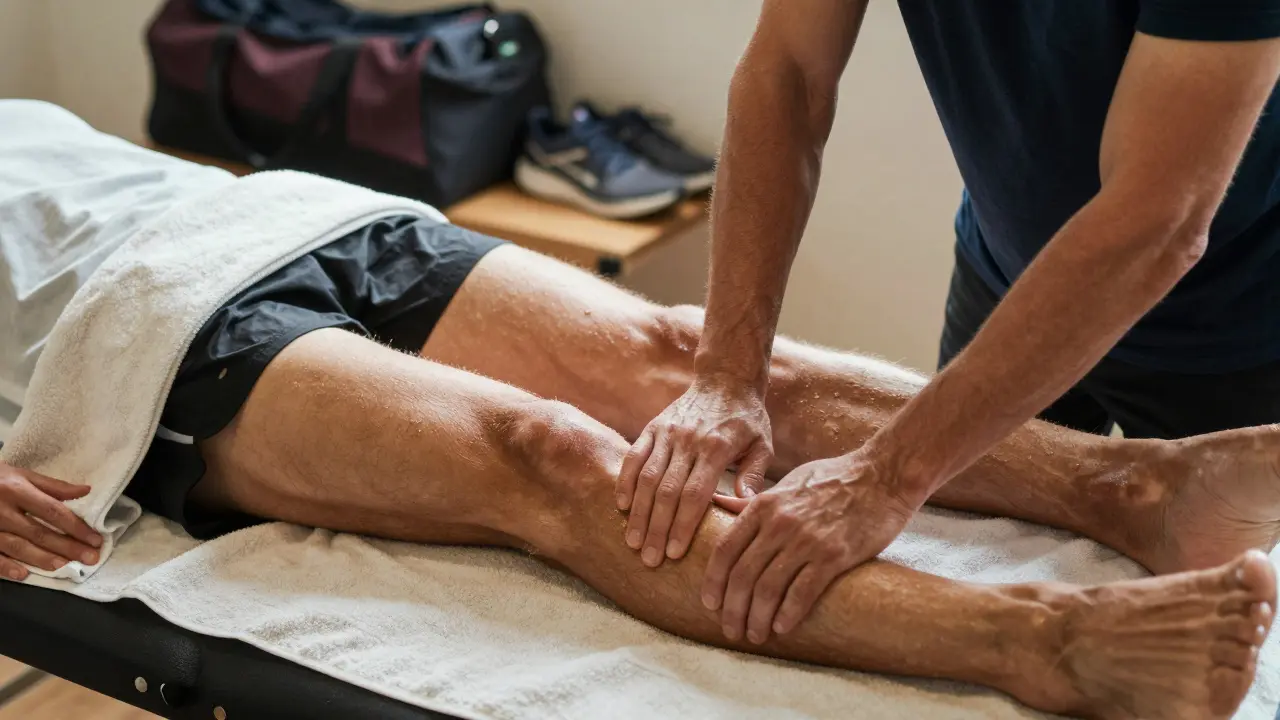
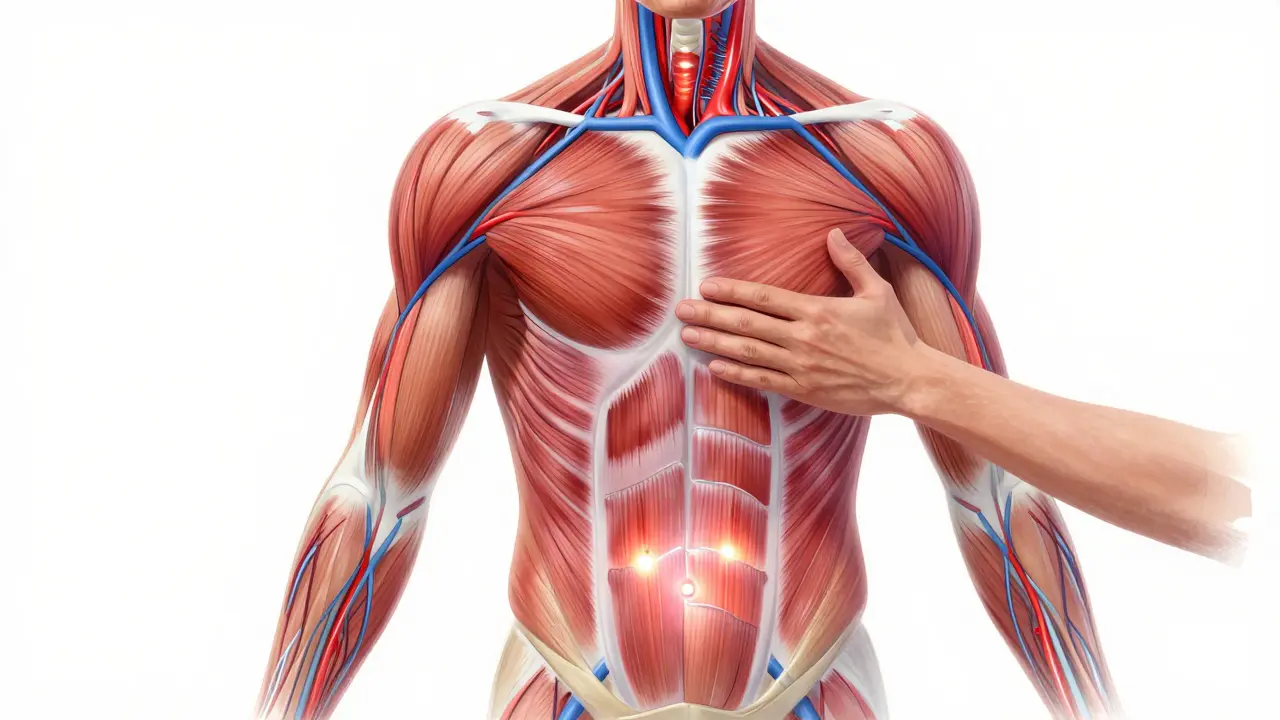
Sports massage isn’t one single technique. It’s a blend of deep tissue work, trigger point therapy, stretching, and myofascial release-all tailored to the needs of active people. Unlike a relaxing spa massage, it’s focused, targeted, and often intense. The goal isn’t to make you feel sleepy. It’s to make you feel stronger.
Think of it like tuning a high-performance engine. Your muscles, tendons, and ligaments are the parts that get worn down with use. Sports massage helps clear out lactic acid, break up scar tissue, and restore natural movement patterns. It’s not magic. It’s physiology.
How It Helps Athletes Recover
After a hard workout or game, your body is flooded with inflammation. That’s normal. But if that inflammation doesn’t resolve, it leads to stiffness, soreness, and eventually, injury. Sports massage speeds up recovery by increasing blood flow to tired muscles. Studies show it can reduce muscle soreness by up to 30% within 24 hours after intense exercise.
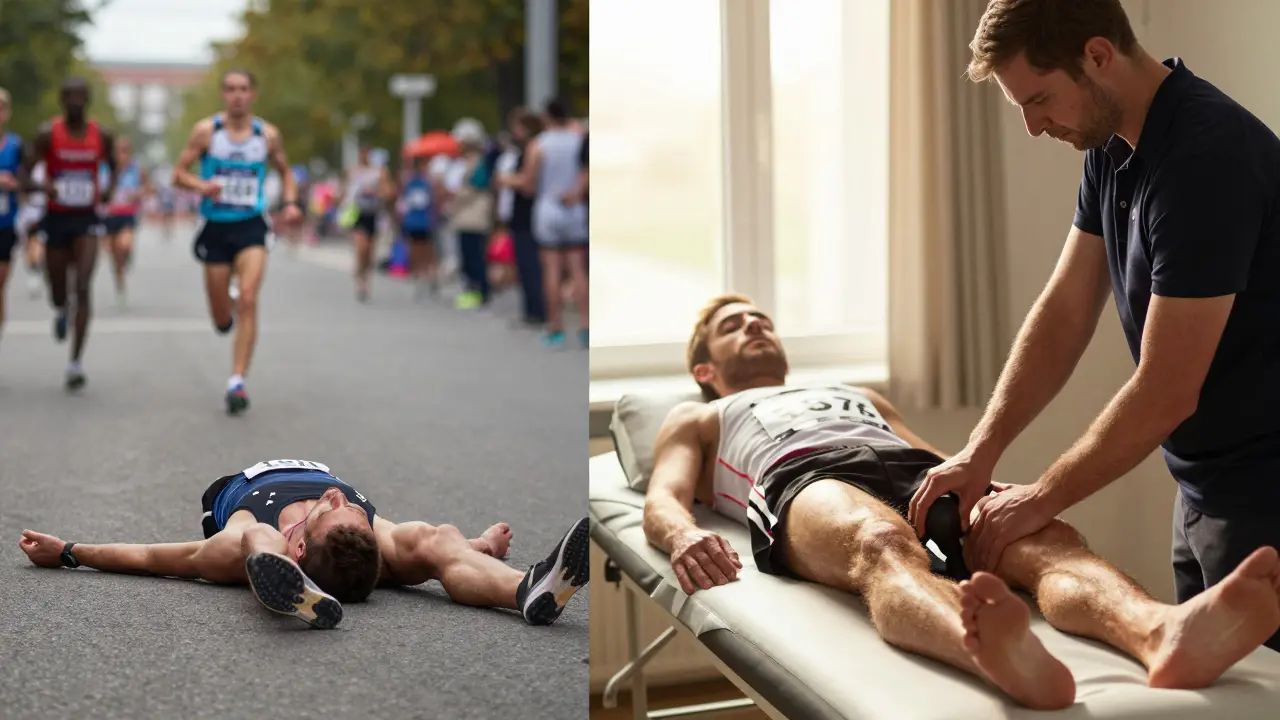
One 2023 study from the Journal of Athletic Training tracked 85 runners after a 10K race. Half got a 45-minute sports massage within two hours of finishing. The others didn’t. The massaged group reported significantly less pain, better range of motion, and returned to training 1.5 days faster on average.
It’s not just about feeling better. It’s about getting back to training sooner. For weekend warriors and competitive athletes alike, that’s the difference between progress and plateaus.
Pre-Event vs. Post-Event: Two Different Approaches
Not all sports massages are the same. Timing matters.
Pre-event massage (done 1-2 hours before activity) is light and stimulating. It warms up the muscles, improves circulation, and mentally prepares you. Think of it as a dynamic warm-up with hands. It doesn’t dig deep-it activates.
Post-event massage (done within 2-4 hours after activity) is deeper and slower. It focuses on flushing out metabolic byproducts, calming the nervous system, and reducing swelling. This is where the real recovery magic happens.
Many elite teams now use a combination: a quick pre-event session to prime the body, followed by a longer post-event session the same day. For amateurs, even just one post-event session per week can make a noticeable difference.
Who Benefits Most?
You don’t need to be a professional to benefit. Here’s who sees the biggest gains:
- Runners-especially those training for long distances. IT band tightness and calf tension are common, and massage helps loosen those areas.
- Weightlifters-repeated strain on shoulders, hips, and lower back responds well to targeted release work.
- Team sport athletes-soccer, basketball, rugby players deal with sudden stops, twists, and impacts. Massage helps prevent chronic tightness.
- Recreational athletes-people who train 3-5 times a week but don’t have access to physiotherapists. Massage fills the gap.
- Injury recovery patients-once cleared by a doctor, massage helps restore mobility after strains or sprains.
Even desk workers who hit the gym after work can benefit. The combination of sitting all day and intense workouts creates muscle imbalances. Sports massage helps correct those before they turn into pain.
What to Expect During a Session
A typical sports massage lasts 45-75 minutes. You’ll usually be asked to wear shorts or athletic gear. The therapist will start with broad strokes to assess tension areas, then move into deeper work.
You’ll likely feel some discomfort-especially around knots or scar tissue. But it shouldn’t be unbearable. A good therapist will check in constantly: "Is this pressure okay?" If it’s too much, speak up. This isn’t a pain contest.
Afterward, you might feel slightly sore for a day or two. That’s normal. Drink water. Move gently. Avoid heavy lifting or intense cardio for 24 hours. Your muscles are healing.
Common Myths About Sports Massage
Let’s clear up a few misconceptions:
- Myth: "Massage breaks up lactic acid."
Truth: Lactic acid clears naturally within an hour. Massage helps with inflammation and muscle tension, not lactic acid removal. - Myth: "You need to be in pain to get results."
Truth: Pain isn’t progress. Deep pressure should feel like "good hurt," not "stop this." - Myth: "It’s only for elite athletes."
Truth: Anyone who trains regularly can benefit. You don’t need a team of physios to justify it. - Myth: "One session fixes everything."
Truth: Like training, consistency matters. Monthly sessions help. Weekly sessions transform.
How Often Should You Get It?
There’s no one-size-fits-all answer. But here’s a simple guide:
- Competitive athletes: 1-2 times per week during peak training
- Regular gym-goers (3-5x/week): Once every 1-2 weeks
- Recreational exercisers (1-3x/week): Once a month
- Injury recovery: As advised by your physiotherapist (often 2x/week initially)
Some people swear by getting a session right after a big race or game. Others prefer a weekly maintenance routine. The best approach? Try both. Track how you feel. Adjust based on your body’s feedback.
What to Look for in a Therapist
Not all massage therapists are trained for sports. Look for:
- Certification in sports massage or clinical sports therapy
- Experience working with athletes in your sport
- Ability to explain what they’re doing and why
- Willingness to communicate with your coach or physio (if applicable)
Ask if they’ve worked with runners, cyclists, or weightlifters before. If they say "I do all types," that’s fine-but follow up with: "What’s the most common issue you see in [your sport]?" Their answer will tell you if they really understand your needs.
DIY Tips Between Sessions
You can’t rely on weekly massages alone. Pair them with smart self-care:
- Use a foam roller on major muscle groups (quads, hamstrings, calves) for 5-10 minutes after workouts
- Stretch dynamically before training, statically after
- Hydrate well-muscles need water to release tension
- Get enough sleep-recovery happens during rest
- Try self-massage tools like lacrosse balls for tight spots (e.g., glutes, upper back)
These habits won’t replace massage, but they’ll make each session more effective.
When to Skip It
Sports massage isn’t for everyone. Avoid it if you have:
- An acute injury (sprain, strain, fracture) within the first 48-72 hours
- Open wounds, burns, or infections
- Severe bruising or swelling
- Blood clotting disorders or are on blood thinners
- Recent surgery (wait until cleared by your doctor)
If you’re unsure, check with your doctor or physiotherapist first. Better safe than sorry.
The Bigger Picture
Sports massage isn’t a magic cure. But it’s one of the few recovery tools that’s backed by science, affordable, and accessible. When paired with proper sleep, nutrition, and training, it becomes part of a winning system.
Think of it like brushing your teeth. You don’t wait until your tooth hurts to do it. You do it because you know prevention beats repair. The same applies to your muscles. Regular sports massage isn’t a luxury-it’s a smart investment in your long-term performance.
Can sports massage help prevent injuries?
Yes. By improving muscle flexibility, reducing tightness, and correcting imbalances, sports massage lowers the risk of strains and overuse injuries. A 2024 study in the British Journal of Sports Medicine found athletes who received monthly sports massages had 40% fewer muscle-related injuries over a 6-month period compared to those who didn’t.
Is sports massage painful?
It shouldn’t be excruciating. You may feel deep pressure, especially in tight areas, but it should stay within the "good hurt" range-like when a stretch feels intense but not sharp. If it hurts too much, speak up. A skilled therapist will adjust pressure based on your feedback.
How long do the effects last?
Immediate effects like reduced soreness and improved mobility usually last 24-72 hours. Long-term benefits-like better flexibility and fewer injuries-build up over weeks and months of consistent sessions. Think of it like exercise: one workout helps today. Regular training changes your body over time.
Can I get a sports massage if I’m not an athlete?
Absolutely. If you exercise regularly-even just walking, cycling, or doing yoga-your muscles still experience stress. Sports massage isn’t just for pros. It’s for anyone who wants to move better, recover faster, and stay pain-free.
Do I need to undress for a sports massage?
You’ll typically wear shorts or athletic clothing. The therapist will drape you with towels and only expose the area being worked on. You’re never fully exposed. If you’re uncomfortable, ask for adjustments. Most therapists are used to working with clients who prefer to stay partially clothed.