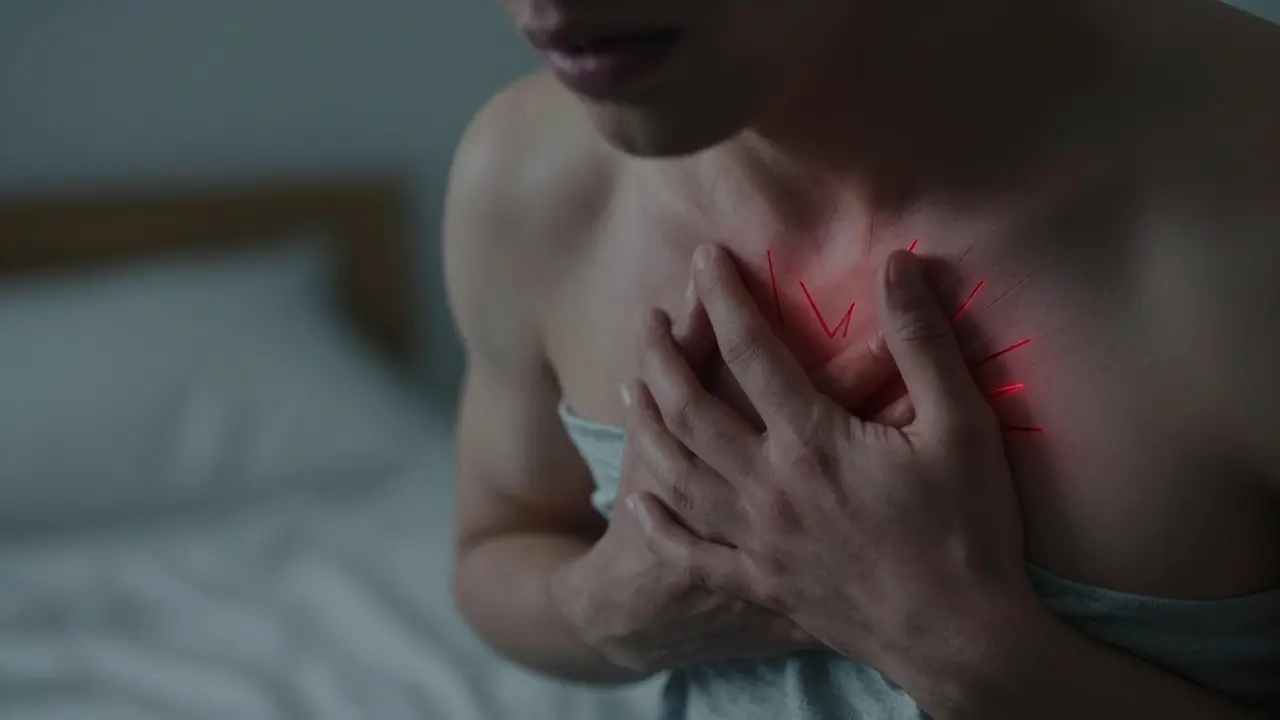
You check your pulse. It’s a bit fast. Your heart races. You’re dying.
Sound familiar? If you spend more time worrying about what might be wrong with you than actually living your life, you aren’t just being cautious. You are likely dealing with health anxiety, also known as illness anxiety disorder or, in older terms, hypochondria. This isn't about having a disease; it is about having a fear of disease that feels as real and terrifying as the physical pain itself.
In Perth, where the sun shines bright and the lifestyle is active, it can feel isolating when your mind convinces you that a minor headache is a brain tumor or that a twitching muscle is a sign of early-onset Parkinson's. The good news? Health anxiety is treatable. But first, we need to understand why your brain is hitting the panic button over every bodily sensation.
The Brain on Alert: Why Does This Happen?
To fix the problem, we have to look at the machinery behind it. Health anxiety stems from a miscommunication in how your brain processes bodily signals. Most people feel a stomach ache and think, "I ate too much pizza." People with health anxiety feel a stomach ache and think, "This is cancer. I need to go to the ER now."
This reaction is driven by the amygdala, the part of your brain responsible for the fight-or-flight response. In people with high health anxiety, this alarm system is hypersensitive. It interprets neutral or benign sensations-like a skipped heartbeat or a rash-as imminent threats.
There is a feedback loop at play here:
- Trigger: You notice a physical sensation (e.g., dizziness).
- Catastrophic Interpretation: Your brain jumps to the worst-case scenario (e.g., stroke).
- Anxiety Spike: Adrenaline floods your system.
- Physical Symptoms: The adrenaline causes more shaking, sweating, and rapid heartbeat.
- Confirmation Bias: You see these new symptoms as proof that your initial fear was right.
The cycle reinforces itself. Every time you check your body or search online for symptoms, you teach your brain that these actions are necessary for survival. Over time, the threshold for what triggers anxiety lowers until even normal breathing feels suspicious.
Safety Behaviors: The Trap of Reassurance
If you have health anxiety, you probably engage in what psychologists call "safety behaviors." These are actions you take to reduce anxiety in the short term but which make the problem worse in the long run. They include:
- Body Checking: Feeling your lymph nodes, checking your skin for moles, or monitoring your heart rate multiple times a day.
- Reassurance Seeking: Asking friends, family, or doctors repeatedly if you look okay or if your symptoms are serious.
- Cyberchondria: Searching symptoms on Google or WebMD. This is perhaps the most dangerous habit because the internet is filled with worst-case scenarios presented as common facts.
- Avoidance: Staying away from hospitals, doctors' offices, or even places where sick people might be, like public transport during flu season.
Why do these backfire? Because they prevent you from learning that you can tolerate uncertainty. When you check your pulse and it’s normal, you feel relief. But that relief is temporary. Next time, the anxiety will return, often stronger, because you never learned to sit with the discomfort of not knowing. You became dependent on the check to feel safe.
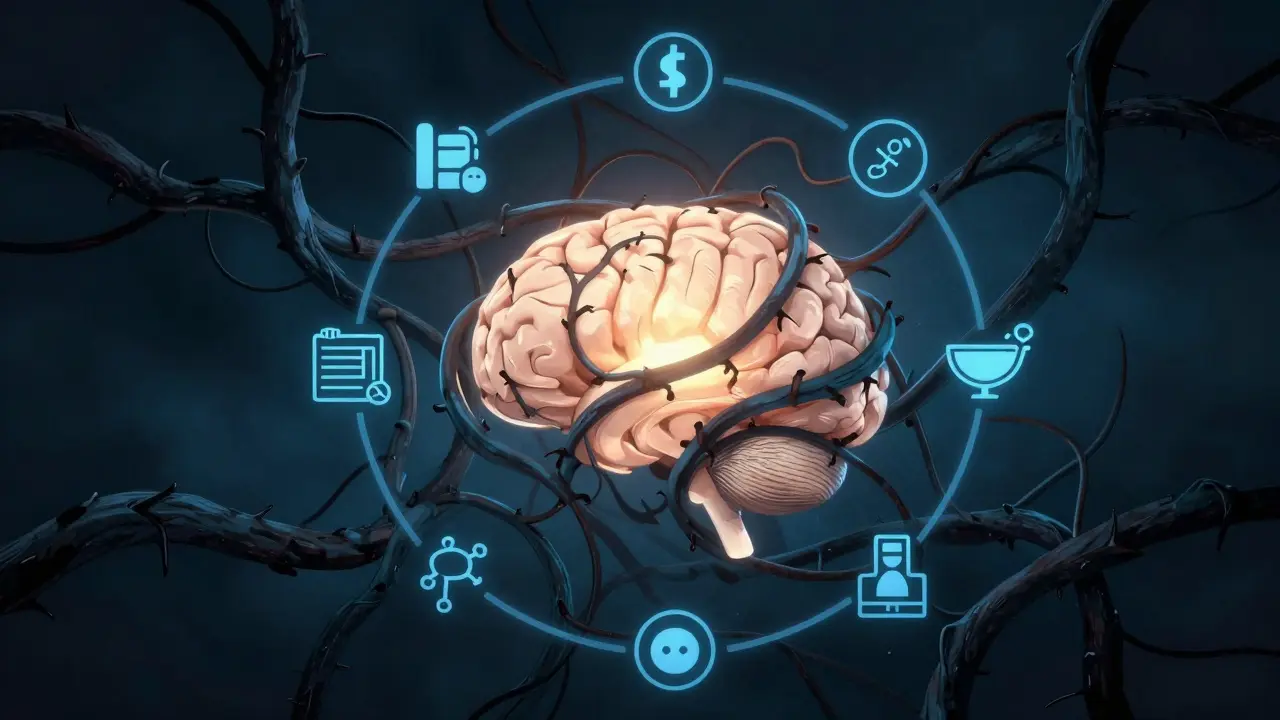
CBT: Rewiring the Response
The gold standard treatment for health anxiety is Cognitive Behavioral Therapy (CBT). Unlike talk therapy that focuses on past trauma, CBT is practical and present-focused. It helps you identify distorted thoughts and change the behaviors that maintain them.
Here is how CBT tackles health anxiety in practice:
1. Cognitive Restructuring
You learn to catch catastrophic thoughts and challenge them with evidence. Instead of thinking, "This chest pain means I’m having a heart attack," you learn to ask: "What else could cause this?" Perhaps it’s acid reflux, muscle strain, or anxiety itself. You don’t ignore the symptom; you broaden your perspective to include probable, non-dangerous explanations.
2. Exposure and Response Prevention (ERP)
This is the hardest but most effective part. ERP involves deliberately exposing yourself to feared stimuli while resisting the urge to perform safety behaviors. For example:
- Exposure: Notice a strange sensation in your leg.
- Response Prevention: Do NOT check it, do NOT Google it, do NOT ask your partner if it looks swollen. Just let the feeling be there.
At first, this feels unbearable. Your anxiety will spike. But if you wait it out without checking, something magical happens: your anxiety naturally decreases on its own. This teaches your brain that the sensation was not dangerous and that you survived the uncertainty. Over time, the trigger loses its power.
Practical Steps to Take Today
You don’t need to wait for a therapist to start making changes. Here are actionable steps you can implement immediately to break the cycle.
Set Boundaries with Information
Stop using the internet as a diagnostic tool. Delete apps that track every single biometric unless prescribed by a doctor. Set a rule: if a symptom persists for more than two weeks, see a doctor. If it’s less than two weeks, assume it is stress-related and monitor it passively. Passive monitoring means acknowledging the symptom without analyzing it.
The "Worry Time" Technique
Instead of letting health worries interrupt your entire day, schedule a specific 15-minute window each day called "Worry Time." If a health fear pops up at 10 AM, tell yourself, "I will worry about this at 5 PM." Write it down and move on. During Worry Time, you can think about all your fears, write them down, and analyze them. Often, by the time 5 PM arrives, the urgency has faded, and you realize the fear wasn’t worth the energy.
Grounding Exercises
When you feel a panic attack starting due to a physical sensation, use grounding techniques to bring your focus back to the present moment. Try the 5-4-3-2-1 method:
- Identify 5 things you can see.
- Identify 4 things you can touch.
- Identify 3 things you can hear.
- Identify 2 things you can smell.
- Identify 1 thing you can taste.
This shifts your brain’s activity from the internal scan of your body to the external environment, lowering the intensity of the anxiety.

When to See a Professional
While self-help strategies are powerful, health anxiety can be deeply entrenched. If your anxiety is affecting your work, relationships, or sleep, it is time to seek professional help. In Australia, you can access mental health support through Medicare via a Mental Health Treatment Plan from your GP. This allows you to claim rebates for sessions with psychologists who specialize in CBT.
Look for therapists who explicitly mention experience with OCD (Obsessive-Compulsive Disorder) or anxiety disorders, as health anxiety shares many mechanisms with OCD. Medication, such as SSRIs (Selective Serotonin Reuptake Inhibitors), may also be recommended in severe cases to lower the baseline level of anxiety, making therapy more effective.
Living with Uncertainty
The goal of treating health anxiety is not to eliminate all doubt. No one can guarantee you won’t get sick someday. The goal is to build tolerance for uncertainty. It is about reaching a place where you can say, "I feel weird, and I don’t know why, and that’s okay. I’ll keep living my life and see what happens."
Recovery is not linear. There will be days when an old fear resurfaces. That doesn’t mean you’ve failed; it means you’re human. Each time you choose not to check, not to search, and not to spiral, you are rewiring your brain. You are taking back control from the unseen battle and returning to the joy of simply being alive.
Is health anxiety the same as hypochondria?
Yes, essentially. "Hypochondria" is the older, colloquial term. In modern psychology, specifically in the DSM-5 (Diagnostic and Statistical Manual of Mental Disorders), it is classified as Illness Anxiety Disorder. The key difference in diagnosis is whether the person has significant physical symptoms. If they do, it may be classified under Somatic Symptom Disorder. If the primary issue is the fear of having a disease despite minimal or no symptoms, it is Illness Anxiety Disorder.
Can health anxiety cause physical symptoms?
Absolutely. Anxiety triggers the release of stress hormones like cortisol and adrenaline. These chemicals cause very real physical effects, including rapid heartbeat, muscle tension, digestive issues, dizziness, and shortness of breath. This creates a vicious cycle where the anxiety causes symptoms, which then fuel more anxiety.
How do I stop Googling my symptoms?
Start by recognizing the impulse. When you feel the urge to search, pause and delay. Use the "Worry Time" technique mentioned above. Remind yourself that online information is designed to capture attention with worst-case scenarios, not to provide medical diagnoses. Replace the habit with a grounding exercise or a distracting activity like calling a friend or going for a walk.
Does medication help with health anxiety?
Medication can be helpful, particularly SSRIs, which are commonly used to treat anxiety and depression. They can lower the overall level of anxiety, making it easier to engage in therapy. However, medication alone rarely cures health anxiety. It works best when combined with CBT to address the underlying thought patterns and behaviors.
How can friends and family support someone with health anxiety?
Supporters should avoid providing excessive reassurance. Saying "You're fine" might help in the moment but reinforces the need to check. Instead, encourage the person to sit with their uncertainty. Validate their feelings ("I know this is scary for you") without validating the fear ("But your doctor said you are healthy"). Encourage them to stick to their treatment plan and limit discussions about health topics.