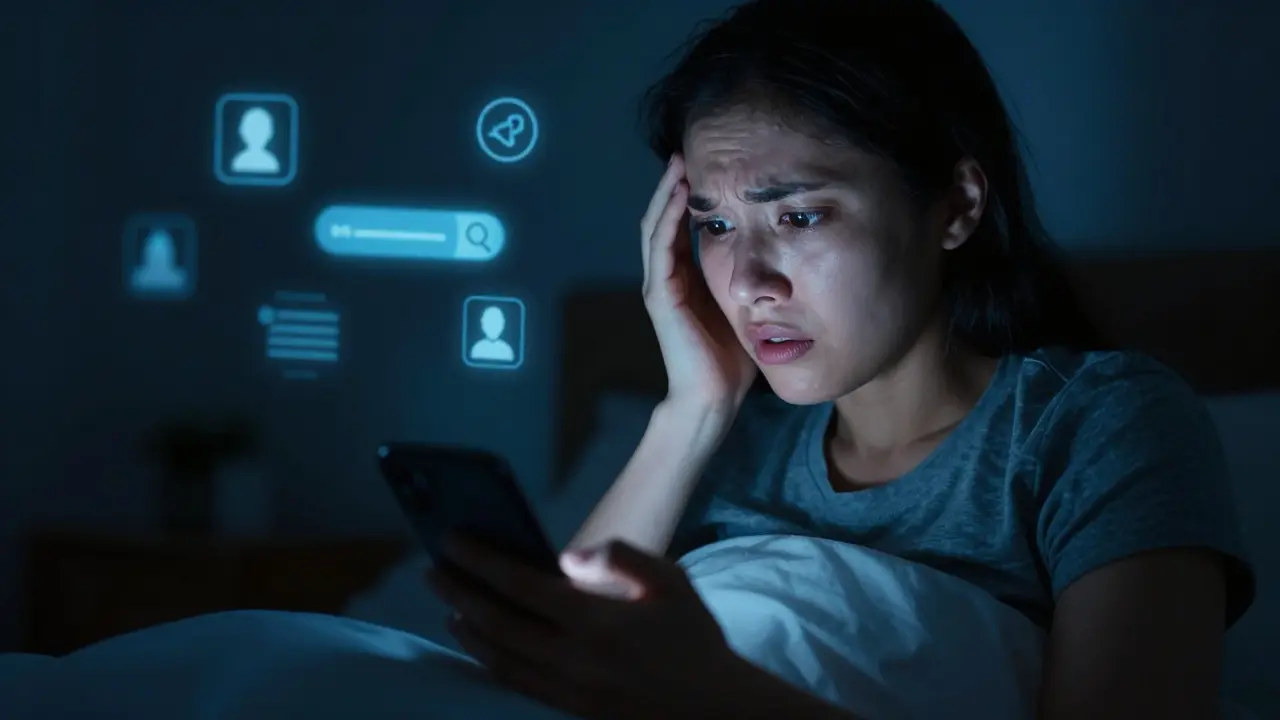
Have you ever felt a strange twinge in your chest and immediately Googled "heart attack symptoms"? Did the search results send you spiraling into panic, convinced that this minor sensation was a sign of impending doom? If so, you are not alone. This intense fear of having or developing a serious illness, despite medical reassurance, is known as health anxiety, formerly referred to as hypochondria.
It is more than just being cautious about your well-being. It is a persistent preoccupation with health that consumes hours of your day, disrupts your sleep, and strains your relationships. While many people worry about their health occasionally, those with health anxiety live in a state of constant surveillance over their bodies. The good news? It is manageable. By understanding the roots of this condition and learning specific coping mechanisms, you can reclaim your life from the grip of unfounded fear.
What Exactly Is Health Anxiety?
To tackle health anxiety, we first need to define it clearly. In clinical terms, it often falls under the diagnosis of Illness Anxiety Disorder in the DSM-5 (Diagnostic and Statistical Manual of Mental Disorders). The core feature is a high level of anxiety about health, accompanied by excessive behaviors related to health concerns-such as repeatedly checking the body for signs of illness-or maladaptive avoidance, like avoiding doctor appointments because you are terrified of finding out you are sick.
Crucially, if physical symptoms are present, they are mild or absent. If significant physical symptoms exist, the diagnosis might shift to Somatic Symptom Disorder, where the distress comes from the symptoms themselves rather than the fear of what they mean. However, in everyday conversation, "health anxiety" covers both scenarios. It is a mental health condition where the brain misinterprets normal bodily sensations as threats.
Consider Sarah, a 34-year-old teacher. She feels a slight headache after a long day. Instead of attributing it to stress or dehydration, her brain jumps to "brain tumor." She spends three hours reading forums, calls her doctor at midnight, and lies awake until dawn. This cycle is the hallmark of health anxiety: the interpretation of ambiguity as danger.
The Root Causes: Why Does This Happen?
You might wonder why some people develop this intense fear while others shrug off similar symptoms. Research suggests there isn't one single cause. Instead, it is usually a combination of psychological, biological, and environmental factors working together.
- Cognitive Biases: People with health anxiety tend to have a heightened awareness of bodily changes. They also exhibit "confirmation bias," meaning they only notice information that confirms their fear of illness and ignore evidence to the contrary. A cough isn't just a cold; it's proof of lung disease.
- Past Trauma: Having been seriously ill yourself, or watching a loved one suffer from a chronic or terminal disease, can leave a lasting imprint. For example, if your parent died of cancer when you were young, your brain may be wired to view any unexplained symptom through the lens of that trauma.
- Anxiety Sensitivity: Some individuals are naturally more sensitive to the physical sensations of anxiety. Because anxiety itself causes physical symptoms-racing heart, sweating, trembling-these sensations can feed back into the fear loop, creating a vicious cycle.
- Information Overload: We live in an era of instant medical information. While knowledge is power, for someone prone to health anxiety, the internet is a minefield. Cyberchondria-the act of searching for health information online leading to increased anxiety-is a major exacerbating factor in the digital age.
The Consequences: More Than Just Worry
It is easy to dismiss health anxiety as "just worrying too much." But the consequences are real and damaging. Living in a state of perpetual alarm takes a heavy toll on every aspect of your life.
Mental and Emotional Toll: The constant vigilance leads to chronic stress, depression, and exhaustion. You are essentially running a marathon of fear every day. This emotional drain can make it difficult to enjoy hobbies, work, or social interactions.
Physical Impact: Ironically, the anxiety itself creates physical symptoms. Muscle tension, gastrointestinal issues, fatigue, and headaches become common complaints. These new symptoms then fuel further anxiety, creating a self-perpetuating loop that is hard to break without intervention.
Relationship Strain: Partners, family members, and friends often feel helpless or frustrated. They may stop offering support because they feel their reassurance is never enough, or they get tired of being asked the same questions repeatedly. This isolation can deepen the sense of loneliness associated with the condition.
Financial Burden: Frequent doctor visits, unnecessary tests, and missed work days add up. Many people with health anxiety spend thousands of pounds on medical care that yields no positive findings, yet the relief is temporary.
Effective Coping Mechanisms: Breaking the Cycle
The most important thing to understand is that health anxiety is treatable. You do not have to live in fear forever. The goal is not to eliminate all worry-that is impossible-but to reduce its intensity and frequency so it no longer controls your life.
1. Cognitive Behavioral Therapy (CBT)
Cognitive Behavioral Therapy (CBT) is widely considered the gold standard treatment for health anxiety. CBT helps you identify and challenge the irrational thoughts that drive your fear. A therapist will help you recognize patterns like catastrophizing (assuming the worst-case scenario) and probability overestimation (believing a rare disease is likely).
For instance, if you think, "This lump means I have cancer," CBT teaches you to examine the evidence. What are the other, more likely explanations? Has a doctor checked it? What does the statistical probability say? By restructuring these thoughts, you reduce the emotional charge behind them.
2. Mindfulness and Acceptance
Mindfulness practices teach you to observe your thoughts and sensations without judgment or reaction. Instead of fighting a racing heart or trying to suppress a scary thought, you acknowledge it: "I am noticing a rapid heartbeat. It feels uncomfortable, but it is not dangerous." This detachment reduces the power of the anxiety. Techniques like deep breathing, body scans, and meditation can help calm the nervous system and break the feedback loop between mind and body.
3. Limiting Body Checking and Reassurance Seeking
This is perhaps the hardest but most crucial step. Every time you check your pulse, search Google for symptoms, or ask a friend if you look pale, you provide temporary relief. However, this reinforcement makes the anxiety stronger in the long run. It tells your brain, "There is a threat, and checking is the solution."
To cope, you must gradually reduce these behaviors. Set limits on how much time you spend researching symptoms. Stop checking your body multiple times a day. Learn to sit with the uncertainty instead of seeking immediate answers.
4. Scheduled Worry Time
Instead of letting health worries intrude all day, designate a specific 15-minute window each day as "worry time." If a health fear pops up at 10 AM, tell yourself, "I will think about this at 5 PM." Write it down and move on. During your scheduled time, allow yourself to fully engage with the worry. Often, by the time 5 PM arrives, the urgency has faded, and you realize the thought wasn't worth the energy.
5. Lifestyle Adjustments
Basic self-care plays a supportive role. Regular exercise reduces overall anxiety levels by releasing endorphins. Adequate sleep improves emotional regulation. Reducing caffeine and alcohol intake can prevent spikes in heart rate and jitteriness, which might otherwise trigger health fears.
| Behavior | Harmful Response (Avoid) | Helpful Response (Adopt) |
|---|---|---|
| Feeling a symptom | Immediately Google symptoms | Note the sensation, label it as anxiety, and continue your activity |
| Uncertainty about health | Seek repeated reassurance from doctors/friends | Accept uncertainty; trust previous medical clearances |
| Body awareness | Constantly check pulse, skin, or lumps | Redirect attention to external tasks or mindfulness exercises |
| Negative thoughts | Ruminate on worst-case scenarios | Challenge thoughts with evidence-based reasoning |
When to Seek Professional Help
While self-help strategies are powerful, professional guidance can accelerate recovery. You should consider seeing a mental health professional if:
- Your health worries interfere with daily functioning, work, or relationships.
- You spend more than an hour a day thinking about or checking your health.
- You have avoided medical care due to fear, or conversely, you cannot stop visiting doctors.
- Self-help techniques have not reduced your anxiety after several weeks.
A psychologist specializing in CBT can provide structured tools tailored to your needs. In some cases, medication such as SSRIs (Selective Serotonin Reuptake Inhibitors) may be prescribed to help manage underlying anxiety or depression, making therapy more effective.

Supporting Someone with Health Anxiety
If you love someone struggling with health anxiety, your role is delicate. Avoid two extremes: enabling the behavior by providing endless reassurance, or dismissing their feelings by saying "it's all in your head."
Instead, validate their emotion but not the fear. Say, "I can see you're really scared right now, and I'm here for you," rather than "You don't have cancer, stop worrying." Encourage them to stick to their treatment plan and gently redirect conversations away from health topics when possible. Patience and consistency are key.
Conclusion: Reclaiming Your Peace of Mind
Health anxiety is a thief. It steals your peace, your time, and your joy. But it is not a life sentence. By recognizing the triggers, challenging the distorted thoughts, and practicing acceptance, you can break free from its grip. Remember, the goal is not to achieve perfect health certainty-an impossibility for anyone-but to build confidence in your ability to handle uncertainty. With the right tools and support, you can stop living in fear and start living in the present moment again.
Is health anxiety the same as hypochondria?
Yes, largely. "Hypochondria" is the older term that has been replaced in modern diagnostic manuals like the DSM-5 with "Illness Anxiety Disorder" or "Somatic Symptom Disorder." The change in terminology reflects a better understanding of the condition as a form of anxiety rather than a character flaw or mere obsession.
Can health anxiety go away on its own?
It is unlikely to resolve completely without intervention. While the intensity may fluctuate, the underlying pattern of interpreting bodily sensations as threats tends to persist. Active treatment, particularly CBT, is necessary to rewire these thought patterns and behaviors.
How long does it take to overcome health anxiety?
Recovery timelines vary, but many people see significant improvement within 12 to 20 sessions of CBT. Consistent practice of coping mechanisms outside of therapy is crucial. It is a gradual process of building tolerance to uncertainty, not an overnight fix.
Does going to the doctor help health anxiety?
Medical check-ups are important for ruling out actual physical conditions. However, once serious issues are excluded, frequent doctor visits often worsen health anxiety by reinforcing the belief that something is wrong. It is best to establish a relationship with one primary care provider who understands your anxiety and avoids unnecessary testing.
What is cyberchondria?
Cyberchondria refers to the escalation of health anxiety caused by searching for medical information online. Search engines often prioritize dramatic or rare conditions, leading users to believe they have serious illnesses. Limiting online symptom checking is a critical step in managing health anxiety.