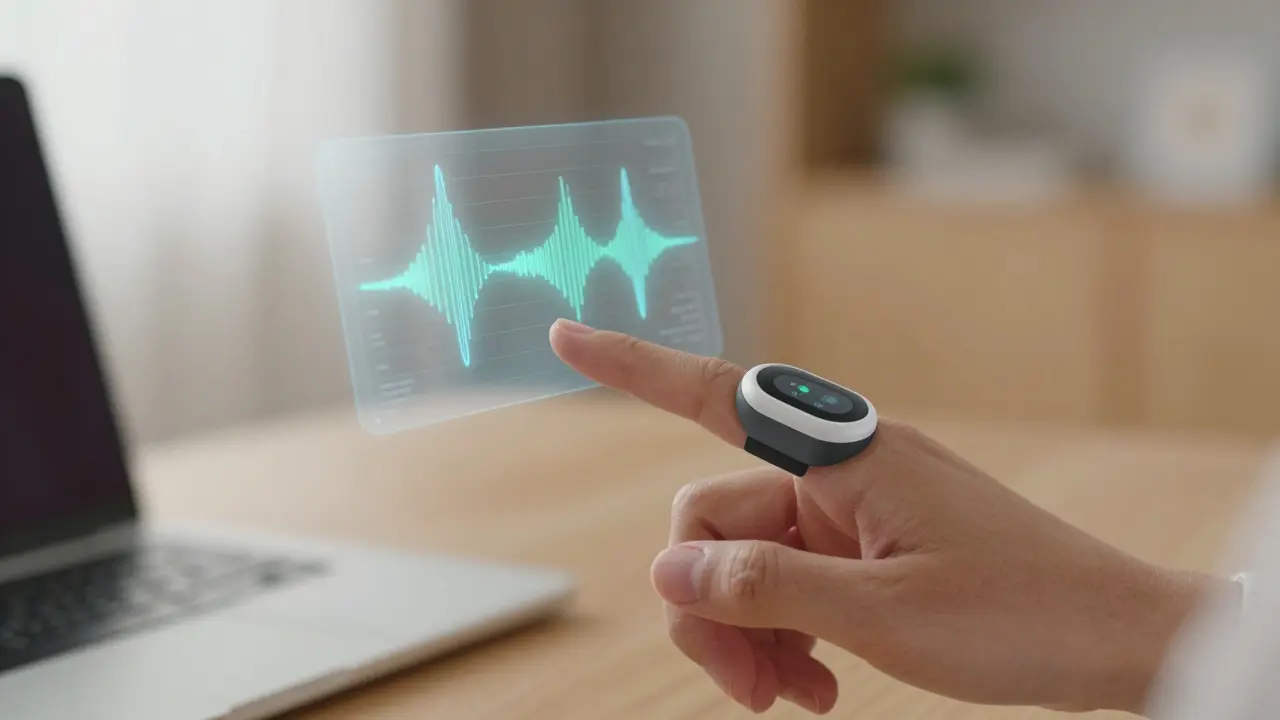
Stress isn't just a feeling; it's a physical event. When your boss sends that urgent email at 5 PM, your heart rate spikes, your muscles tighten, and your breathing shallows. Most of us ignore these signals until we burn out. But what if you could see those changes in real-time? That’s exactly what Biofeedback is a technique that uses electronic monitoring to convey information about physiological processes to facilitate voluntary control over bodily functions. It turns the invisible mechanics of stress into visible data, giving you the power to change them.
You don’t need a degree in neuroscience to use these methods. You just need the right tools and a bit of practice. Here are the top 10 biofeedback techniques that can help you take back control from chronic stress.
1. Heart Rate Variability (HRV) Biofeedback
Heart Rate Variability (HRV) measures the variation in time between each heartbeat. Contrary to what you might think, a perfectly steady heart rate isn't healthy. High HRV indicates a flexible nervous system capable of adapting to stress, while low HRV suggests rigidity and high stress levels.
| Metric | What It Means | Ideal State |
|---|---|---|
| High HRV | Nervous system flexibility | Relaxed, resilient |
| Low HRV | Fight-or-flight dominance | Stressed, fatigued |
To use this technique, you connect a sensor to your finger or chest. The device displays your HRV on a screen. Your goal is to synchronize your breathing with your heart rate rhythm. By slowing your breath to about five to six cycles per minute, you trigger the baroreflex mechanism, which boosts vagal tone. This simple act shifts your body from sympathetic arousal (stress) to parasympathetic activation (calm). Studies show that consistent HRV training can reduce anxiety scores by up to 30% in just a few weeks.
2. Electromyography (EMG) Biofeedback
Tension headaches and jaw clenching are classic signs of physical stress. EMG biofeedback places small electrodes on your skin to measure muscle activity. You’ll likely start with sensors on your forehead or trapezius muscles.
As you sit quietly, the monitor shows a graph of your muscle tension. If you furrow your brow, the line spikes. The task is simple: lower the line. You do this by consciously relaxing those specific muscles. Over time, your brain learns to recognize the subtle sensation of tension before it becomes painful. This technique is particularly effective for people who carry stress in their shoulders or neck, common among desk workers and drivers.
3. Thermal Biofeedback
Have you ever noticed your hands getting cold when you’re anxious? That’s because stress triggers vasoconstriction, narrowing blood vessels in your extremities to send blood to vital organs. Thermal biofeedback uses a temperature sensor on your finger to track this change.
The goal here is warmth. By focusing on making your hand feel warm, you encourage vasodilation. This process is linked to the relaxation response. Research indicates that thermal biofeedback is highly effective for migraine prevention. Patients who train themselves to increase finger temperature often report fewer and less severe migraines because they are actively counteracting the vascular changes associated with pain onset.
4. Neurofeedback (EEG Biofeedback)
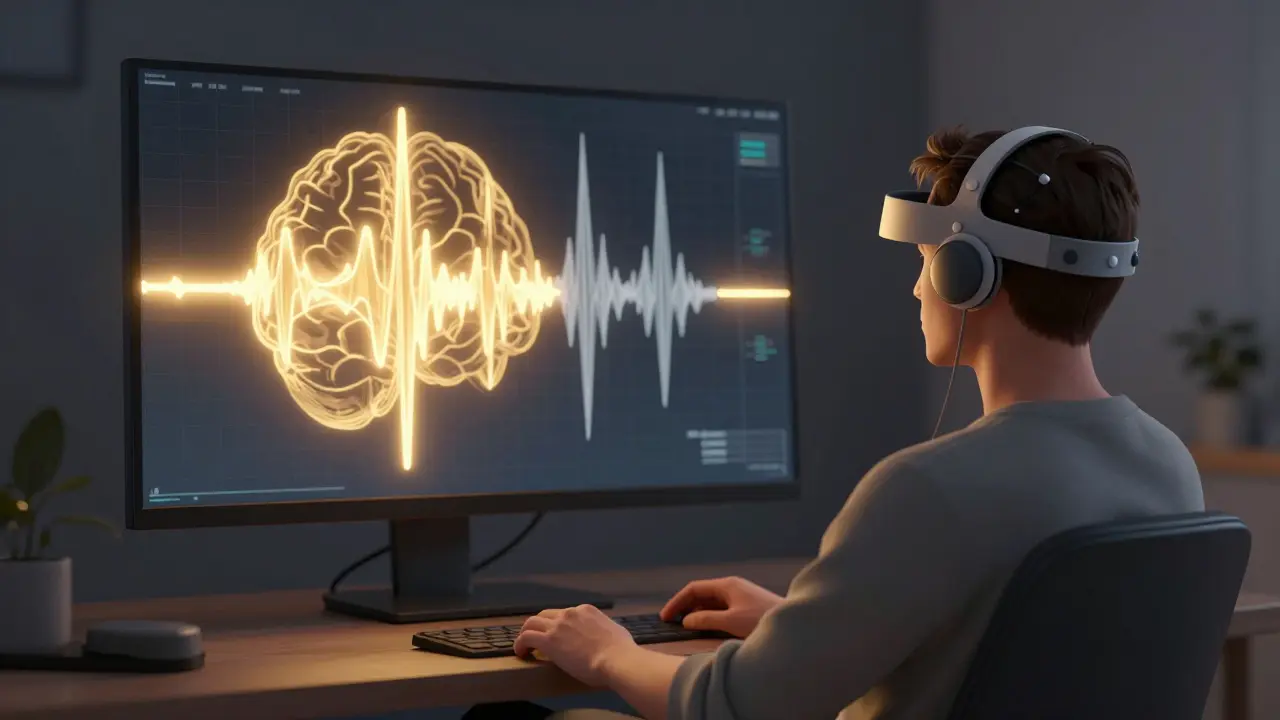
Neurofeedback takes things a step further by monitoring brain waves using electroencephalography (EEG). Sensors placed on your scalp detect electrical activity. Different brain wave frequencies correspond to different states:
- Beta waves: Alertness, focus, but also anxiety if excessive.
- Alpha waves: Relaxed alertness, calm.
- Theta waves: Deep relaxation, meditation.
In a session, you watch a movie or play a game that pauses or dims when your brain enters a stressed state (high beta) and continues when you achieve a calm state (alpha/theta). This operant conditioning helps retrain your brain to stay calmer under pressure. It’s widely used for ADHD but is increasingly popular for managing generalized anxiety and PTSD.
5. Respiratory Biofeedback
While HRV focuses on the heart, respiratory biofeedback focuses purely on the lungs. A belt-like sensor wraps around your chest or abdomen to measure breathing depth and rate.
Most stressed people breathe shallowly from their chest. This technique trains diaphragmatic breathing. You learn to expand your belly rather than your chest. The visual feedback ensures you aren’t just thinking about breathing deeply, but actually doing it. This method is crucial for panic disorder management, as it directly interrupts the hyperventilation cycle that fuels panic attacks.
6. Galvanic Skin Response (GSR) Biofeedback
Your sweat glands react to emotional arousal even before you notice you’re sweating. GSR, also known as Electrodermal Activity (EDA), measures the conductivity of your skin, which increases with moisture.
This is the same principle behind polygraph tests. In a therapeutic setting, you wear finger sensors that display your skin conductance level. A spike means rising emotional arousal. The challenge is to lower the reading through calming thoughts or imagery. This technique is excellent for building emotional regulation skills, helping you spot the earliest micro-signals of anger or fear.
7. Blood Volume Pulse (BVP) Biofeedback
BVP measures the amount of blood flowing through your capillaries, usually via a finger sensor. It provides data on pulse rate and blood flow volume.
Unlike HRV, which looks at timing variations, BVP gives you a direct readout of your pulse speed. If your heart is racing, the graph shows rapid peaks. You use relaxation techniques to slow the pulse down. This is often combined with thermal biofeedback, as increased blood flow naturally warms the fingers. It’s a straightforward way to visualize the immediate impact of relaxation exercises on your cardiovascular system.
8. Capnography (CO2 Biofeedback)
This one is less common but powerful for specific types of anxiety. Capnography measures the concentration of carbon dioxide in your exhaled breath.
When we panic, we tend to over-breathe, blowing off too much CO2. This leads to hypocapnia, causing dizziness, tingling, and more anxiety. A mouthpiece sensor shows your CO2 levels in real-time. You learn to breathe in a way that maintains optimal CO2 saturation (usually around 4-5%). This technique is particularly useful for people with somatic symptom disorders or those prone to hyperventilation syndrome.

9. Myoelectric Relaxation Training
Similar to EMG but broader in scope, myoelectric relaxation involves scanning multiple muscle groups simultaneously. Instead of focusing on one area, you get a full-body map of tension.
You might discover you’re holding tension in your glutes or calves without realizing it. The feedback helps you perform a systematic body scan, releasing tension zone by zone. This holistic approach is great for general wellness and improving sleep quality, as physical relaxation precedes mental relaxation.
10. Virtual Reality (VR) Biofeedback
Modern biofeedback is merging with immersive technology. VR headsets can integrate with biofeedback sensors to create interactive environments.
Imagine a virtual forest where the trees grow taller and the birds sing louder as your heart rate slows and your muscles relax. If you get stressed, the sky darkens. This gamification makes the learning process engaging and intuitive. It’s especially effective for children or individuals who find traditional graph-based biofeedback boring or difficult to interpret.
How to Choose the Right Technique
Not all biofeedback methods are created equal for every person. Your choice should depend on your primary stress symptoms.
| Primary Symptom | Recommended Technique | Why It Works |
|---|---|---|
| Tension Headaches | EMG Biofeedback | Targets muscle tightness directly |
| Anxiety/Panic | HRV & Respiratory | Regulates autonomic nervous system |
| Migraines | Thermal Biofeedback | Improves peripheral circulation |
| ADHD/Focus Issues | Neurofeedback | Trains brain wave patterns |
| General Burnout | HRV & Myoelectric | Restores overall balance |
If you’re new to this, start with HRV biofeedback. It’s accessible, has strong scientific backing, and addresses the root of most stress responses: the imbalance in your autonomic nervous system. Many consumer-grade devices now offer basic HRV tracking, making it easier than ever to begin.
Practical Tips for Success
Biofeedback isn’t a magic pill; it’s a skill. Like learning to play guitar, it requires repetition. Here’s how to make it stick:
- Start Small: Aim for 10-15 minutes a day. Consistency beats intensity.
- Create a Ritual: Use the same time and place each day to build habit strength.
- Trust the Data: Don’t try to "cheat" the sensor. The feedback is only valuable if it’s honest.
- Combine Methods: Pair biofeedback with mindfulness or cognitive behavioral therapy for deeper results.
- Track Progress: Keep a journal of your sessions and note any changes in mood or physical symptoms.
Remember, the goal isn’t to eliminate stress entirely-that’s impossible. The goal is to shorten the duration of your stress response and recover faster. With these tools, you’re not just managing stress; you’re mastering your physiology.
Is biofeedback safe for everyone?
Yes, biofeedback is generally considered safe and non-invasive. Since it doesn’t involve medication or surgery, side effects are rare. However, individuals with certain medical conditions, such as epilepsy (for neurofeedback) or severe cardiovascular issues, should consult a healthcare provider before starting. Always seek guidance from a certified biofeedback practitioner for personalized advice.
How long does it take to see results from biofeedback?
Results vary depending on the individual and the condition being treated. Some people experience immediate relief during their first session, especially with HRV or thermal biofeedback. For lasting changes, such as reduced migraine frequency or improved anxiety management, it typically takes 8 to 15 sessions practiced regularly over several weeks. Consistency is key to rewiring your body’s stress response.
Can I do biofeedback at home without expensive equipment?
Absolutely. While clinical settings offer advanced multi-sensor setups, many effective techniques can be practiced at home. Smartphone apps paired with affordable Bluetooth sensors can provide accurate HRV and respiratory feedback. Additionally, free resources like guided meditation apps often incorporate biofeedback principles, teaching you to recognize internal cues without external devices.
Does insurance cover biofeedback therapy?
Coverage depends on your insurance plan and the reason for treatment. In many regions, biofeedback is covered for specific conditions like migraines, chronic pain, and hypertension when prescribed by a doctor. For general stress management, it may be considered an out-of-pocket expense. Check with your provider and look for practitioners who accept your insurance or offer sliding scale fees.
What is the difference between biofeedback and neurofeedback?
Biofeedback is an umbrella term that includes various techniques monitoring physiological signals like heart rate, muscle tension, and skin temperature. Neurofeedback is a specific type of biofeedback that focuses exclusively on brain wave activity measured by EEG. While all neurofeedback is biofeedback, not all biofeedback is neurofeedback. Neurofeedback is typically used for neurological conditions, whereas other forms address broader stress and pain issues.