The good news is that you don't have to live in a constant state of alarm. While professional therapy is the gold standard, the way you handle your daily routine-your health anxiety self-care-acts as the foundation for recovery. It's about retraining your brain to stop seeing every bodily sensation as a threat.
Quick Wins for Immediate Relief
- The 5-4-3-2-1 Method: Acknowledge 5 things you see, 4 you can touch, 3 you hear, 2 you can smell, and 1 you can taste. This pulls you out of your head and back into the room.
- Scheduled Worry Time: Give yourself 15 minutes at 4 PM to worry about your symptoms. If a scary thought pops up at 10 AM, tell yourself, "I'll deal with that during my scheduled time."
- Cold Water Shock: Splash ice-cold water on your face or hold an ice cube. This triggers the mammalian dive reflex, which naturally slows your heart rate.
Understanding the Cycle of Health Anxiety
To fix the problem, we have to look at how it actually works. Health Anxiety is a psychological condition characterized by excessive preoccupation with having or acquiring a serious illness. It often manifests as Illness Anxiety Disorder, where the focus is less on existing symptoms and more on the fear of future sickness.
The cycle usually looks like this: you notice a normal bodily sensation (like a fast heartbeat after climbing stairs), you interpret it as a sign of danger (a heart attack), your body releases adrenaline (causing more fast heartbeats), and you conclude that your initial fear was correct. It's a self-fulfilling prophecy fueled by the body's own stress response.
Breaking the "Dr. Google" Habit
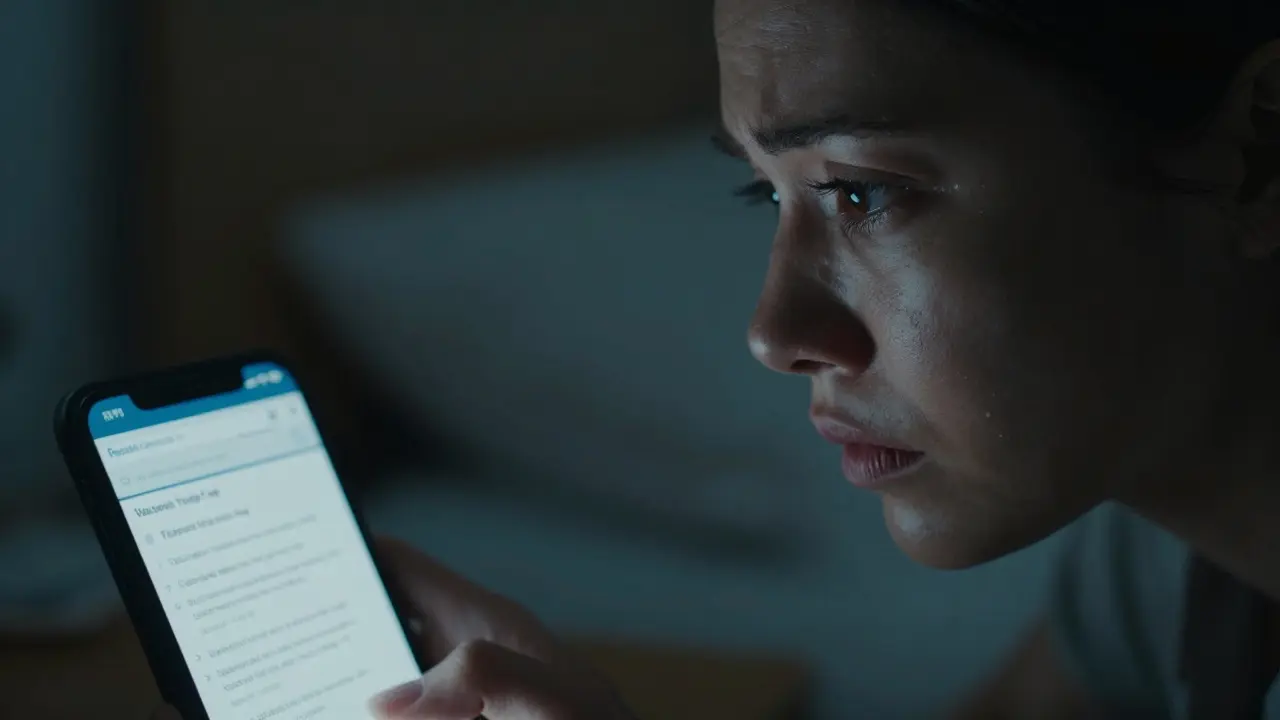
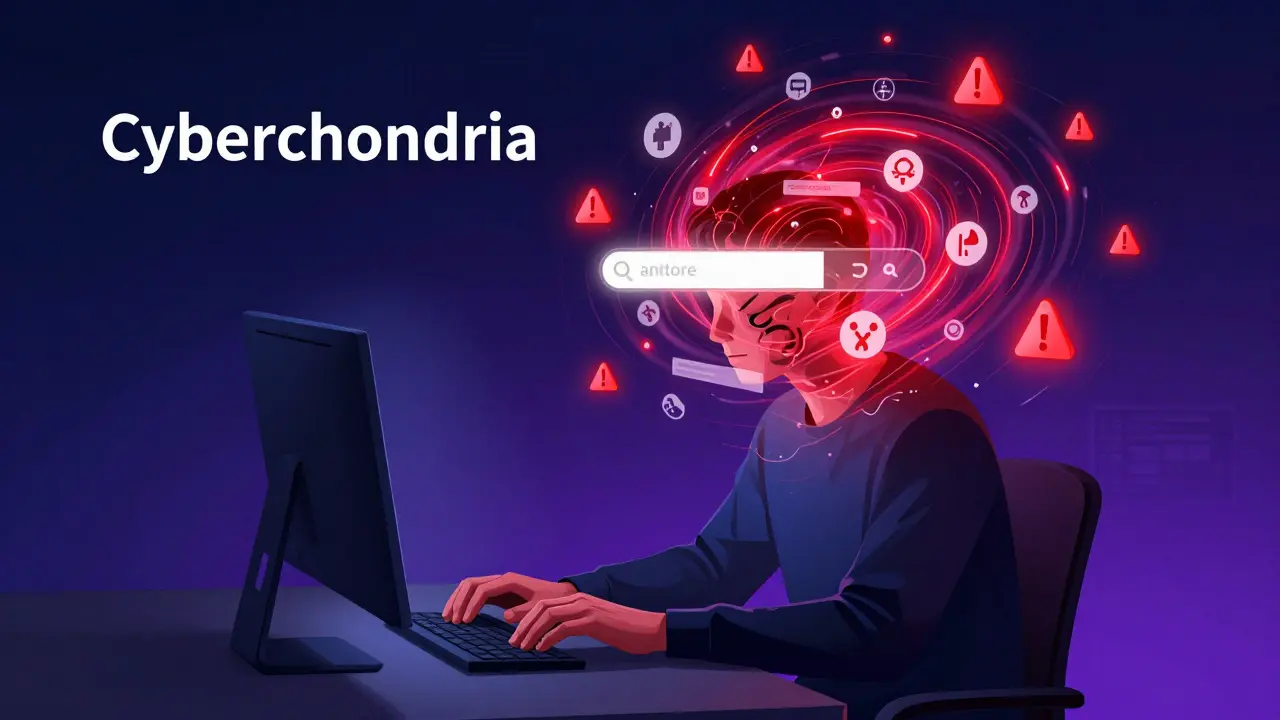
We've all been there. You search for "headache" and suddenly the search results are telling you that you have a brain tumor. This is called "cyberchondria." The problem is that search engines are designed to show the most relevant results, not the most probable ones. Rare diseases get more clicks, so they appear higher in the results.
Effective self-care means setting hard boundaries with your devices. Try the "Search Fast" rule: if you feel the urge to look up a symptom, wait 24 hours. Most of the time, the sensation disappears on its own by the next day, proving that the internet's diagnosis was wrong. If you absolutely must check something, stick to reputable sources like the Mayo Clinic or the NHS, which provide balanced perspectives rather than alarmist headlines.
Physical Self-Care to Calm the Nervous System
Your mind and body are on a two-way street. When your mind is anxious, your body tightens. When your body is relaxed, your mind finds it harder to panic. Focus on activities that lower your baseline cortisol levels.
Mindfulness is the practice of maintaining a non-judgmental state of heightened or acute awareness of one's present moment. For someone with health anxiety, this means noticing a sensation-like a stomach cramp-and saying, "I feel a cramp in my stomach," instead of "Why is my stomach cramping? Is it appendicitis?" One is a neutral observation; the other is a catastrophic judgment.
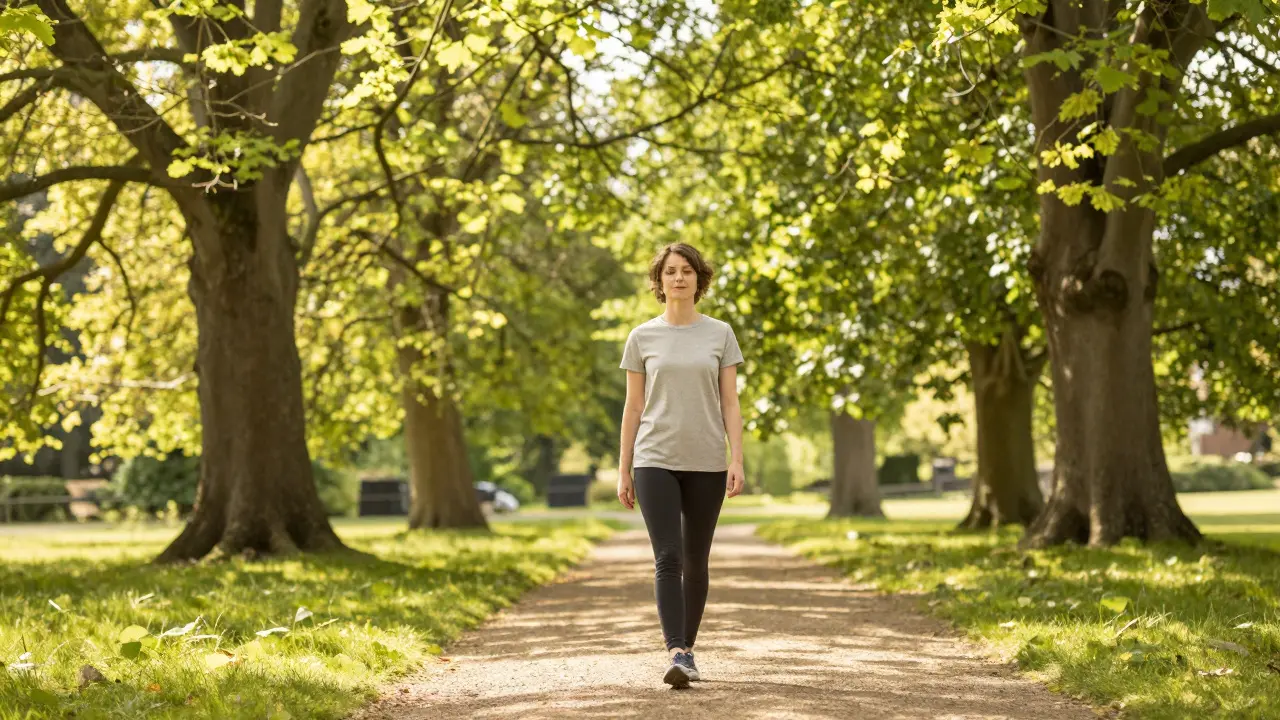
Regular movement also helps. You don't need to run a marathon, but a 20-minute walk in a park changes your brain chemistry. It proves to your brain that your body is strong and functioning, which contradicts the "I'm sick" narrative your anxiety is pushing.
| Behavior | The "Quick Fix" (Harmful) | The Sustainable Path (Helpful) | Long-term Result |
|---|---|---|---|
| Symptom Checking | Constant body scanning | Scheduled mindfulness check-ins | Reduced hyper-vigilance |
| Information Seeking | Searching symptoms on forums | Consulting one trusted GP | Lowered mental noise |
| Reassurance | Asking partners "Do I look sick?" | Self-soothing affirmations | Increased self-confidence |
| Avoidance | Avoiding doctors entirely | Routine annual screenings | Actual health security |
The Role of Sleep and Nutrition
It's a cliché because it's true: being tired makes everything feel like a catastrophe. Lack of sleep impairs the prefrontal cortex-the part of your brain responsible for logic and reasoning. When you're sleep-deprived, your amygdala (the fear center) takes the wheel, making a simple muscle twitch feel like a medical emergency.
Watch your stimulants too. Caffeine, while great for waking up, mimics the physical symptoms of anxiety: jitters, racing heart, and shallow breathing. If you're prone to health anxiety, your brain might misinterpret a caffeine rush as a panic attack, triggering a spiral. Switching to herbal teas or reducing your intake after 10 AM can significantly lower your daily "anxiety floor."
Building a Mental Toolkit for Flare-ups
There will be days when self-care isn't enough and the panic feels overwhelming. In those moments, you need a pre-planned strategy. Stop trying to "think" your way out of anxiety; you can't reason with a panic attack because the logical part of your brain has essentially gone offline.
- Acknowledge and Label: Say out loud, "I am experiencing health anxiety right now." This separates you from the feeling.
- Challenge the Thought: Ask yourself, "What is the evidence for this? Have I felt this before? Did the worst-case scenario happen then?"
- Shift Focus: Engage in a high-concentration task. Play a complex video game, solve a puzzle, or organize a drawer. The goal is to move blood flow back to the frontal lobe.
It is also vital to distinguish between self-care and medical neglect. Self-care isn't about ignoring your health; it's about managing your reaction to it. Routine check-ups are healthy. Constant, daily check-ups are anxiety. The difference is intent: are you seeking health, or are you seeking the temporary relief of being told you're okay?
What is the difference between health anxiety and being cautious about health?
Caution is about taking reasonable precautions, like getting a yearly physical or eating vegetables. Health anxiety is an obsession that interferes with your daily life. If you spend hours a day researching symptoms or feel unable to work because you're worried about a disease you don't have, it has crossed the line into anxiety.
Can self-care actually cure health anxiety?
Self-care is a management tool, not necessarily a "cure." For many, it reduces the intensity of the anxiety to a manageable level. However, for severe cases, self-care should be paired with Cognitive Behavioral Therapy (CBT), which helps rewire the thought patterns causing the fear.
Why does my heart race when I'm anxious, and why does that make me more anxious?
This is the "fear-of-fear" loop. Your body enters 'fight or flight' mode, releasing adrenaline that increases your heart rate to prepare you for danger. Because you are hyper-aware of your body, you notice the racing heart and interpret it as a heart problem, which creates more fear and more adrenaline.
How do I stop scanning my body for symptoms?
Start by consciously noticing when you scan. Instead of fighting it, label it: "There's my scanning habit again." Then, gently shift your attention to something external-the sound of the wind, the feel of your clothes, or a task in front of you. Over time, the habit weakens.
Is it okay to see a doctor if I have health anxiety?
Yes, but the goal is to change the *type* of visits. Instead of going every time you feel a new sensation, agree on a schedule with your doctor. Be honest with them about your anxiety so they can provide clear, concise answers without fueling your fears through over-testing.
Next Steps for Different Journeys
If you're just starting to notice these patterns, focus on the "digital detox" first. Remove health-related forums from your bookmarks and set a rule about not searching symptoms after 8 PM. This removes the primary trigger for most people.
If you've been struggling for years and feel like you're at a breaking point, your next step isn't more self-care-it's professional support. Look for a therapist specializing in CBT or exposure therapy. They can help you gradually face the fear of bodily sensations in a safe environment.
For those who are mostly stable but have occasional "flare-ups," keep a mood and symptom journal. You'll likely notice a pattern: your anxiety spikes when you're stressed at work or haven't slept well. Once you see the pattern, you can stop blaming your body and start addressing the actual trigger.