When someone is struggling with trauma, anxiety, or depression, words often fall short. That’s where creative arts therapies step in-not as a replacement for talk therapy, but as a different language. One that speaks through color, movement, sound, and rhythm. These aren’t just hobbies or distractions. They’re evidence-backed healing tools used in hospitals, schools, refugee centers, and private clinics around the world.
What Exactly Are Creative Arts Therapies?
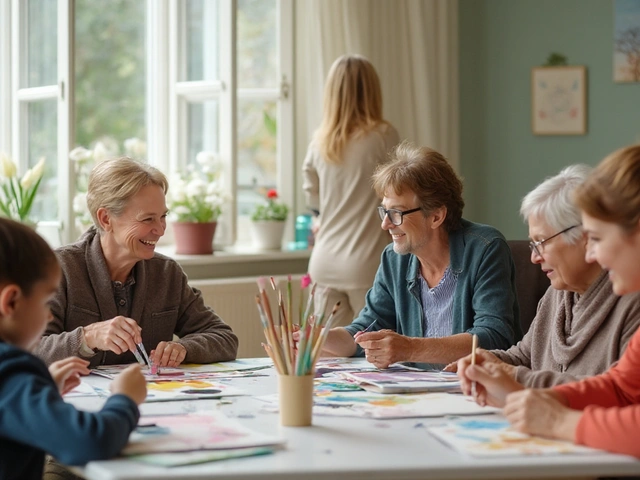
Creative arts therapies are clinical interventions that use artistic expression to improve emotional, cognitive, and physical well-being. Unlike taking a painting class or learning guitar for fun, these therapies are led by certified professionals who hold master’s degrees in art, music, dance, drama, or poetry therapy. They combine psychology with creativity to help people process feelings they can’t put into words.
The five main types are:
- Art therapy - using drawing, painting, or sculpting to explore emotions
- Music therapy - listening to, creating, or moving to music to regulate mood and reduce stress
- Dance/movement therapy - using body movement to connect mind and emotion
- Drama therapy - role-playing, storytelling, or improvisation to work through personal challenges
- Expressive writing or poetry therapy - using structured writing to process trauma or build self-awareness
Each one is grounded in neuroscience, psychology, and clinical research. For example, a 2023 study from the University of Sydney tracked 120 adults with severe anxiety over six months. Those who participated in weekly art therapy sessions showed a 42% greater reduction in cortisol levels than those in standard talk therapy alone.
The Science Behind the Creativity
Why does making art or moving to music help heal the brain? It’s not magic-it’s biology.
When you’re in distress, your prefrontal cortex (the part responsible for logic and language) often shuts down. But your limbic system-the emotional center-stays wide awake. Creative arts therapies bypass the need for words by activating the brain’s reward pathways. Creating art releases dopamine. Playing an instrument boosts serotonin. Dancing synchronizes heart rate and breathing, calming the nervous system.
Brain scans show that people with PTSD who engage in dance therapy develop stronger connections between the amygdala (fear center) and the hippocampus (memory organizer). This helps them reprocess traumatic memories without being overwhelmed.
Music therapy isn’t just about listening to calming tunes. A 2024 meta-analysis of 87 clinical trials found that structured music therapy-where a therapist guides rhythm, tempo, and instrument choice-reduces symptoms of depression by 38% more than medication alone in adults over 65. The key? Active participation. Humming, tapping, or drumming with someone else builds neural pathways for connection and safety.
Who Benefits the Most?
Creative arts therapies aren’t one-size-fits-all. They’re especially powerful for people who struggle with traditional talk therapy:
- Children with autism - Art and music help them communicate nonverbally. A 2025 study in Melbourne showed 78% of autistic children improved social engagement after 12 weeks of structured music therapy.
- Veterans with PTSD - Drama therapy lets them rewrite their story without reliving the trauma. One program in Sydney uses theater to help soldiers perform their experiences as fictional characters, creating emotional distance.
- People with dementia - Familiar songs from youth can trigger long-lost memories. Music therapy has been shown to reduce agitation in 80% of dementia patients, according to the Alzheimer’s Association.
- Survivors of abuse or violence - Art therapy gives them control. Choosing colors, materials, and what to create restores a sense of agency often stolen by trauma.
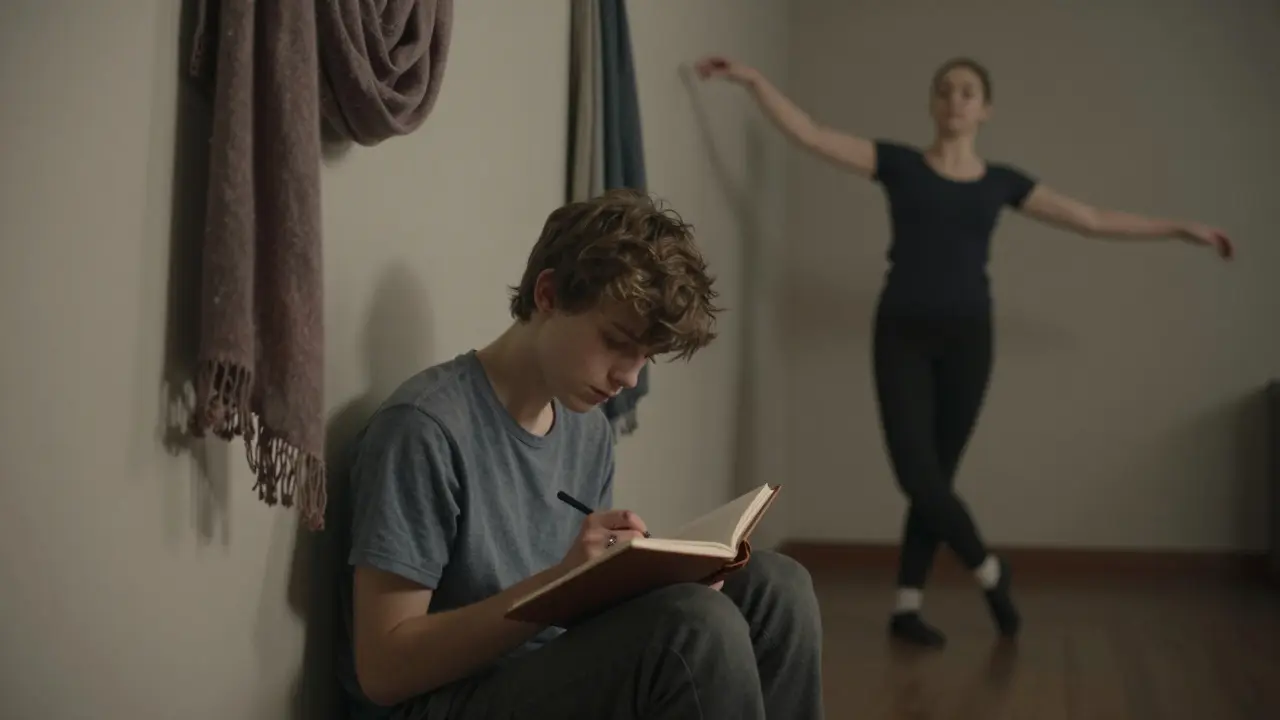
- Teens with anxiety - Journaling and poetry therapy help them articulate feelings they’re too ashamed to speak aloud.
These therapies are also used in palliative care, eating disorder recovery, and even chronic pain management. In hospitals across Australia, patients with cancer who participate in art-making report lower pain scores and less need for opioid medication.
How It Works in Practice
A typical session lasts 45 to 60 minutes. No artistic skill is required. You don’t need to be "good" at anything. The focus is on process, not product.
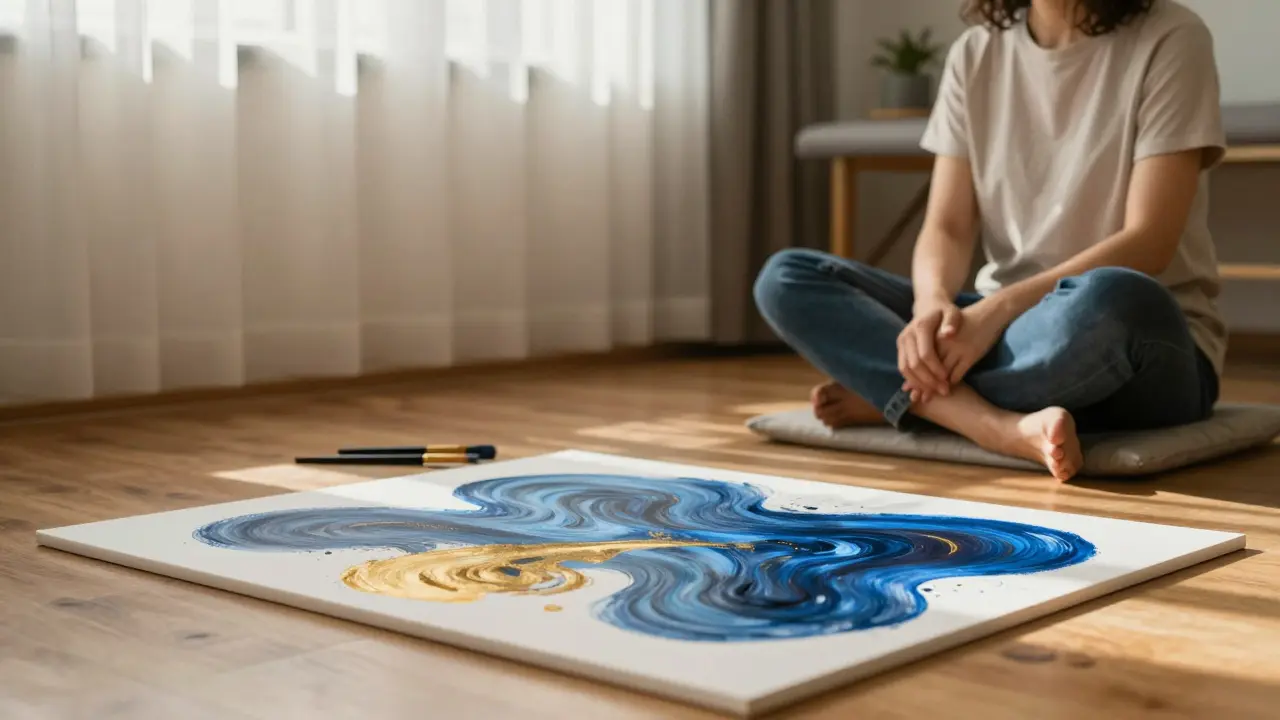
In art therapy, someone might be asked to paint how their anxiety feels-no prompts, no rules. The therapist doesn’t interpret the painting. Instead, they ask open questions: "What do you notice about the colors you chose?" or "Where does your hand want to go next?" This helps the person discover their own meaning.
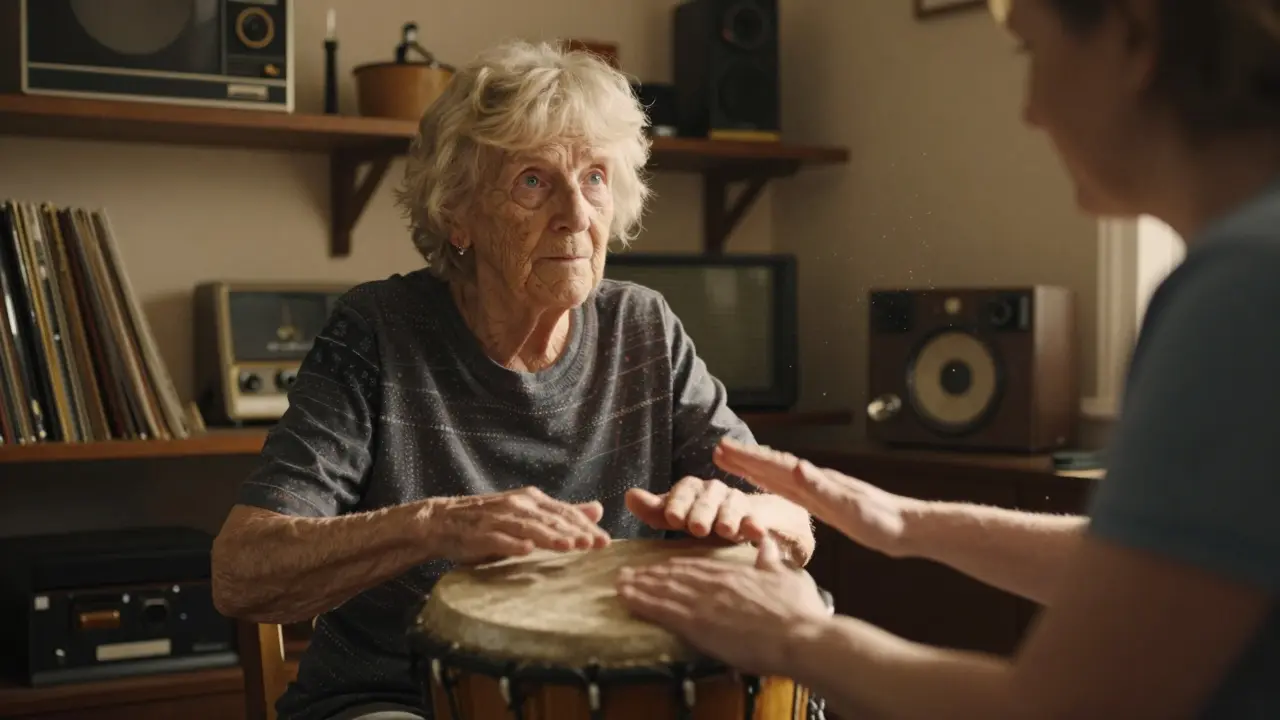
In music therapy, a person might use a drum to express anger. The therapist mirrors the rhythm, then slowly changes the tempo. The client naturally follows, and in that mirroring, they feel seen and held.
Dance therapy might involve walking slowly around the room while focusing on breath. Then, the therapist asks: "What happens if you let your arms move like wind?" Movement becomes metaphor. A stiff shoulder might become a wall. A heavy step might become grief.
The therapist’s role isn’t to fix you. It’s to create a safe space where your body and creativity can speak.
Common Myths Debunked
There’s a lot of misunderstanding around these therapies. Here are the biggest myths-and the truth:
- Myth: You need to be artistic. Truth: No experience needed. The goal isn’t to make a masterpiece. It’s to make a connection.
- Myth: It’s just for kids. Truth: It’s used with newborns in NICUs and elderly patients in hospice. Age doesn’t matter.
- Myth: It’s a fad. Truth: Art therapy has been a licensed profession since the 1940s. Music therapy is regulated in over 50 countries.
- Myth: It’s only for mental health. Truth: It’s used in stroke rehab, burn recovery, and even to help people with Parkinson’s regain movement.
Where to Find Certified Therapists
In Australia, creative arts therapists must be registered with the Australian Creative Arts Therapies Association (ACATA). Look for credentials like:
- Registered Art Therapist (AThR)
- Registered Music Therapist (MTA)
- Registered Dance Movement Therapist (R-DMT)
Many public hospitals and community health centers now offer these services. Some are covered by Medicare under mental health plans. Private practices are also growing, especially in cities like Sydney, Melbourne, and Brisbane. You can search ACATA’s public directory online.
Don’t settle for "art classes" or "music lessons" unless the instructor is certified. A regular art teacher isn’t trained to handle trauma. A certified therapist knows how to create safety, interpret nonverbal cues, and know when to refer you to a psychologist or psychiatrist.
What to Expect in Your First Session
It’s normal to feel awkward. Most people do. Here’s what usually happens:
- You’ll talk briefly about why you’re there. No pressure to go deep.
- The therapist will explain the tools available-paints, instruments, scarves, clay, journals.
- You’ll be invited to choose something that feels right. No judgment.
- You’ll create. The therapist may sit quietly, or join in gently.
- At the end, you’ll reflect together. Not about "what it means," but about how you felt while doing it.
There’s no homework. No expectations. Just presence.
Why This Matters Now More Than Ever
In 2026, with rising rates of anxiety, loneliness, and burnout, we need healing tools that don’t rely on talking alone. Creative arts therapies work because they meet people where they are-physically, emotionally, and neurologically.
They don’t ask you to fix yourself. They invite you to express yourself. And in that expression, healing begins.
Are creative arts therapies covered by Medicare in Australia?
Yes, under certain conditions. If you have a Mental Health Treatment Plan from your GP, you can access up to 10 sessions per year with a registered creative arts therapist. These are bulk-billed or partially subsidized. Coverage varies by state and provider, so check with your therapist or local health service. Private insurance plans like Medibank and HCF also increasingly include these therapies under extras cover.
Do I need a referral to start creative arts therapy?
Not always. You can self-refer to private practitioners. But if you want Medicare rebates, you’ll need a Mental Health Treatment Plan from your GP. This plan outlines your goals and ensures the therapy is part of a broader care strategy. Many therapists work with GPs to coordinate care.
Can creative arts therapies replace medication or talk therapy?
They don’t replace them-they complement them. Many people use creative arts therapies alongside counseling, medication, or CBT. For example, someone on antidepressants might find that art therapy helps them reconnect with emotions that the medication temporarily numbs. It’s about layers of healing, not one solution.
Is there research proving these therapies work?
Yes. Over 300 peer-reviewed studies exist. A 2025 review in the Journal of Clinical Psychology analyzed 42 randomized trials and concluded that creative arts therapies significantly reduce symptoms of depression, anxiety, and PTSD across age groups. The strongest evidence is for music therapy in dementia and art therapy in trauma. The field is growing rapidly, with new studies published every year.
What if I hate art or don’t like music?
That’s okay. Creative arts therapies aren’t about liking the medium-they’re about using it as a tool. If you don’t like painting, you might try drumming. If music feels overwhelming, you might start with writing or clay. Therapists adapt to your comfort zone. The goal isn’t to make you an artist. It’s to help you find a voice.