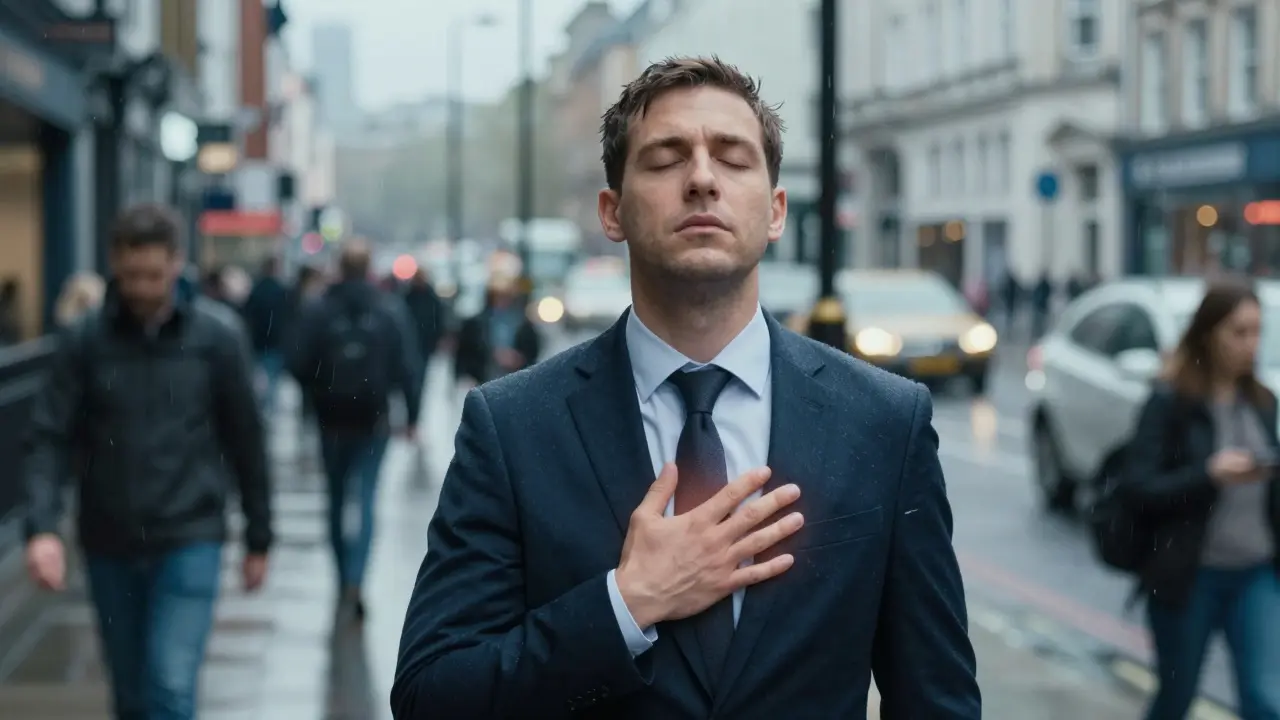
You know that feeling. Your chest tightens, your thoughts race like a browser with too many tabs open, and your hands start to shake. It happens when the boss calls an emergency meeting, when the car breaks down on the motorway, or when life just throws a curveball you didn't see coming. Most people want to know how to handle this, but few actually know the mechanics of it. This is the reality of the Calmness Challenge. It isn't about suppressing emotions or pretending everything is fine. It is about learning to Stay Cool in a Crisis when your biology is screaming at you to fight or run.
The Biology of Panic
Before you can master your reaction, you need to understand what is happening inside your body. When you face a threat, real or imagined, your brain triggers a specific biological sequence. This is the Sympathetic Nervous System, the part of the nervous system responsible for the body's fight-or-flight response. It dumps Adrenaline and Cortisol into your bloodstream.
These chemicals prepare your muscles to move, but they also make you feel jittery and overwhelmed. Your heart rate spikes to pump blood to your limbs, and your digestion slows down because your body thinks you are being chased by a predator. In 2026, our predators are usually emails, deadlines, or traffic, but your body reacts as if a lion is at the door. Recognizing this is the first step. You are not losing your mind; you are experiencing a survival mechanism that is misfiring in a modern context.
Once you realize this physical reaction is automatic, you can stop fighting it. Fighting the feeling only adds more stress. Instead, acknowledge the surge. Tell yourself, "My body is trying to protect me." This simple mental note creates a tiny gap between the trigger and your reaction. In that gap lies your ability to choose how to respond.
Immediate Tactic: Breathwork
When the Parasympathetic Nervous System is the part of the nervous system responsible for rest and digest functions, counteracting the stress response, it signals safety to your brain. You can activate this system manually through your breath. Your breath is the only autonomic function you can control voluntarily.
One of the most effective methods is Box Breathing, a breathing technique used by Navy SEALs to maintain focus under pressure. It works by regulating the oxygen and carbon dioxide levels in your blood, which directly impacts your heart rate. Here is how you do it:
- Breathe in through your nose for a count of four seconds.
- Hold that breath inside your lungs for four seconds.
- Exhale slowly through your mouth for four seconds.
- Hold your lungs empty for four seconds before starting again.
Repeat this cycle four times. It sounds simple, but when you are panicking, counting forces your brain to engage the logical part of your mind. You cannot think clearly and panic simultaneously. This technique is portable. You can do it in a taxi, in a boardroom, or while waiting in a hospital corridor. It does not require any equipment, just your focus.
Another variation is the 4-7-8 method. You inhale for four, hold for seven, and exhale for eight. The longer exhale is key because it stimulates the vagus nerve, which slows down your heart rate. If you find counting difficult while stressed, just focus on making your exhale longer than your inhale. Any breath pattern where you breathe out longer than you breathe in will trigger a relaxation response.
Grounding Techniques for the Mind
Sometimes breathing isn't enough because your mind is stuck in the future, worrying about what might happen next. You need to pull your attention back to the present moment. This is where Grounding Techniques come in. These methods use your five senses to anchor you in reality.
The most popular version is the 5-4-3-2-1 method. It forces your brain to scan your environment rather than your internal thoughts. Look around and identify:
- Five things you can see.
- Four things you can touch.
- Three things you can hear.
- Two things you can smell.
- One thing you can taste.
This might sound childish, but it works on a neurological level. It shifts activity from the amygdala, the fear center of the brain, to the prefrontal cortex, which handles observation and logic. For example, if you are in a heated argument, stop and name five blue objects in the room. Notice the texture of your chair. Listen to the hum of the refrigerator. These small actions break the loop of anxiety.
Physical grounding also helps. If you are standing, press your feet firmly into the floor. Feel the weight of your body. If you are sitting, place your hands on your knees and feel the pressure. Physical sensation reminds your brain that you are here, now, and safe. It interrupts the dissociation that often comes with high stress.

Cognitive Reframing Strategies
Your thoughts drive your emotions, and your emotions drive your actions. If you tell yourself, "I'm going to fail," your body will act accordingly. Cognitive Reframing is a psychological technique that involves identifying negative thought patterns and replacing them with more balanced ones. It is about changing the narrative in your head.
Instead of thinking, "This is a disaster," try, "This is a challenge I can handle." Instead of "I can't do this," try, "I will figure this out step by step." The facts haven't changed, but your relationship to the facts has. This reduces the perceived threat level, which lowers the cortisol spike.
Ask yourself specific questions to challenge the panic. Is this situation life-threatening? Probably not. Will I survive this even if it goes wrong? Yes. What is the very next small step I can take? Focus only on that step. Crisis management is not about solving the whole problem at once; it is about managing the immediate moment.
Another helpful phrase is "This too shall pass." It is a reminder that emotional states are temporary. You are not your feelings. You are the observer of your feelings. This perspective creates distance. You are not the storm; you are the sky watching the storm move through.
Building Long-Term Resilience
Techniques like breathing and grounding are fire extinguishers. They are vital when things catch fire. But you also need a fire prevention system. This is Resilience, the capacity to recover quickly from difficulties, toughness. You build resilience through daily habits that keep your baseline stress level low.
Sleep is non-negotiable. When you are tired, your emotional regulation centers in the brain do not function well. A lack of sleep makes you more reactive. Aim for seven to eight hours of quality sleep. Protect your sleep schedule like a job interview. It is the foundation of your mental stability.
Physical movement is another pillar. You do not need to run a marathon. A twenty-minute walk outside can burn off excess adrenaline. Exercise uses up the stress hormones that your body produced during the day. It signals to your system that you are safe enough to move.
Mindfulness is the practice of maintaining a non-judgmental state of heightened or complete awareness of one's thoughts, emotions, or experiences on a moment-to-moment basis. Practicing mindfulness daily makes it easier to access during a crisis. If you meditate for ten minutes every morning, you are training your brain to return to the present. It is like a muscle. The more you use it, the stronger it gets.

Recognizing Burnout and Panic
There is a difference between normal stress and something more serious. If you feel constantly exhausted, cynical, and ineffective, you might be experiencing Burnout, a state of emotional, physical, and mental exhaustion caused by excessive and prolonged stress. This is not something you can just breathe away. It requires rest and often a change in your environment or workload.
Similarly, if you have sudden, intense fear with physical symptoms like chest pain or shortness of breath without an obvious trigger, you might be having a Panic Attack, a sudden episode of intense fear that triggers severe physical reactions when there is no real danger or apparent cause. These are medical events. While the techniques mentioned here can help, they are not a replacement for professional care.
Knowing when to ask for help is a sign of strength, not weakness. If your stress is affecting your daily life, work, or relationships, talk to a therapist or doctor. They can provide tools tailored to your specific situation. Sometimes, medication or therapy is the right tool to help you regain control.
Practical Scenarios
Let's look at how this applies in real life. Imagine you are stuck in a traffic jam and you are going to be late for a crucial meeting. Your instinct is to honk and yell. Instead, engage the Calmness Challenge. Pull over if it is safe. Do three rounds of Box Breathing. Remind yourself that being five minutes late is not a tragedy. Call the meeting organizer to update them. You have taken control of the situation.
Consider a workplace conflict. A colleague criticizes your work publicly. Your face burns, and you want to snap back. Pause. Feel your feet on the floor. Use Cognitive Reframing: "They are stressed too," or "This is about the work, not me." Respond calmly later when you are not in the heat of the moment. This preserves your professional reputation and your peace of mind.
Even in emergencies, like a medical issue, staying calm helps others. If you are the one in charge, your calmness becomes contagious. If you panic, everyone else panics. By regulating your own nervous system, you create a safe space for others to think clearly. This is a leadership skill that goes beyond management.
How quickly can breathing techniques calm me down?
Most people feel a physiological shift within two to three minutes of controlled breathing. It takes time to lower the heart rate and reduce cortisol levels, so consistency is key during the exercise.
Can I practice these techniques while driving?
Yes, but keep your eyes on the road. Simple breathing exercises are safe to do while driving. Avoid complex grounding techniques that require looking around extensively until you are parked safely.
What if I still feel anxious after trying these methods?
It is normal for anxiety to linger. The goal is not to eliminate stress instantly but to reduce its intensity. If anxiety persists for weeks, consult a mental health professional for further support.
Is mindfulness the same as meditation?
Mindfulness is a quality of attention that can be practiced anywhere, while meditation is a formal practice to cultivate that attention. You can be mindful while washing dishes without sitting in meditation.
Does exercise really help with stress management?
Yes, physical activity metabolizes stress hormones like adrenaline and cortisol. Regular exercise improves your baseline resilience, making you less reactive to stressors in daily life.