Why Quiet Your Mind?
Most of us spend our days in a state of constant noise. Between the ping of a smartphone, the hum of traffic, and that endless inner monologue arguing about a meeting from three years ago, actual silence is rare. But what happens when you intentionally stop the noise? You aren't just "relaxing"; you're retraining your brain to stop reacting to every single stimulus. When you practice meditation for beginners, you're essentially building a mental gym where the only weight you're lifting is your own attention.
The goal isn't to turn your brain into a blank slate-that's a myth that makes people quit. Instead, it's about changing your relationship with your thoughts. Imagine your mind is a busy highway. Most of the time, you're standing in the middle of the road, getting hit by cars. Meditation is the act of stepping off the pavement and sitting on the grass, watching the traffic go by without needing to jump in front of every vehicle.
Quick Takeaways for Your Practice
- Consistency over duration: Five minutes every day beats two hours once a month.
- Non-judgment: Noticing your mind wandered is actually the "win" in meditation.
- Breath as an anchor: Use your physical sensations to pull yourself back to the present.
- Environment: You don't need a mountain top; a quiet corner of your bedroom works fine.
What Exactly is Meditation?
At its core, Meditation is an umbrella term for a variety of techniques designed to promote relaxation, build mental fortitude, and achieve a heightened state of awareness. It isn't a religious requirement, though it has roots in ancient traditions. Today, it's widely used as a secular tool for mental health.
One of the most popular forms is Mindfulness, which involves focusing on the present moment without judging it. If you're eating an apple, you actually taste the apple instead of thinking about your emails. Then there's Transcendental Meditation, a specific technique involving the silent repetition of a mantra to settle the mind into a state of deep quiet.
While these styles differ, they all target the same physiological response: moving the body from the "fight or flight" mode of the sympathetic nervous system into the "rest and digest" mode of the parasympathetic nervous system. This shift lowers your heart rate and reduces the production of cortisol, the primary stress hormone.
How to Start Your First Session
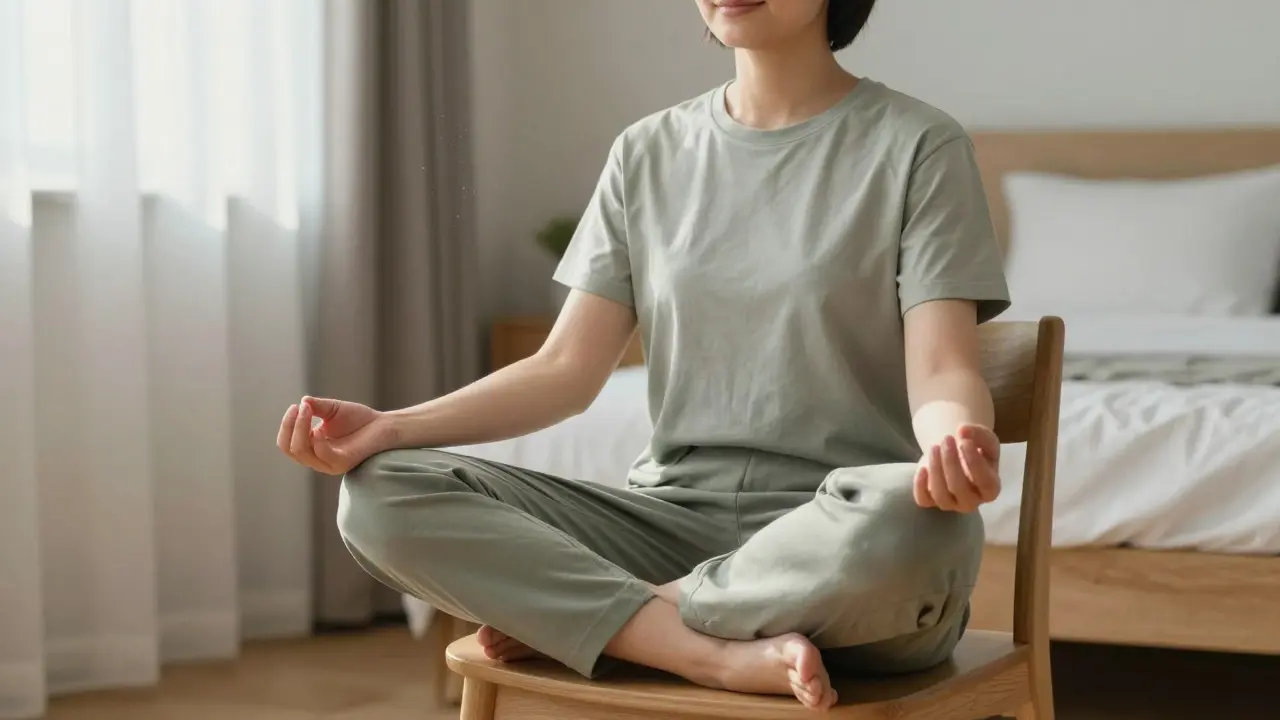
You don't need special robes, incense, or a specific posture to get started. All you need is a place where you won't be interrupted for a few minutes. If you're worried about your legs falling asleep, feel free to sit in a chair with your feet flat on the floor.
- Set a timer: Start with 5 to 10 minutes. This removes the anxiety of constantly checking the clock.
- Find your posture: Sit upright. You want to be relaxed but alert. If you slouch, you'll likely just fall asleep, which is a nap, not meditation.
- Close your eyes: This shuts out the visual distractions of your room.
- Focus on your breath: Notice where you feel the breath most-the tip of your nose, the rise of your chest, or the expansion of your belly.
- Acknowledge the drift: Your mind will wander. You'll think about dinner or a weird comment a coworker made. When this happens, simply say to yourself, "Ah, thinking," and gently bring your attention back to your breath.
The magic happens in that moment of return. Every time you catch your mind wandering and bring it back, it's like doing one bicep curl for your brain. Over time, this strengthens the prefrontal cortex, the part of the brain responsible for decision-making and emotional regulation.
Comparing Different Meditation Styles
Not every method works for every person. Some people find the silence terrifying, while others find focused repetition boring. Depending on what you want to achieve-whether it's lower anxiety, better sleep, or spiritual growth-different paths provide different results.
| Technique | Primary Focus | Best For... | Effort Level |
|---|---|---|---|
| Mindfulness | Present moment awareness | General stress and anxiety | Low to Medium |
| Zazen | Strict posture and breath | Deep discipline and clarity | High |
| Loving-Kindness | Compassion and goodwill | Anger or social friction | Medium |
| Vipassana | Deep self-observation | Emotional breakthrough | High |
The Biological Impact of Silence
It might seem like you're "doing nothing," but your brain is incredibly active during meditation. Research into Neuroplasticity-the brain's ability to reorganize itself-shows that consistent practice actually changes the physical structure of the brain. For example, studies using MRI scans have shown a decrease in the gray matter of the amygdala, the region associated with fear and stress.
When you reduce the noise, you also impact your Default Mode Network (DMN). This is the network that kicks in when you're daydreaming or ruminating on the past. A hyperactive DMN is often linked to depression and anxiety. By focusing on a single point (like the breath), you quiet the DMN, giving your mind a much-needed break from the cycle of overthinking.
Beyond the brain, the benefits bleed into your physical health. Regular practitioners often report lower blood pressure and improved sleep quality because they've taught their bodies how to switch off the stress response more efficiently.

Overcoming Common Roadblocks
The biggest lie people believe is that they "can't meditate because they can't stop thinking." If you're thinking, you're doing it right. The purpose is to observe the thoughts, not to kill them. If you spend ten minutes thinking about your grocery list but you notice it happened a dozen times, that's a successful session.
Another common issue is restlessness. You might feel an itch on your nose or a sudden urge to check your phone. Instead of reacting immediately, try to observe the sensation. Ask yourself, "Where exactly is this itch? How does it feel?" Often, by the time you've analyzed the sensation, it disappears on its own. This is the practice of developing a "gap" between a stimulus and your reaction.
For those who struggle with sitting still, Walking Meditation is a great alternative. Instead of closing your eyes, focus on the sensation of your feet hitting the ground. Notice the shift in weight from the heel to the toe. It turns a mundane activity into a grounding exercise.
Integrating Silence Into a Busy Life
You don't need to retreat to a monastery to find peace. The real challenge-and the real reward-is maintaining that sense of calm while you're in the middle of a chaotic workday. This is called "micro-meditating."
Try these quick integration tips:
- The Red Light Breath: Every time you hit a red light or wait for a kettle to boil, take three deep, conscious breaths.
- Listening Meditation: For one minute, listen to every sound around you without labeling them as "good" or "bad." Just hear the noise.
- Digital Detox Windows: Set a 30-minute window after waking up where you don't touch a screen. Use this time to just exist before the world's demands flood in.
By weaving these small moments of silence into your day, you prevent stress from accumulating. Instead of waiting for a weekend getaway to recover, you're managing your mental energy in real-time.
How long does it take to see results from meditation?
Some people feel a sense of calm immediately after their first session. However, structural changes in the brain and significant reductions in anxiety typically appear after 8 weeks of consistent daily practice, even if the sessions are only 10-20 minutes long.
Can I meditate while falling asleep?
Yes, specifically through "Body Scan" or Yoga Nidra techniques. While traditional meditation aims for alertness, sleep-focused meditation helps relax the muscles and quiet the mind to prepare for rest. Just be aware that the goal here is relaxation, not the mental discipline of wakeful awareness.
Is it normal to feel frustrated or bored?
Absolutely. Boredom is actually a part of the process. It's your brain protesting because it's used to the constant hit of dopamine from phones and entertainment. When you feel bored, simply observe the boredom. That observation is the practice.
Do I need a mantra to meditate?
Not at all. Mantras are helpful for some (like in Transcendental Meditation) because they give the mind a specific object to hold onto. However, your breath, a candle flame, or even a physical sensation can serve as your anchor just as effectively.
What if I fall asleep during my session?
If you consistently fall asleep, try meditating with your eyes slightly open, gazing softly at a spot on the floor. You can also try sitting in a more active posture-like kneeling or sitting on a firm chair-rather than lying in bed.
Next Steps for Your Journey
If you've tried a few sessions and want to go deeper, consider exploring a structured course or a reputable app to keep you accountable. The key is to avoid the trap of "perfectionism." Some days your mind will be a storm; some days it will be a lake. Both are okay.
For those who find silence difficult, start with guided meditations where a voice leads you through the process. Once you feel comfortable, gradually increase the periods of silence within the session. Eventually, you'll find that the silence isn't something to fear, but a sanctuary you can visit whenever the world gets too loud.