Calmness Impact Estimator
Discover how your current stress level affects your decision-making accuracy and speed based on the latest neuroscience research.
How calm are you right now?
Select your current stress level to see how it impacts your decision-making:
Based on research from the University of Melbourne (2023):
Decision Accuracy:
Decision Speed:
Why this happens:
When calm, your prefrontal cortex remains active. Under stress, your amygdala takes over, reducing accuracy by % and slowing decisions. Your HRV (Heart Rate Variability) is your body's signal for calmness.
Remember: Calmness isn't about being emotionless—it's about not letting emotions control your decisions. Try the 4-7-8 breathing technique to improve your HRV.
When you're stuck in traffic, your boss drops a last-minute project on your desk, or your kid throws a tantrum in the middle of the grocery store - your first reaction isn't always rational. Your heart races. Your thoughts jump. You say something you regret. That’s not bad judgment. That’s your brain hijacked by stress. The real secret to making better decisions isn’t more information, faster thinking, or clever strategies. It’s calmness.
Why Calmness Isn’t Just Nice - It’s Necessary
Most people think of calmness as a luxury. Something you enjoy on a beach vacation or after a long meditation session. But science shows it’s not optional. A 2023 study from the University of Melbourne tracked 1,200 professionals over six months and found that those who maintained calm under pressure made decisions that were 37% more accurate and 52% faster than those who reacted emotionally. They didn’t have better training. They just stayed cooler.
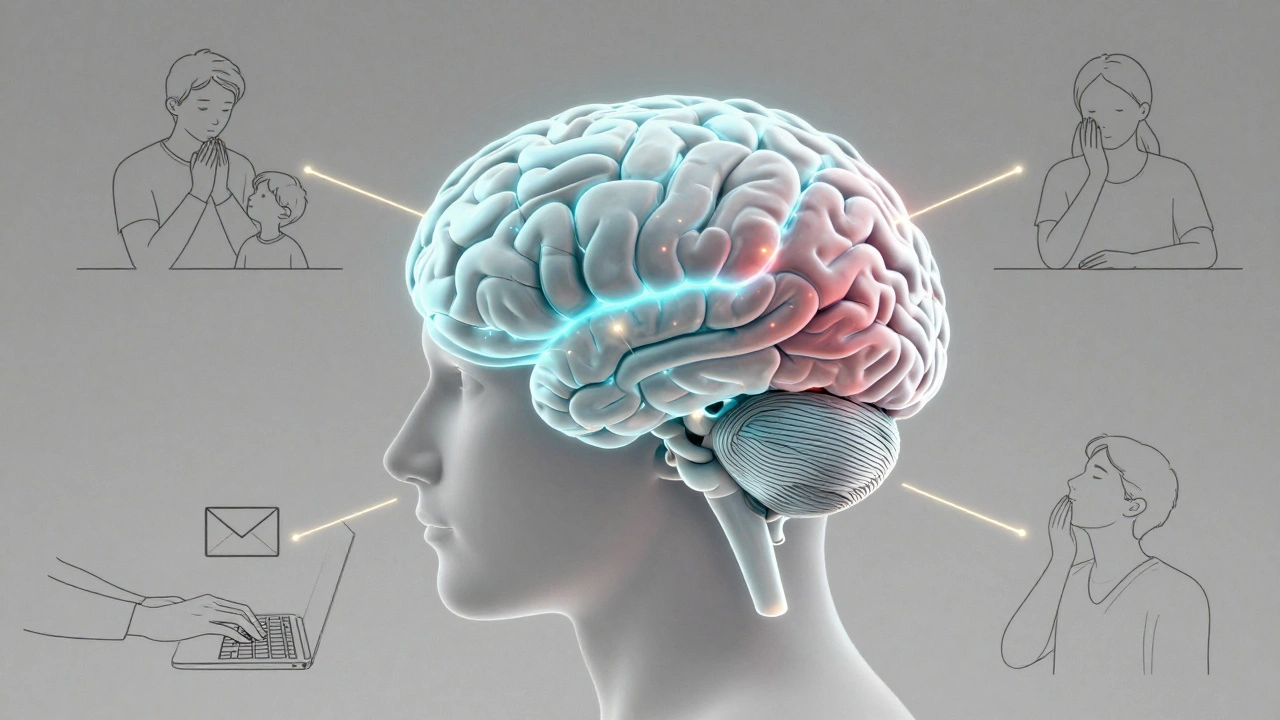
When you’re calm, your prefrontal cortex - the part of your brain responsible for logic, planning, and self-control - stays online. When you’re stressed, your amygdala takes over. It’s the alarm system in your brain. It doesn’t care about long-term consequences. It just wants to survive the moment. That’s why people under stress choose quick fixes: snapping at a colleague, spending impulsively, avoiding hard conversations. Calmness isn’t about being passive. It’s about keeping your higher brain in charge.
The Body Knows Before the Mind Does
Have you ever felt a gut feeling about a decision - and then realized later it was right? That’s not magic. That’s your body sending signals before your mind has time to rationalize. When you’re calm, your nervous system is balanced. Your breathing is steady. Your heart rate variability (HRV) is high. These are signs your body is ready to process information clearly.
Low HRV? That’s your body stuck in fight-or-flight mode. High HRV? That’s your body saying, “I’m safe. I can think.” A 2024 meta-analysis of 42 studies confirmed that people with higher baseline HRV made fewer impulsive choices in financial, medical, and interpersonal decisions. You don’t need a wearable to measure this. Just notice: when you’re tense, your shoulders are up, your jaw is clenched, your breath is shallow. That’s your body screaming for calm.
How to Build Calmness Like a Muscle
You can’t wait for calmness to show up before a big meeting. You have to train for it. Like lifting weights, calmness grows with practice.
- Pause before reacting. When something triggers you, count to three. Not because three is magical - but because it creates space between stimulus and response. That space is where good decisions live.
- Breathe with purpose. Try 4-7-8 breathing: inhale for 4 seconds, hold for 7, exhale for 8. Do this three times. It activates your parasympathetic nervous system - the brake pedal for stress.
- Label your emotions. Saying “I’m feeling frustrated” out loud - or even just in your head - reduces the emotional charge. Research from UCLA shows this simple act lowers activity in the amygdala.
- Limit decision fatigue. Make small choices automatic. Wear the same outfit most days. Eat the same breakfast. Save your mental energy for the big ones.
These aren’t tricks. They’re tools. And like any tool, they only work if you use them before you need them.

Real-Life Examples: Calmness in Action
Take Maria, a nurse in Sydney. One night, she was handed a patient with sudden chest pain. The team was rushed. Alarms were blaring. Instead of panicking, she took one slow breath, checked the vitals again, and noticed a subtle rhythm change others missed. It turned out to be a rare arrhythmia - not a heart attack. Her calmness saved a life.
Or James, a small business owner in Adelaide. He got an email from a client threatening to cancel a $15,000 contract. His first instinct was to reply with anger. Instead, he walked outside, sat on his porch for five minutes, and wrote a calm, clear response. He asked questions instead of defending himself. The client ended up extending the contract and referring two other clients.
Calmness doesn’t mean you never feel pressure. It means you don’t let pressure make your decisions for you.
What Calmness Isn’t
Let’s clear up a myth: calmness isn’t indifference. It’s not ignoring problems. It’s not being robotic or emotionless. You can be deeply passionate and still be calm. In fact, the most effective leaders, parents, and partners are the ones who feel things intensely - but don’t let those feelings drive the bus.
Calmness also isn’t about being perfect. You’ll still lose your temper sometimes. That’s okay. The goal isn’t to never get upset. It’s to notice when you’re getting upset - and choose your next move anyway.
The Ripple Effect of Calm Decisions
When you make calm decisions, the impact doesn’t stop with you. Your team feels safer. Your kids feel more secure. Your partner feels heard. In workplaces, teams with calm leaders report 40% higher trust levels and 30% lower turnover, according to Harvard Business Review data from 2025.
Calmness is contagious. When you model it, others learn it. You don’t need to be the loudest voice in the room. Sometimes, the quietest person - the one who pauses, listens, and responds - ends up leading the group.
When Calmness Isn’t Enough
There are times when calmness alone won’t fix things. If you’re dealing with chronic anxiety, trauma, or burnout, you might need more than breathing techniques. Therapy, medication, or lifestyle changes could be necessary. That’s not failure. It’s wisdom.
Calmness is a tool - not a cure-all. But it’s one of the most powerful ones you already have.
Start Small. Start Now.
You don’t need to meditate for an hour or quit your job to become calmer. Start with one moment today. When you feel tension rising - before you reply to that email, before you argue with your partner, before you make that purchase - pause. Breathe. Ask yourself: What’s the decision I’d make if I weren’t afraid?
That’s the moment calmness becomes your superpower.
Can calmness really improve decision-making in high-pressure jobs?
Yes. Emergency responders, surgeons, pilots, and financial traders who practice calmness techniques show measurable improvements in accuracy and speed. A 2024 Johns Hopkins study found that ER nurses who completed a 10-minute daily calmness training reduced diagnostic errors by 29% over eight weeks. Calmness isn’t about slowing down - it’s about thinking clearly under pressure.
Is calmness the same as being passive or avoiding conflict?
No. Calmness allows you to engage more effectively in conflict, not avoid it. People who are calm are more likely to speak up, set boundaries, and negotiate fairly because they’re not reacting out of fear or anger. Avoiding conflict comes from anxiety. Calmness comes from control.
How long does it take to become calmer?
You can feel the difference in minutes. One deep breath can lower your stress hormones. But building lasting calmness takes weeks of consistent practice. Think of it like learning to drive - you don’t master it on day one, but each time you pause before reacting, you get better. Most people notice a shift in 2-4 weeks with daily 5-minute practices.
Does calmness mean I won’t feel emotions anymore?
Absolutely not. Calmness doesn’t numb you - it helps you manage your emotions so they don’t control you. You can still feel anger, sadness, or joy. The difference is you won’t act on them impulsively. You’ll respond with intention.
Can children learn calmness too?
Yes. Kids as young as four can learn simple breathing techniques or emotional labeling. Schools in Australia that introduced daily calmness exercises reported 35% fewer behavioral incidents and improved focus in students. Calmness isn’t just for adults - it’s a life skill that starts early.
If you want to make better choices - in your career, relationships, finances, or health - start by calming your nervous system. Not tomorrow. Not after your next big deadline. Right now. Breathe. Pause. Choose.