
Have you ever felt stuck in a loop of thoughts that words just couldn't untangle? Maybe you tried talking it out with a friend or even a professional, but the solution still felt out of reach. You are not alone. For many people, traditional talk therapy hits a wall when emotions run too deep or trauma sits too quietly in the body. This is where creative arts therapies come in. They offer a different path-one that bypasses the need for perfect vocabulary and speaks directly to your feelings through color, sound, movement, and story.
In Perth, where the pace can be deceptively calm against a backdrop of intense sun and rugged landscapes, I’ve seen how these non-verbal tools help people reconnect with themselves. It’s not about becoming an artist. It’s about using creative expression as a mirror to reflect what’s happening inside you. When language fails, art listens.
What Exactly Are Creative Arts Therapies?
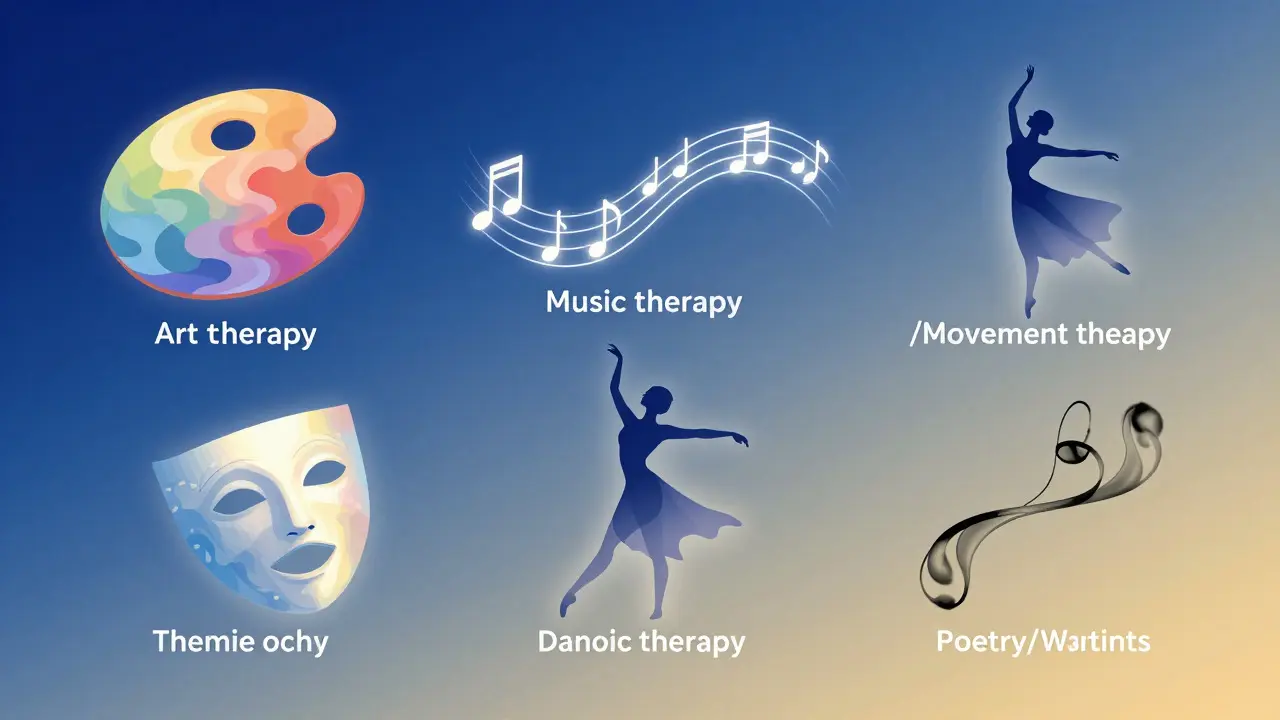
Creative arts therapies are a group of therapeutic modalities that use artistic processes-including visual arts, music, dance/movement, drama, and poetry-to improve physical, mental, and emotional well-being. Unlike casual hobbies, these practices are guided by trained professionals who understand both psychology and the specific medium they work with. The goal isn’t to produce a masterpiece for a gallery; it’s to process experiences, reduce stress, and build resilience.
Think of it this way: if talk therapy is like reading a map, creative arts therapy is like actually walking the terrain. You feel the ground beneath your feet, notice the obstacles, and discover new paths without needing to describe every step in detail first. This approach is particularly powerful because it engages multiple parts of the brain simultaneously-sensory, emotional, and cognitive-creating deeper neural connections than words alone often achieve.
The Five Pillars of Expression
Creative arts therapy isn’t a single method. It’s an umbrella term covering several distinct disciplines, each offering unique benefits depending on your needs. Let’s break down the main types so you can see which might resonate with you.
| Modality | Primary Medium | Best For | Key Benefit |
|---|---|---|---|
| Art Therapy | Painting, drawing, sculpture | Visualizing abstract emotions, trauma processing | Makes internal states external and tangible |
| Music Therapy | Singing, playing instruments, listening | Mood regulation, memory recall, social connection | Bypasses verbal filters to access emotion directly |
| Dance/Movement Therapy | Gestures, rhythm, body motion | Somatic healing, anxiety reduction, embodiment | Releases tension stored physically in the body |
| Drama Therapy | Role-play, improvisation, storytelling | Exploring identity, practicing social skills | Allows safe experimentation with different perspectives |
| Poetry/Writing Therapy | Journals, verses, narrative writing | Structuring chaotic thoughts, self-reflection | Creates distance from painful memories through metaphor |
Each modality taps into different sensory pathways. If you struggle to articulate anger, painting might let you smash colors onto canvas. If grief feels heavy in your chest, moving your body to slow rhythms might help release that weight. There is no "wrong" choice here-only what feels accessible to you right now.
Why Creativity Boosts Life Quality
You might wonder if spending time making things really changes anything beyond feeling relaxed for an hour. Research suggests otherwise. Engaging in creative acts triggers the release of dopamine, the brain’s reward chemical, which naturally elevates mood. But the benefits go deeper than temporary happiness.
1. Reducing Cortisol Levels
Chronic stress keeps your body in fight-or-flight mode, leading to fatigue, poor sleep, and weakened immunity. Studies show that just 45 minutes of creative activity can lower cortisol levels by up to 25%. In my own practice observing clients in Western Australia, those who engaged in regular art sessions reported sleeping better within two weeks-not because they were tired, but because their nervous systems finally learned to rest.
2. Building Emotional Resilience
When you create something from nothing, you prove to yourself that you have agency. This small act of creation builds confidence that spills over into other areas of life. Facing a blank page or silent instrument requires courage. Overcoming that initial resistance teaches you that discomfort is temporary and manageable-a lesson applicable to job interviews, relationship conflicts, or personal losses.
3. Enhancing Self-Awareness
Words can lie. We tell ourselves we’re fine when we’re not. Art doesn’t lie. The colors you choose, the shapes you draw, or the melodies you hum reveal truths your conscious mind might hide. A client once drew a house with no doors during a session. She hadn’t realized she felt trapped in her marriage until seeing it visually. That image became the starting point for honest conversation and eventual change.
Getting Started Without Pressure
The biggest barrier to trying creative arts therapy is the fear of being "bad" at it. Please forget that idea. These therapies aren’t judged by aesthetic standards. They are measured by honesty and engagement. Here’s how to begin safely and effectively:
- Find a Qualified Practitioner: Look for credentials like ATR (Art Therapist Registered) or MT-BC (Board-Certified Music Therapist). In Australia, check directories from the Australian Dance Therapy Association or similar bodies. A trained therapist provides structure and safety, especially if you’re dealing with trauma.
- Start Small at Home: You don’t need expensive supplies. Keep a sketchbook and pencil nearby. When overwhelmed, doodle lines until they form shapes. No interpretation needed-just movement.
- Use Music Intentionally: Create playlists for specific moods. One for energy, one for calm. Notice how your body responds. Do you tap your foot? Relax your shoulders? Use these cues to regulate your state throughout the day.
- Move Your Body Daily: You don’t need a dance studio. Put on a song and sway while washing dishes. Shake out tension after a stressful email. Movement grounds you in the present moment.
Consistency matters more than intensity. Ten minutes daily beats two hours once a month. Make creativity part of your routine, like brushing your teeth or drinking water. It becomes a tool you reach for automatically when life gets loud.
Common Misconceptions Debunked
Despite growing popularity, myths still surround creative arts therapies. Let’s clear them up so you can approach them with open eyes.
"It’s just a hobby."
False. While hobbies relax, therapy heals. A hobbyist paints to enjoy the result. A therapy client paints to explore pain. The difference lies in intention and guidance. A therapist helps you interpret symbols and connect insights to real-life challenges.
"You need talent to benefit."
Absolutely not. Talent is irrelevant. If you could tie your shoes, you can engage in creative arts therapy. The process values authenticity over skill. Ugly drawings often carry more emotional truth than polished ones.
"It only works for children."
Wrong. Children naturally express themselves creatively, but adults suppress this ability due to societal pressure. Reclaiming that voice as an adult can be profoundly liberating. Many seniors find renewed purpose through music or art groups, combating isolation and cognitive decline.
Integrating Creativity Into Daily Life
You don’t need a weekly appointment to reap benefits. Weave micro-moments of creativity into your existing schedule. Try keeping a gratitude journal where you write three things daily-but add a small doodle next to each. Or listen to instrumental music while commuting instead of podcasts. These tiny shifts train your brain to seek joy and reflection regularly.
In Perth, community centers often host free workshops. Check local libraries or cultural hubs. Connecting with others in shared creative spaces reduces loneliness and fosters belonging. Even sitting silently alongside strangers coloring mandalas creates a sense of collective peace.
Is creative arts therapy covered by insurance?
Coverage varies widely. In Australia, some private health funds cover sessions if prescribed by a GP under mental health plans. Medicare rebates may apply for accredited psychologists who integrate creative methods. Always check with your provider beforehand. Public hospital programs sometimes offer free services for specific conditions like PTSD or dementia.
How long does it take to see results?
Some people feel immediate relief after the first session due to catharsis. Others need 8-12 weeks to notice lasting changes in mood or behavior. Progress depends on individual circumstances, consistency, and the complexity of issues addressed. Patience is key-healing isn’t linear.
Can I do creative arts therapy alone?
Yes, self-guided creative practice offers significant benefits for stress management and mindfulness. However, for deep psychological work or trauma recovery, working with a qualified therapist ensures safety and proper interpretation. Solo practice complements professional therapy but rarely replaces it for serious concerns.
What if I hate all forms of art?
That’s okay! Start with low-pressure activities like clay modeling or rhythmic drumming. Focus on sensation rather than outcome. Often, resistance stems from past criticism or perfectionism. A good therapist will meet you where you are, helping you discover unexpected affinities without judgment.
Are there risks involved?
Emotional surfacing can be uncomfortable initially. Unprocessed trauma may arise during sessions. This is why trained facilitators are crucial-they guide you through intense feelings safely. Physical risks are minimal unless using sharp tools improperly. Always disclose medical history to your therapist before beginning.