
Most people treat health goals like a New Year’s resolution that dies by February. You buy the gym membership, download the calorie counter, and swear off sugar. Then life happens. Work piles up, stress spikes, and suddenly you’re back to old habits, feeling guilty instead of energized. But here is the truth: setting health goals isn’t about punishment or perfection. It is about building a life where you feel capable, clear-headed, and resilient. When done right, these small shifts create a ripple effect that changes how you work, relate to others, and view yourself.
The Real Purpose of Setting Health Goals
We often think of health goals as numbers on a scale or miles run per week. That is too narrow. At their core, health goals are structured intentions designed to improve physical, mental, and emotional well-being through consistent action. They act as a compass when motivation fades. Without them, we drift toward comfort zones that rarely serve our long-term vitality. With them, we create boundaries and routines that protect our energy.
Consider Sarah, a marketing manager in London who struggled with chronic fatigue. She didn’t set a goal to lose weight. Instead, she aimed to walk thirty minutes daily after lunch. Within six weeks, her afternoon slumps disappeared. Her productivity at work improved because she was no longer fighting brain fog. This wasn’t magic-it was the result of aligning her behavior with a clear intention. Health goals give us permission to prioritize ourselves without guilt.
Why Most Health Goals Fail (And How to Fix Them)
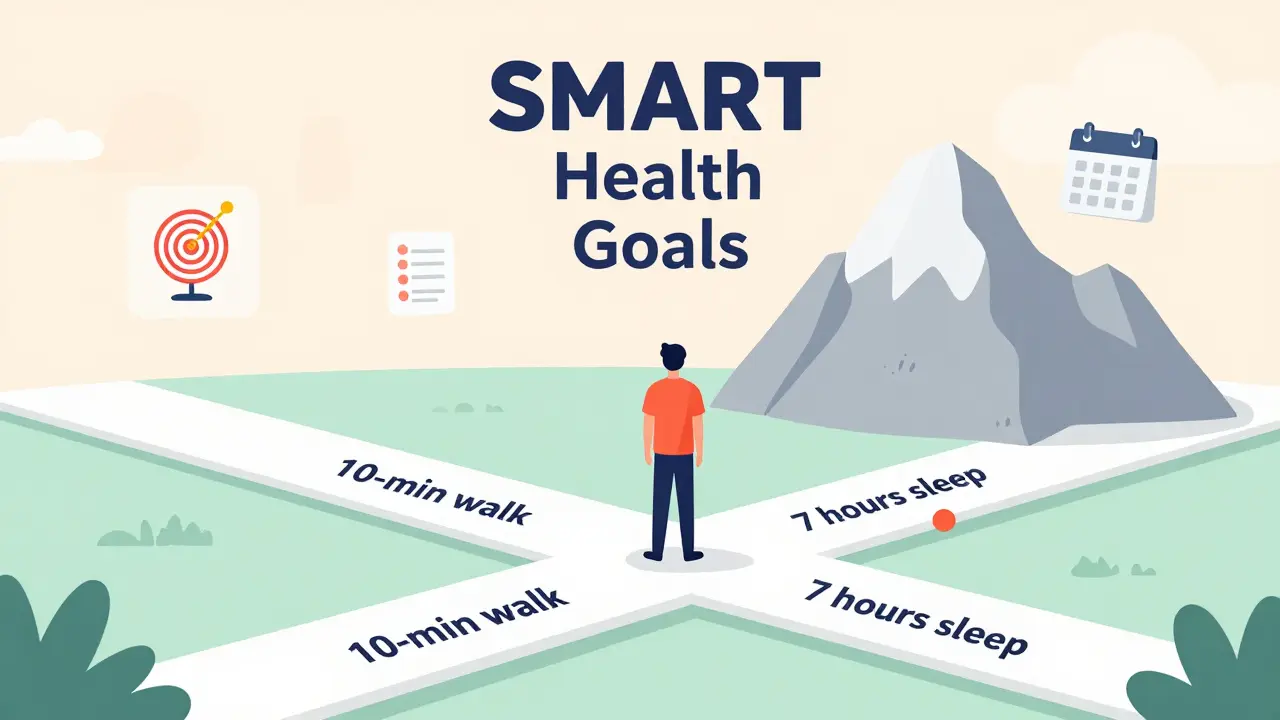
Research from behavioral science shows that vague goals lead to vague results. Saying “I want to get healthier” gives your brain no roadmap. What does healthy mean? Eating more vegetables? Sleeping earlier? Moving more? Without specificity, progress becomes impossible to measure. The fix lies in using SMART criteria: Specific, Measurable, Achievable, Relevant, and Time-bound.
- Specific: Replace “exercise more” with “do three strength training sessions weekly.”
- Measurable: Track steps, sleep hours, or water intake so you can see trends.
- Achievable: Start small. Aim for ten-minute workouts if you’ve been sedentary.
- Relevant: Connect the goal to something meaningful, like playing with your kids or reducing anxiety.
- Time-bound: Set deadlines like “by end of June” to create urgency.
Another common trap is focusing only on outcomes rather than processes. Losing twenty pounds is an outcome. Walking daily is a process. Outcomes depend on factors outside your control-genetics, metabolism, even luck. Processes are entirely within your power. When you focus on showing up consistently, success follows naturally.
The Ripple Effect: How One Goal Changes Everything
One of the most underestimated aspects of health goals is their compounding nature. Small wins build momentum. When you commit to drinking eight glasses of water daily, you notice clearer skin. That boost in confidence might inspire you to cook meals at home instead of ordering takeout. Cooking at home leads to better nutrition, which improves digestion and energy levels. Suddenly, you’re sleeping better, thinking sharper, and handling stress with more ease.
| Initial Goal | Direct Benefit | Secondary Impact | Long-Term Transformation |
|---|---|---|---|
| Daily 30-min walk | Better circulation | Improved mood & creativity | Sustained cardiovascular health |
| Seven hours of sleep | Reduced irritability | Stronger immune function | Lower risk of chronic disease |
| Mindful eating practice | Better portion control | Enhanced relationship with food | Sustainable weight management |
| Weekly digital detox | Less screen time | Deeper connections with loved ones | Increased presence & mindfulness |
This interconnectedness means you don’t need to overhaul your entire life overnight. Pick one lever, pull it consistently, and watch other areas improve automatically. The key is patience. Real transformation takes months, not days.
Mental Health Benefits Often Overlooked
We tend to separate physical health from mental health, but they are deeply intertwined. Physical activity releases endorphins and serotonin, chemicals that regulate mood. Regular movement reduces symptoms of depression and anxiety by up to forty percent according to studies published in The Lancet Psychiatry. Yet many people overlook this connection when setting goals.
If you struggle with low mood or high stress, consider making movement part of your therapy toolkit. Even gentle yoga or stretching can lower cortisol levels and calm the nervous system. Pair this with breathing exercises or journaling, and you create a holistic approach to self-care. Remember, mental resilience starts with bodily awareness. When you honor your body’s needs, your mind follows suit.
Building Habits That Stick
Goals become habits when repetition turns into automaticity. James Clear, author of Atomic Habits, explains that identity drives behavior. If you say “I’m trying to eat healthier,” you’re still resisting the idea. But if you declare “I am someone who values nourishment,” every choice aligns with that belief. Shift your language, shift your actions.
- Start tiny: Do one push-up. Read one page. Meditate for sixty seconds. Tiny actions reduce resistance.
- Stack habits: Attach new behaviors to existing ones. Brush teeth → floss → meditate for two minutes.
- Design your environment: Keep fruits visible, hide junk food, lay out workout clothes the night before.
- Celebrate small wins: Acknowledge effort, not just results. Progress fuels motivation.
- Expect setbacks: Missed a day? Forgive yourself. Consistency matters more than perfection.
Habit formation typically takes between eighteen and two hundred fifty-four days, depending on complexity and individual circumstances. Don’t expect instant change. Trust the process.
Tailoring Goals to Your Lifestyle
No single formula works for everyone. A student juggling exams needs different priorities than a retiree seeking mobility. A parent managing childcare requires flexibility compared to someone working remotely from home. Customize your goals around your unique context.
Ask yourself:
- What drains my energy most?
- When do I feel strongest?
- Which activities bring me joy?
- Where do I spend the majority of my day?
Use these answers to craft realistic plans. Maybe your ideal morning includes green tea and sunlight exposure. Perhaps evening walks fit better into your schedule. There’s no wrong way-as long as it serves your well-being.
Measuring Progress Without Obsession
Tracking helps, but obsession harms. Use metrics as guides, not judges. Weigh-ins fluctuate due to hydration, hormones, and digestion. Relying solely on the scale distorts reality. Instead, track non-scale victories: improved stamina, fewer headaches, easier stair climbing, deeper sleep.
Keep a simple journal noting how you feel each week. Rate energy levels, mood stability, and satisfaction scores. Over time, patterns emerge showing true progress beyond superficial markers. Celebrate those insights-they prove you’re moving forward.

Common Pitfalls to Avoid
Even seasoned practitioners fall into traps. Here are frequent mistakes and solutions:
- Overloading: Trying to change everything at once leads to burnout. Focus on one area first.
- All-or-nothing mindset: Skipping a meal doesn’t ruin your diet. One missed workout won’t undo gains. Stay flexible.
- Comparing to others: Social media highlights curated lives, not real struggles. Measure against yesterday’s version of yourself.
- Ignoring recovery: Rest is productive. Schedule downtime like appointments. Recovery prevents injury and sustains motivation.
- Lacking support: Share goals with friends or join communities. Accountability accelerates adherence.
Avoiding these errors keeps you grounded and focused on sustainable growth.
Creating a Supportive Environment
Your surroundings shape your choices. Surround yourself with people who encourage healthy living. Cook together, hike weekends, share recipes. Positive influence amplifies commitment. Conversely, distance yourself from negativity that undermines efforts.
Modify your space too. Remove temptations, add reminders, make good choices easy. Place books near your bed, keep dumbbells accessible, stock pantry with wholesome ingredients. Design makes discipline optional.
Final Thoughts on Living Intentionally
Setting health goals isn’t about achieving some mythical perfect state. It’s about reclaiming agency over your life. Every step toward better health strengthens autonomy, boosts confidence, and enhances quality of life. You deserve to feel vibrant, engaged, and alive-not just survive another day.
So start today. Choose one thing. Commit fully. Watch what unfolds. Because sometimes, the smallest decision creates the biggest impact.
How long does it take to form a new health habit?
Research suggests forming a new habit takes anywhere from 18 to 254 days, averaging around 66 days. Complex behaviors require longer periods. Consistency matters more than speed. Stick with it even when progress feels slow.
Can I set multiple health goals simultaneously?
Yes, but limit yourself to 2-3 major goals initially. Too many changes overwhelm cognitive resources. Master foundational habits before adding layers. Gradual expansion ensures lasting adoption.
What should I do if I miss several days of tracking?
Don’t quit. Resume immediately without judgment. Missing data points don’t erase prior progress. Adjust expectations if needed, but maintain continuity. Perfection isn’t required-persistence is.
Are health goals effective for improving mental health?
Absolutely. Physical activity increases neurotransmitters linked to happiness. Structured routines provide stability during uncertain times. Combined with mindfulness practices, health goals significantly enhance psychological resilience.
How do I know if my health goal is realistic?
Test feasibility by asking whether you could sustain it indefinitely. If the answer involves extreme deprivation or unsustainable effort, revise downward. Realistic goals balance challenge with achievability. Aim for gradual improvement, not radical transformation.