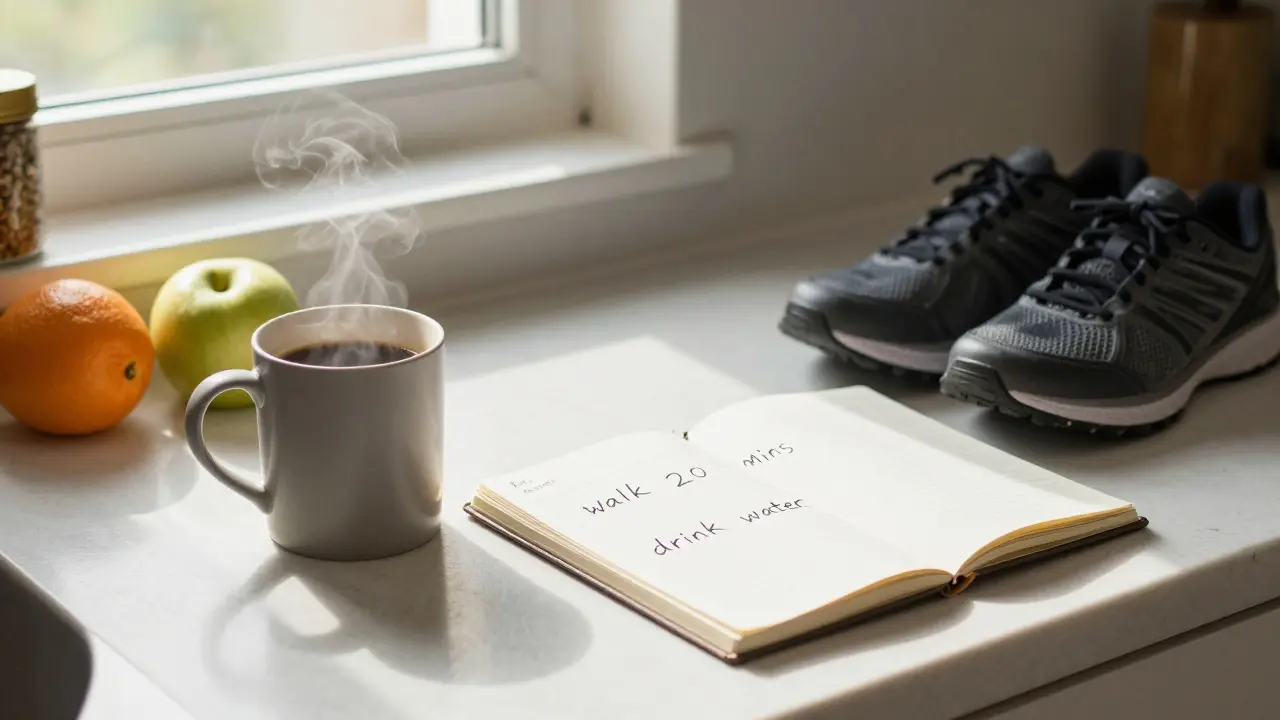
Most of us have been there. It’s early January, the coffee is fresh, and you’ve written down a list of resolutions that looks like a superhero origin story. You’re going to run a marathon, eat only kale, and meditate for an hour every morning. By mid-February, the running shoes are collecting dust, the kale has wilted in the fridge, and your meditation cushion is being used as a footrest. Why does this happen? Because we treat health goals as temporary fixes rather than permanent lifestyle shifts. We aim for perfection instead of progress.
The truth is, making your wellness a priority isn’t about willpower. It’s about strategy. In 2026, with information overload at an all-time high, the biggest barrier to good health isn’t a lack of knowledge-it’s a surplus of conflicting advice. The key to success lies in simplifying your approach. You don’t need another complicated diet plan or a grueling workout routine. You need a system that fits into your actual life, not the idealized version of it you see on social media.
Rethinking What 'Wellness' Means for You
Before you can set a goal, you have to define what success looks like. For decades, the fitness industry sold us a narrow definition of health: thinness and muscle mass. But modern science tells a different story. True wellness is a holistic state of physical, mental, and emotional well-being. It includes how you sleep, how you handle stress, the quality of your relationships, and yes, how you move your body.
If you start your journey focusing solely on the number on the scale, you’re setting yourself up for frustration. Weight fluctuates based on hydration, hormones, and salt intake. It’s a lagging indicator. Instead, focus on leading indicators-things you can control directly. Did you drink enough water today? Did you take a walk after dinner? Did you get seven hours of sleep? These small actions compound over time to create significant health changes. When you broaden your definition of wellness, you remove the pressure of looking a certain way and replace it with the satisfaction of feeling good.
The Science of Small Wins: Why Tiny Habits Work
Here is a secret that most people ignore: big changes rarely stick. Our brains are wired to resist drastic alterations to our daily routines. This is why extreme diets fail. They require too much cognitive effort. Every time you say "no" to food you love or "yes" to a workout you hate, you deplete your willpower reserves. Eventually, those reserves run dry, and you revert to old habits.
The solution? Start stupidly small. This concept, popularized by behavioral scientist BJ Fogg, suggests that you should make your new habit so easy that you can’t say no. Want to start exercising? Don’t sign up for the gym. Commit to doing one push-up a day. Want to read more? Read one page a night. Once you establish the identity of someone who exercises or reads, expanding the habit becomes natural. You’ll likely do more than one push-up, but the victory is in showing up. Consistency beats intensity every single time.
Using SMART Goals Without the Boring Part
You’ve probably heard of SMART goals before. Specific, Measurable, Achievable, Relevant, and Time-bound. It sounds like corporate jargon, but it’s actually a powerful tool if you strip away the stiffness. Let’s look at how to apply this to real-life health scenarios.
Instead of saying "I want to get healthier," which is vague and unmeasurable, try this:
- Specific: "I will walk for 20 minutes."
- Measurable: You can track this on your phone or watch.
- Achievable: Twenty minutes is manageable even on a busy workday.
- Relevant: Walking improves cardiovascular health and reduces stress.
- Time-bound: "Every weekday morning before work."
This clarity removes decision fatigue. You don’t have to wonder if you should exercise or how long you should go. The plan is already made. When the alarm goes off, you just put on your shoes. The less thinking involved, the more likely you are to follow through.
Habit Stacking: Anchoring New Behaviors to Old Ones
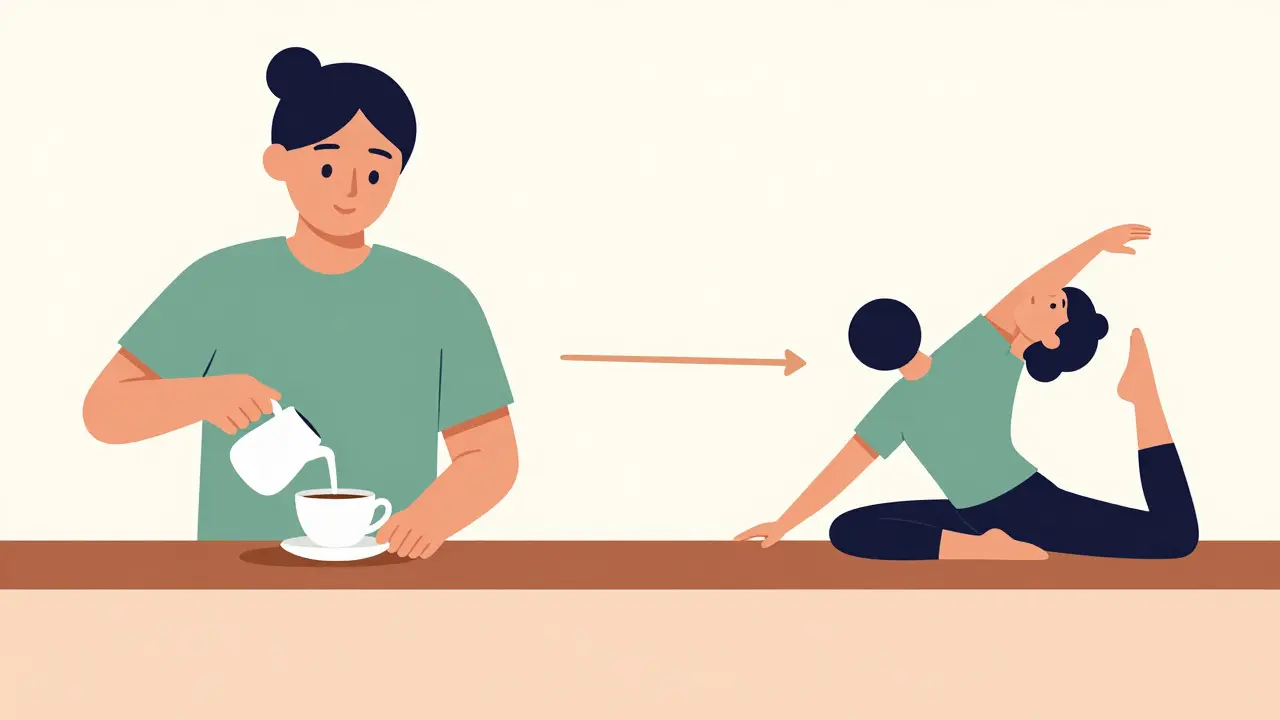
One of the most effective techniques for building new health habits is called habit stacking. Coined by author James Clear, this method involves attaching a new behavior to an existing one. The formula is simple: "After I [current habit], I will [new habit]."
Think about your day. What do you do automatically? Do you brush your teeth? Make coffee? Sit down at your desk? These are anchors. If you want to start stretching, stack it onto your morning coffee routine. After you pour your coffee, you stretch for two minutes. If you want to improve your posture, stack it onto sitting at your desk. After you log into your computer, you adjust your chair and straighten your back.
This works because your brain creates neural associations. You’re borrowing the momentum of an established habit to propel a new one. It eliminates the need for motivation. Motivation is fleeting; structure is reliable. By linking your health goals to things you already do, you integrate them seamlessly into your life without adding extra friction.
Nutrition: Focus on Addition, Not Subtraction
When it comes to eating, most people focus on restriction. They cut out sugar, carbs, or entire food groups. While elimination diets can work short-term, they often lead to bingeing later because deprivation triggers cravings. A more sustainable approach is to focus on addition. Ask yourself, "What can I add to my plate?" rather than "What do I need to stop eating?"
Try adding one vegetable to every dinner. Add a handful of nuts to your lunch. Drink a glass of water before every meal. Over time, these additions naturally crowd out less nutritious options. You won’t feel deprived because you’re still enjoying your favorite foods; you’re just balancing them out. This shift in mindset transforms nutrition from a chore into an act of self-care. You’re nourishing your body, not punishing it.
| Aspect | Restriction Mindset | Addition Mindset |
|---|---|---|
| Focus | What to avoid | What to include |
| Emotional Impact | Guilt and deprivation | Satisfaction and abundance |
| Sustainability | Low (leads to burnout) | High (integrates easily) |
| Example | No pizza allowed | Add salad to pizza night |

Sleep and Stress: The Silent Health Killers
We often overlook sleep and stress management when setting health goals, yet they are foundational. Poor sleep disrupts hunger hormones, increases cortisol levels, and impairs cognitive function. No amount of kale or cardio can fully compensate for chronic sleep deprivation. Similarly, unmanaged stress keeps your body in a constant state of fight-or-flight, which contributes to inflammation and heart disease.
To prioritize sleep, create a wind-down ritual. Dim the lights an hour before bed. Put away screens, which emit blue light that suppresses melatonin production. Try reading a physical book or practicing deep breathing exercises. Aim for consistency-go to bed and wake up at the same time every day, even on weekends. This regulates your circadian rhythm, making it easier to fall asleep and wake up refreshed.
For stress, identify your triggers. Is it traffic? Work deadlines? Family dynamics? Once you know what stresses you out, you can build buffers. Take five-minute breaks during intense work periods. Practice mindfulness meditation, even if it’s just for three minutes. Apps like Headspace or Calm can guide you, but simply focusing on your breath is enough. The goal isn’t to eliminate stress entirely-that’s impossible-but to change how you respond to it.
Tracking Progress Without Obsession
Data can be empowering, but it can also become obsessive. Tracking every calorie or step can lead to anxiety and disordered behaviors. The key is to track metrics that reflect overall well-being, not just performance. Consider keeping a simple journal where you note your energy levels, mood, and sleep quality each day. Look for patterns. Do you feel better on days when you walk? Worse on days when you skip breakfast?
Use technology wisely. Wearables can provide useful insights, but don’t let them dictate your worth. If your smartwatch says you didn’t hit your step goal, don’t beat yourself up. Just acknowledge it and try again tomorrow. Progress is rarely linear. There will be weeks where you slip up, and that’s okay. What matters is getting back on track, not achieving perfection.
Building a Support System
Willpower is overrated; community is underrated. Humans are social creatures, and we are heavily influenced by the people around us. If your friends spend their evenings drinking and eating junk food, sticking to your health goals will be harder. Find a tribe that supports your values. Join a walking group, hire a coach, or find an accountability partner.
Even online communities can provide support. Share your wins and struggles with others who are on similar journeys. Celebrate small victories together. Having someone to check in with makes a huge difference. It adds a layer of social accountability that helps you stay committed when motivation wanes.
How long does it really take to form a new habit?
The popular idea that it takes 21 days to form a habit is a myth. Research from University College London suggests it takes anywhere from 18 to 254 days, with an average of 66 days. The time varies depending on the complexity of the habit and the individual. The key is consistency, not speed. Don’t give up if you don’t feel automatic after three weeks.
What should I do if I miss a day?
Never miss twice. Missing one day is an accident; missing two is the start of a new (bad) habit. If you slip up, forgive yourself quickly and get back to your routine immediately. Self-criticism leads to shame, which often results in abandoning the goal entirely. Be kind to yourself and view setbacks as learning opportunities.
Is it better to set multiple health goals at once?
No. Trying to change everything at once is a recipe for failure. Pick one primary goal to focus on for the first few months. Once that behavior becomes automatic, you can add another. For example, master your sleep schedule first, then introduce regular exercise. Layering habits ensures each one sticks properly.
How do I deal with unhealthy cravings?
Cravings are often signals of underlying needs like stress, boredom, or dehydration. Before giving in, pause and ask yourself what you’re really feeling. Drink a glass of water, wait ten minutes, or distract yourself with a different activity. Often, the craving will pass. If you do indulge, do it mindfully and without guilt. Balance is key.
Can I achieve health goals if I have a busy schedule?
Absolutely. In fact, busy people often benefit most from structured health goals. Use habit stacking to integrate wellness into your existing routine. Even five minutes of movement or mindful eating counts. Prioritize high-impact activities like sleep and nutrition, which yield the biggest returns for minimal time investment. Efficiency, not duration, is the goal.