Imagine being able to see your own brain activity in real time-like a live dashboard showing when your focus slips or your nerves spike. That’s what biofeedback does for people with ADHD. It doesn’t rely on pills. It doesn’t require hours of talk therapy. It trains your brain to self-correct, using simple, science-backed signals you can feel and learn from.
What Biofeedback Actually Does for ADHD
Biofeedback for ADHD uses sensors to measure physical signals your body gives off-like brainwave patterns, heart rate, muscle tension, or skin temperature. These signals are turned into visual or sound cues you can see or hear. For example, you might watch a video that only plays clearly when your brain is in a calm, focused state. If your mind starts to wander, the screen dims. No one tells you to pay attention. Your brain figures it out on its own.
This isn’t magic. It’s neuroplasticity in action. The brain changes based on feedback. When you get consistent, real-time info about your focus levels, your brain learns to stay in that sweet spot longer. Studies from the American Academy of Pediatrics show that neurofeedback (a type of biofeedback focused on brainwaves) can reduce inattention and hyperactivity in children with ADHD as effectively as stimulant medication-without the side effects.
How It Works: The Science Behind the Screen
The most common form used for ADHD is EEG neurofeedback. Small electrodes are placed on the scalp to track electrical activity in the brain. Two key brainwave patterns are targeted:
- Theta waves (4-8 Hz): These dominate when you’re daydreaming or zoning out. High theta is common in ADHD.
- Beta waves (13-30 Hz): These are linked to focused, alert thinking. Low beta often means poor concentration.
The goal? Reduce excessive theta and boost beta. During a session, you might play a game where your spaceship flies faster when your brain hits the right rhythm. Over time, your brain starts to recognize what focused feels like-and remembers it even when the screen is off.
A 2023 meta-analysis of 22 clinical trials found that participants who completed 30-40 sessions of EEG neurofeedback showed lasting improvements in attention, impulse control, and working memory. These gains stayed strong six months after treatment ended.
Why It Works Better Than You Think
Medication helps many people with ADHD, but it doesn’t teach skills. It masks symptoms. Biofeedback teaches the brain how to regulate itself. That’s why results often last long after therapy stops.
One parent in Norwich told me her 10-year-old son, who used to cry every morning before school because he couldn’t sit still, started asking to do his biofeedback sessions. After eight weeks, his teacher noticed he raised his hand more in class. No prescriptions. No side effects. Just a kid who finally felt in control.
It’s not about willpower. It’s about rewiring. Your brain is like a muscle. If you never train it to focus, it forgets how. Biofeedback gives it the practice it needs.
Who Benefits Most?
Biofeedback works for kids, teens, and adults. But it’s especially powerful for:
- Parents who want to avoid long-term medication use
- Adults with ADHD who struggle with organization and time management
- People who’ve tried medication but had side effects like appetite loss, sleep issues, or mood swings
- Those who feel stigmatized by taking pills
It’s not a quick fix. Most people need 20 to 40 sessions, usually once or twice a week. But each session builds on the last. You don’t need to be tech-savvy. You don’t need to understand brainwaves. You just need to show up and try.

What to Expect in a Session
Your first session is a setup. Sensors go on your head and maybe your fingers. You sit quietly while the system maps your baseline brain activity. Then you do a short task-maybe watching a video or playing a simple game.
The feedback is gentle. No loud alarms. No flashing lights. Just subtle changes in sound pitch, screen brightness, or game speed. Your brain picks up the pattern without you even realizing it.
After 10 sessions, most people start noticing small shifts: less fidgeting, fewer distractions, better sleep. After 20, family members often say, “You seem calmer.” By 30, many report they can sit through meetings, finish tasks, or read a book without losing focus.
How It Compares to Other ADHD Treatments
| Method | Time to See Results | Duration of Effects | Side Effects | Cost per 30 Sessions |
|---|---|---|---|---|
| Stimulant Medication (e.g., Adderall) | Hours | Only while taking | Appetite loss, insomnia, anxiety | £300-£600 |
| Cognitive Behavioral Therapy (CBT) | 8-12 weeks | Months to years | Minimal | £800-£1,500 |
| Biofeedback (EEG Neurofeedback) | 4-8 weeks | Years (often permanent) | None reported | £1,200-£2,000 |
| Behavioral Parent Training | 6-12 weeks | Months to years | None | £400-£800 |
Biofeedback costs more upfront than meds, but it doesn’t require ongoing prescriptions. Many clinics offer payment plans. Some NHS trusts in the UK now fund it for children with severe ADHD who don’t respond to standard treatments.
Real-Life Success Stories
A 32-year-old teacher in Leeds started biofeedback after years of struggling to keep up with lesson planning. She’d forget deadlines, lose papers, and feel overwhelmed by simple tasks. After 25 sessions, she says, “I finally stopped feeling like my brain was on a different frequency than everyone else.” She now teaches full-time without medication.
A 14-year-old boy in Bristol, who used to be suspended weekly for talking out of turn, completed 32 sessions and went from failing math to earning a B in his final exam. His mom says, “He didn’t get smarter. He just stopped fighting his own brain.”
Where to Start
Look for clinics that specialize in neurofeedback for ADHD. Ask if they use FDA-cleared equipment (like NeurOptimal, BrainMaster, or MindPut). Avoid places that promise miracles in five sessions. Real biofeedback takes time.
Some universities and research centers offer lower-cost programs. The University of East Anglia in Norwich runs a pilot program for teens with ADHD-free for participants. You can also ask your GP for a referral to a specialist.
Home devices exist, but they’re less accurate and lack professional oversight. For best results, start with in-clinic sessions. You can transition to home use later if needed.
Is It Right for Everyone?
Biofeedback isn’t a cure-all. It won’t help if someone refuses to participate or expects instant results. It’s not ideal for people with severe anxiety or epilepsy unless supervised closely.
But for those willing to put in the work, it’s one of the few ADHD treatments that gives back control-not just symptom relief. You’re not being fixed. You’re learning how to manage your own brain.
If you’re tired of relying on pills, or if you’ve seen the side effects firsthand, biofeedback offers a quiet, powerful alternative. It doesn’t shout. It doesn’t force. It just shows your brain what it’s capable of-and then gets out of the way.
Can biofeedback replace ADHD medication completely?
Some people do stop medication after successful biofeedback, but it depends on the individual. Many use it alongside meds at first, then gradually reduce under a doctor’s supervision. It’s not an either/or decision-it’s a path to less dependence.
How long does each biofeedback session last?
Most sessions are 30 to 45 minutes. You sit comfortably while sensors monitor your brain or body. There’s no pain, no needles, no discomfort. You can read, listen to music, or just relax.
Is biofeedback covered by insurance or the NHS?
In the UK, the NHS doesn’t routinely fund biofeedback for ADHD, but some local trusts offer it as part of pilot programs, especially for children. Private health insurance sometimes covers it if prescribed by a neurologist or psychiatrist. Always check with your provider.
Are there any risks with biofeedback?
Biofeedback is non-invasive and has no known serious side effects. A few people report mild headaches or fatigue after early sessions, but that usually fades. It’s considered one of the safest ADHD interventions available.
How soon will I see results?
Most people notice small changes-like better sleep or less impulsivity-after 4 to 8 sessions. Meaningful improvements in focus and organization usually appear between 12 and 20 sessions. Consistency matters more than speed.
Can adults with ADHD benefit from biofeedback too?
Absolutely. Adults often benefit even more because they’re motivated, self-aware, and can commit to the process. Many report better work performance, improved relationships, and less anxiety after treatment.
What Comes Next?
If you’re considering biofeedback, start by talking to a clinician who specializes in ADHD and neurofeedback. Ask for their success rates, the type of equipment they use, and whether they offer a trial session.
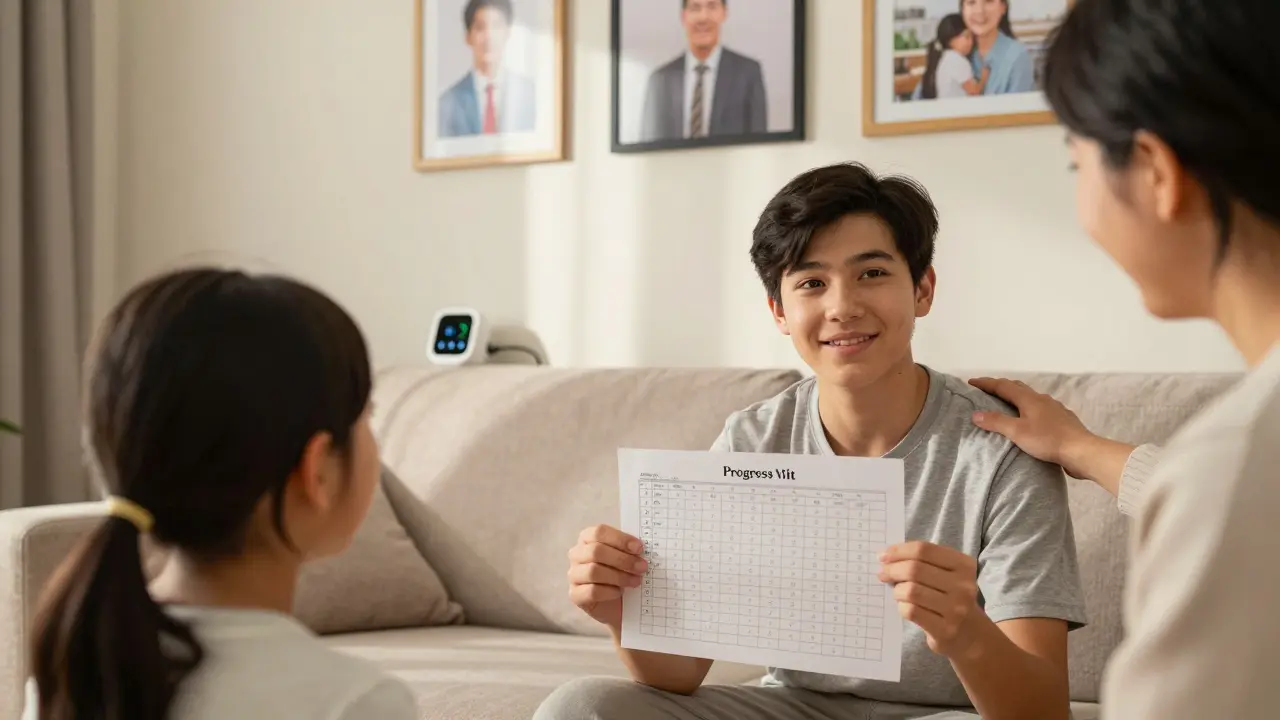
Keep a journal during treatment. Note small wins: “Finished a task without distraction,” “Stayed calm during a stressful meeting,” “Slept through the night.” These are the real signs of progress.
Biofeedback doesn’t promise perfection. But it does promise something rarer: self-mastery. For people with ADHD, that’s not just a benefit-it’s life-changing.